
Writing Forever

shake

I know you know this, so I guess there’s not much point to telling you about it. But, well, there it is, isn’t it?

I’ve been hating on my book, DROPPINGTON PLACE. Okay, well, not on the book itself, but on the writing of it. Some days it’s a blast, and the words flow like sweet cherry wine. The next day comes the roadblock, the stumbling block, the block of ice that freezes our soul and stalls us just plain dead in our tracks. I hate that block, too.

In my story, the characters explore a surrealistic world made entirely of paper. Their path takes them down, well, a path. So, how do we walk down this path?

Walking, and walking, and walking becomes so dull that even I can’t stand to write it.

Instead of walking and walking, the camera drifts up into the sky and looks down on them, telling us where they’ve been and what they’ve seen.

And THAT, my writer friend, is exactly where the roadblock landed. Flooomph, like a big rock in the highway to Interesting Storyland, we stepped out of the lives of the characters, the story became wooden and dull, and no fun to write. And, if you don’t have fun writing a piece, however is your reader going to enjoy it?

Ding-dong. Hello, Mr. Dimwit? Your brain is calling.

It’s a scene, of course. The answer is to place scenes along the path. Scenes that move the story forward even as they move the characters down the road. Cool, huh?

Biggity-big-big-bigger question.

Why do this? Why do you care about great paragraphs, and storylines, and why is it so important for you to put your thoughts on paper?

Why? Why must you publish your book? If writing is so important to you, why don’t you just write and write and let it go at that.

Okay, so maybe it’s not the writing, is it? It’s the reading.

You write your ideas and stories so that others will enjoy, will learn, will see the world in a new way. Isn’t that so?

So, here’s the rub: if you are so concerned about your reader seeing the world in a new way as a result of your work, why put your name on it? Okay, so it’s not just the reading. It’s the fame.

Before we go too far into our writer’s tools and processes, let us get this straight:

You and I are reaching for the brass ring of immortality.

Think about Shakespeare, a household word. Shakespearian theater. It defines a whole category of acting, of playwriting, of presentation. Why isn’t that you?

It could be. If your book is successful, if you find the right combination of story and character, you, my dear reader friend, could be the next Shakespeare, your name whispered and hailed and venerated for generations to come.

That’s immortality for us.

But it’s more than that, isn’t it?

Writing is a business. Success is not measured by finished works. It’s measured by works sold. Sold. Sounds bad, but it is the business.

Sell a million books and you’re doing good. Sell a million books a year and you’re on your way. Sell a million books a year and get a movie deal, and household wordism isn’t far away.

Isn’t that what you want? That’s what I want. I don’t think it will happen, but that doesn’t make me want it any less, or make me work any less hard in trying to get there.

So, go finish your book. Write well. I’m finishing mine. Maybe you’ll read it – maybe I’ll read yours. Maybe yours is so good that Disney is dialing the phone this very instant to make you the next Stephen King.

Hey, it could happen! Immortality could be that close. I’m sitting by the phone.
Marketing Ploy: Chapter Added

cropped-cropped-009.jpg

Okay, no lies here. Only the straight up truth. Something inside says to publish the chapters of this book, one miserable week at at time, until the book is laid completely before you. So, submitted for your approval, MARIGOLD’S END, Chapter 3. You’ll find it over there, on the left, under the title MARIGOLD’S END, the Novel. See how it works?

So, why publish chapters of the book. Once you’ve read it, you’re not likely to buy, like, a dozen copies. Maybe you could – they make great Christmas presents and passable doorstops – but no one is holding their breath.

No, it’s something more fundamental than marketing. What is the WWW if not the marketplace of the world. What is the Internet, and the ability to publish whatever, whenever, if not a way to float ideas, to share thoughts, to trade our works of art with one another?

In Shakespeare’s time, he published his own work through a publisher, hoping that it would sell. But more than just hoping for a little quick cash, a little Elizabethan jingle-in-the-jeans, he had to write, had to publish, had to share his words.

You’re a writer, you understand. You do the blog thing as a way to express yourself.

More, this is marketing. While I want you to read this book, and  DROPPINGTON PLACE, my next book, I really want to impress in your mind that my books are good and entertaining and worth the paltry shekels one shells out for them. I’m not marketing these books, but their children.

Which, according to gorilla marketing, means I’m not marketing at all, but publicizing.  You, John or Jane Q. Public – isn’t it weird that John and Jane have the same middle initial? It must be Quincy – are not being marketed, but are reading a fine piece of publicity. No pictures, please.

So, go on over and click on MARIGOLD’S END, the Novel, and breeze through Chapter 3. I hope you enjoy reading it as much as I enjoyed writing it.

Oh, and enjoy the publicity. No pictures, please.

BN Marketing Promise Kept

Apocolypse

I’d say this promise is kept by popular demand, but you, dear reader, and I both know that that’s not true, for there is only you and me in this cruel-hearted world. Please place your beer here – _____ – for crying into, later. For we have work to do now.

First and foremost: below you will find the outline for my book, DROPPINGTON PLACE, precisely as promised in yesterday’s post on Bare Naked Marketing. An important part of marketing, of course, is delivering on your promises. Some of those promises are implied. If you shell out several dollars for a Yugo, that the car has a steering wheel is implied, along with seats and a suitably tame headliner.   But a promise like “I will share this with you,” well, that’s a promise with no ifs, ands or butterumpusses about it.

If you were a playwright, you’d know this formula:

Act I: we meet the protagonist and his circumstances. All is well until, just at the end, something dreadful shatters his peaceful existence.

Act II: things gets worse and worse, more and more dire, nastier and nastier, until, at the very end of the act, the idea emerges that will save all.

Act III: we act on the idea, vanquish the dreadfulness, and resolve the manifold puzzles presented during the day. If it’s a musical, the audience walks out humming the overture.

In DROPPINGTON PLACE, we don’t have quite that much structure. You’ll find the outline over there, on the left of this site, under the strikingly original title DROPPINGTON PLACE: Outline.

So, there it is, you and I are sealed at the word processor. I share this with you in the hopes of giving you a window into my creative process.

I trust, of course, that we won’t see you running down the street with my outline in hand bellowing “Eureka! I know what to write!” That would bring bad juju, wouldn’t it?

Your ideas are always welcome – simply comment on this blog.

Stay tuned, dear reader. There are chapters, both of this book and MARIGOLD’S END, to follow.


Remember: no running.

Bare Naked Marketing

man-wearing-barrel-580115

Please disregard the provocative headline… nobody here is taking off their clothes. Probably.

So, whatever does one mean by bare naked marketing? Unlike guerilla marketing, which takes advantage of life’s nooks and crannies to broadcast one’s message, and unlike gorilla marketing, which is naked by default… seriously, how many gorillas look good in yoga pants… bare naked marketing is a new concept, proposed by yours truly.

BNM… the rule for technical writers goes like this: bare naked marketing (BNM), but that’s tedious… is organic marketing. As nobody reads this blog, I’ve decided to expose myself – all right, just my artistic soul – on my current project, DROPPINGTON PLACE.

We’ve already discussed designing the story, and I may have posted a chapter.  We have therefore already explored part of my new marketing ploy… I mean, plan.

BNM: starting tomorrow, you will get to see the writing process that goes into this book. The outline will be posted here, along with changes as they occur. Chapters, as they are finished, will be here, too.

Why BNM? You’re a writer, right? Well, so am I.  Does it not make sense to share our thoughts and processes? I mean, it’s not like some great big secret? Should it be? I think not!

So, starting tomorrow, visit here for the much ballyhooed Bare Naked MARKETING. Clothing on your part is entirely optional.

Cliffhanger Marketing

Image: Wikipedia
Image: Wikipedia

 When we left our heroes, Norman, Jake, and Wanda dangled over the boiling lava pit, suspended in the air by a single strand of dental floss.

 “I believe it’s beginning to stretch…” Jake gasped.

The cliffhanger, the white-knuckler squeaker of a nasty dilemma that makes you just want to, makes you just have to, makes you just DIE to start the next chapter and see what happens, is an old, old way to sell stories.

Scheherazade used them to keep herself alive in the One Thousand and One Nights, remember? The king was going to lop off her head when she reached the end of her story, so she spun out cliffhangers, night after night, until he finally said “dude, like, cut it out!” That may be a loose translation.

The upside of cliffhangers is that you bring the audience back for the next chapter. It’s rather a component of gorilla marketing, wherein you don’t do anything, and let the story do all the work.

The downside is that your story becomes lurchy, if that’s a word, and rather roller coastery, if that’s a word. Your sensitive love story about a girl and her pet dragon must necessarily take a turn for the violent, or for extreme emotions: I HATE you, Nogard bellowed. The end.

Another downside is that cliffhangers become rather tedious. For goodness sake, can’t he AVOID the traps once in a while? The old Batman TV show had just 22 minutes to get out of a cliffhanger, tell some story, and get into a new one, making the Caped Crusader seem, I don’t know, rather cartoonish?

So, it is with a blend of cliffhangery, if that’s a word, and gorilla marketing, that you now find Chapter Two of MARIGOLD’S END here on this very site.

Taa Daa!

As you’ll recall from Chapter One, our troubled twelve-year-old, Phineas Caswell, points the loaded pistol,  trigger-finger itchery (if that’s a word), squarely at the running-away back of Alfred Townsend, the unarmed bully that has made his life a living hell. Will he pull the trigger and end his woes? Will He? WILL HE???

Well, now you can find out. The second chapter, cleverly titled Chapter Two, now has it’s own page. Oh, and you’ll be surprised at the turn of events.         I hope.

Now you can read the chapters, build up steam, get rolling in MARIGOLD’S END, and wait breathlessly for Chapter Three. Oops – I gave away the title!

Before you get all wormy-squirmy and palm-sweaty like you do in the seat across the car dealer sales manager (How am I going to get you into that car today, friend?), I must remind   you: this is gorilla marketing. Don’t buy the book – you can’t!

But, let me know what you think, would you? Liked it? Hated it? Mondo disregardo? Your feedback, my independent writer friend, is most needed.

Now, I’m not desperate – I know that’s what you’re thinking.  But, I’m not, I’m not, I’m not. My darling editor is moooviiiing soooo slooooowly, think of this as Plan B.

Your input, spread out over the number of weeks over which I plan to release a chapter…let’s see, here, 18 chapters, take away the 2 I’ve already released…let’s see, carry the 1…should coincide with her completion of her editorial chore.

Badda boom, badda bing, and all I have to do is NOTHING! Now THAT, my reader friend, is gorilla marketing!


Designing a Book 


CarlsHouse

At first you think, whoa, I am, like, so going to write this book that it’s just going to be the best darned thing anybody has every gosh darned read. Then you sit down at the word processor…

It was a dark and stormy night…backspace, backspace, backspace

You may wonder why I’m dead… backspace, backspace, backspace

You’re not the boss of me, Timmy snarled… backspace, backspace, double backspace, control-X

All right, so, that knock at the front door is clearly not your muse, come to enlighten you…

My book, DROPPINGTON PLACE, has gone through iteration after iteration, the story orbiting around plot point after plot point, through about 17 “hot-dang, this’ll be good” rewrites, and finally sat down and breathed out.

That’s when Byron, the protagonist, stepped in. It turns out he really did have a story to tell – something serious he wanted to say. His story is actually pretty good – a little calm compared to previous editions of his book, but pretty good.

In the original story, Byron finds himself transported to a world of paper, run by a magical being called a homunculus. However will he get back? Assisted by two human friends and a couple of paper people, he eventually gets the homunculus to send him home. Yawnzers, kids. It’s a cool idea, but, like the paper world he visits, seriously flat.

Byron recently announced that he was not happy in the 3D world. His father has left. His mother has “episodes” that pull her emotionally far away, and he misses his best friend, left behind when they moved to a new town. He finds his escape from his woes by building paper houses.

The paper world into which he is thrust holds much more mystery for him, and might even be a place in which he can find respite. We spend most of the story wondering, with him, if the place is real or a dream. The homunculus is a paper copy of a 15th century playwright, and stands in as sort of a father figure for Byron.

We still have all the interesting paper stuff going on, and there’s a bad guy, but that’s no longer what drives the story.

The motor behind the story is Byron’s emotional arc, as he learns to cope with the many difficult issues he must face.

Fine, fine, well and good. Jeepers, mister, you’re a GENIUS, but having a character arc don’t do crackers for the structure of the book.

To remedy that ill, I broke the cracking-good synopsis for DROPPINGTON PLACE into chapters, to wit:

 “…

Chapter 2

At first the fascinating paper world is appealing, as it provides an escape from the woes of the real world. But, after seeing a 3D human like himself turned into a 2D paper person, he realizes he is in danger.


Chapter 3


Searching for a way out, he meets Hailey, a strikingly bright and hopeful 12 year old, who hopes to assist the tiny man requesting help. She uses her knowledge of magic, gained through reading a series of young-adult novels, to explain and understand the paper world. Together they witness Hobbs turn a 3D human into a 2D “flatso” as Byron calls them. They realize that Hobbs is the way out, and decide to visit his castle, Hobbs Manor…”


Now Byron can say all the stuff that’s important, but the rhythm of the book is a flow that can be managed and developed. Each character can say their important stuff, but this outline tells them when to say it.


There is a danger, my writer friend, of getting too detailed in the outline – I know some writers who fall into this sinister little trap. They write and write, not on the book, but in the outline, and solve all of their puzzles so thoroughly that they now see no need to write the book!


So, sketchy and loose, detailed but easy-peasy, that’s the road for Byron!

Writing at Disneyland

Image: Disneyexperience.com

There’s something sort of crazy about being, well, sort of crazy. At the top of the list is that you don’t have to explain anything – well, I’m just sort of crazy like that.   You get lots of clever adjectives, like quirky, and different. And, because you’re just sort of crazy like that, you know, quirky and different, you find yourself with lots of free time on your hands. Let’s not invite her – you, know, she’s quirky and different.

This big and mighty world tries really hard to convince you that being busy is doing something. You can be busy all day long at Disneyland, but, what have you accomplished beyond exhausting yourself and dropping two hundred bucks to a guy in a mouse costume? Nothing, Jack. For all that busyness, you accomplished nothing.

So it is with we quirky, different writers, dontcha think? This endeavor right here, this very one you are reading, which hopefully brings a smile to your erstwhile lips and perhaps gives you something over which to mull when you are not busy being busy, may very well be busyness for the sake of busyness.

It occurred to me while thinking about marketing…I mean, promoting…my book, my mind spinning feverishly like a rabid squirrel in a hamster wheel, that there is nothing to do about marketing…I mean, promoting…my book until my adorable editor is done with it. For the record, she did say she thought this was the best so far, but had scarcely started chapter two. Sigh.

Without a product, what is there to promote?…coming soon from John Reinhart, the author who is, well, uh, is kinda waiting in limbo while his editor wraps up his glorious…wait, where ya going?

BUT, there is a sequel to MARIGOLD’S END, tentatively titled PELICAN’S WAY… there’s sort of a theme here, see, where the Marigold is a ship in the first novel that gets blown up…oh, poop, I spoiled the ending…double poop, because NOW I spoiled the ending by telling you that Phineas blows it up at the end of the book…oh, triple poop! So, see, Pelican is a ship in the next book that gets…well, you’ll have to read that one.

Anyway, the rabid squirrel brains rattled out a good synopsis of that book on Tuesday. And I must say, it’s a ripping good synopsis, as synopses go. That was Tuesday.

On Wednesday, the quirky, different sort of crazy writer that I am, I sort of cracked out a terrific synopsis for my other series of books, called DROPPINGTON PLACE. For a preview of Droppington, scroll to the bottom of this page and you’ll see that I have a blog for that, too. Oh,  I’ve thought of everything.

So, while my lovely editor does everything other than edit my book, my NEW plan is to work on DROPPINGTON PLACE. And thus my hands will be busy.

But, is busyness productivity? If the words crackle and dance from your fingertips, but never get published, is that accomplishing anything?

Maybe that’s why my crazy, quirky, different friends are so fond of Disneyland.

Marketing is a Misnomer

image

Earth to dummy, come in, dummy. Earth to dummy, come in, dummy…

Marketing your book…and, you’re not the dummy, by the way, it’s me…anyway, marketing your book isn’t marketing it at all. Marketing is just a term, a word, meant to scare the living pants off of the weak and timid squirrelly-minded folks not blessed with an iron resolve. I used to have an iron doorstop, but it rusted and ruined my carpet. Just like the word marketing can ruin your efforts to sell your book.

You are not a marketer. You, my friend, are a writer. And, even though there are some pretty good marketing writers, and you might be one, you are a novelist first and foremost, and through and through.

But, gee, Mr. Wizard, if I don’t market my book, however am I to sell enough copies to retire in Provence and grow grapes. Well, Skippy, I’m glad you asked.

We are not marketers, you and I. We are publicists. Publicist. Has a much more noble ring, don’t it?  We are not marketing our work, pandering to the common masses as if we were hawking corn flakes. Marketing is a highly specialized field, filled with buzzwords and jargon and MBAs. Not newbie nimrods like you and me. Well, me.

All seriousness aside, isn’t your goal to sell your book to people who want to read it? You didn’t do all that work just to sell a dust jacket, did you? To be on the close-out aisle at Barnes and Noble?

No, no, no.  That’s the province of the marketer.

You, you write your WordPress blog, you have your Facebook, Twitter, LinkedIn, Google+. You are spreading the word through your social media, which is good.

But, you are preaching to one hundredth of one percent of your future readers. If I sold a book to every reader of this blog the total would come to three…four if I buy one, but, really, I’ve already read it.

Your book is not its own entity. Your book is you…that must become your mantra. I am my book. My book is me.

Although it’s filled with beautiful imagery and breathtaking passages, it all comes to naught if no one knows about it. About you.

So, begone knock-kneed marketing fool, and be welcome, sophisticated publicist…

Okay, so, like, what now?

Well, what does a publicist do? Publicists bring their clients an opportunity to talk, to build interest in the book.  A publicist sails the seas of opportunity, thinking in new and different ways about how to get you noticed. The notice turns into a chance to talk, which turns into public curiosity about your book, which turns into sales, which turns into grape arbors in your front yard. See how easy it is?

So, that is the task for you and me – I include myself because you shouldn’t have to do this on your own: we will become publicists, but not for our books. For ourselves. You and I will get the world interested in us…so interested that they will clamor to buy our novels. And that clamor, my friend, might just bring you your own estate-bottled chardonnay.

The Internet as Closed Door

Closed-Computer

Marketing and publishing your book in this new, connected age is rather like convincing yourself that you’re a genius – no one will dispute it because no one is really listening. No one really cares.

Now, don’t get all huffy and think ol’ Johnny’s getting crabby and bitter. I’ve always been crabby. And bitter? That’s just the flavor to the stew!

But the answer to your publishing and marketing puzzles cannot be found on the WWW. Go ahead, Google “Answers to my marketing puzzles” and you’ll see what I mean. Not there. Never has been.

No one is going to give you the answer. No one is listening.

It’s because you’re asking too darned big of a question. The answer to marketing your book cannot be found on the I’net because you haven’t asked a valid question. It’s like Googling “how to make food.” It can’t be answered.

So you, my writer friend, have to do the hard work of figuring out how you want to market your writing – are you going to publish it yourself, or shoot for the agent/publisher combo? Are you going to purchase advertising or use social media?

Even as you ask yourself these questions, plans start to form in the mind. Plans, plots, machinations. Maybe you’ll do this, with a twist of that..Ah HAH! They’ll never see it coming!

For me, the hardest part is the waiting. My beautiful editor may have read the first couple of pages, but that’s it. Gosh, I sent the corrected version on Christmas Eve…what gives? Could she possibly have anything better to do?

In the mean time, I’ve been foolishly posing my marketing questions to Google, and have reached the conclusion that folks online mostly want to sell me stuff. Perhaps the WWW stands for the Worldwide Wearing down of the Wallet, although I suppose that would be the WWDW, which sounds like we should be carrying guns and calling each other “bro

“.

The point is that, while the Internet is a fantastic resource, it’s not the answer. If you check out a book on marketing from the library, your product is still not marketed. The book doesn’t care about you, either.

At the end of the day, you and I must do our homework, make our tough marketing decisions, get off our protruding duffs, and do something other than hope the Internet will tell us what to do. I’m talking you, mister, or perhaps just to me. Rats. I hate it when that happens!

Until those decisions are made, I’m sorry, but the Internet is closed.

Change Your Marketing Mind

image

The world changed while we were sleeping. It used to be kind of a pain in the bum to hand-write stuff. I mean, you have to get the paper, to get the pens, and most often you had to get the erasable pen because none of us is that good of a writer. But then came typewriters and hey that was pretty cool.

Word processors, those phantoms of the future, made it so easy to create good literature. And then, along came speech – to – text.

I was going to write this post and complain about how difficult it was to use the tiny keyboard on my cell phone. But then I discovered this speech-to-text dealio. Now I am speaking slowly, and clearly, but allowing my inner whatever that is to flow through my lips rather than through my fingers. queen.
The word queen is what my speech – to – text engine things is the word whee, so there is a lot of work to do yet. But, imagine the possibilities for those of us who are too lazy to type the little finger things on our cell phones.

Speech – to – text is supposed to be for those people who have trouble typing. Well, if you are like me, typing is too much trouble. So, I suppose speech – to – text is for you and me. Cool.

How does this relate to marketing? Think about it: you can just open your mouth and create great stuff! Or, if you are like me, you can open your mouth see mediocre stuff, and then go back and type it in correctly.

While we slept, the world changed. This new world is much more friendly to everyone. Even those of us too lazy to type out our marketing messages. Cool!
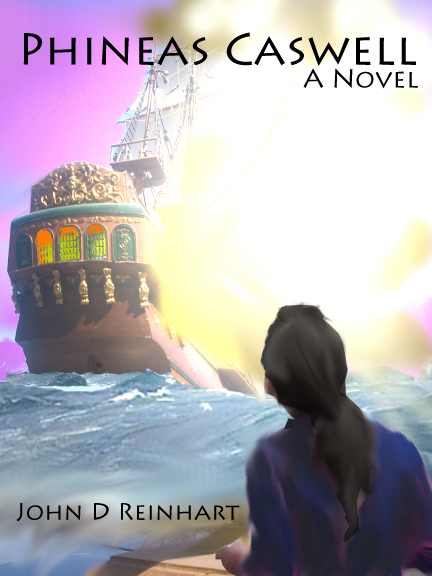
Elevator-Speech Dustcover Marketing

Marigolds End Fin

Don’t you hate those people who sum up their lives in, like, fifteen seconds? What do I do? Well, after I graduated with my MBA from Dogsnorton University, I became the sales manager for Incredible Products, the premier manufacturer of sodium-hydroxide based whisk-broom filaments with offices here and in seventeen other countries. Perhaps you should look into purchasing sodium-hyrdoxide whisk-broom fliaments. Your first thought: don’t these elevator doors ever open?

On the one hand, it’s nice to know what that person is all about. On the other, an elevator pitch invariably leaves you standing there saying “uh, well, huh, how about that?”

Sadly, this must become you. Wait, don’t go! …well, go if you must. But hurry back.

The fellow making his elevator speech to you is showing you a sign, paving your road, mentoring you, yes, you. Instead of muttering “you’re ticking me off, Phil,” you should take a mental note. Use a pencil if you have to.

This person is showing you how to market your book. He’s not exactly granting you permission to be annoying and mono-focused, but he is giving you a great example of how to sell. His elevator speech is guiding you in creating your dustcover speech.

When you buy a book, you don’t just read the front cover. You flip it over and read the paragraph on the back of the dustcover to see if the book has more than just a cool picture to recommend it. That guy’s elevator speech is his dustcover paragraph.

Here are two dustcover paragraphs on my book, MARIGOLD’S END:

The deep blue sea has haunted and hunted twelve-year-old bookbinder’s apprentice Phineas Caswell ever since it took away his best friend and his father. Now, shanghaied aboard his uncle’s ship, the Kathryn B along with his new-found friends Louise and Taylor, he must face pirates, storms, and the secret of nations as he learns the meaning of trust and the value of responsibility.

 …and…

Everything happens to twelve-year-old bookbinder’s apprentice Phineas Caswell: his father and best friend are taken by the sea, he’s beset by bullies, and he’s dragged off to sea by his uncle. But, after learning the ways of sailors, after battling ruthless pirates, facing storms, and even determining the fate of nations, he realizes that life is not what happens to you, but what you make it.

So. Which book would you buy? – I’m sorry, “neither” is not a valid option. I’m still trying to decide which of these best describes not just the story, but the style of the book. Like the elevator speech, how you say what you say says what you need to say, too. Well, I say!

The second book sounds like more fun, but the first book might teach you more. I haven’t figured out which one I like yet – your input would be appreciated before you leave the elevator.

So, go out there and practice your dustcover speech. Who knows? Someday you might be on an elevator, and someone might ask what you do. You turn to them and say “Everything happens to twelve-year-old bookbinder’s apprentice Phineas…”

Don’t these doors ever open?

Thank You, Mister Gates

Photo: designapplause.com

Oh, Bill… whatever would we have done without you? Can you imagine tapping out a novel on an IBM Selectric? Or on a rusty old Underwood? Or, gasp, scrawling it out longhand? That Dickens, huh? Now there is dedication!

When you tippy-tap your messages out on your cell phone, you don’t use words like ululate, or hypertension, or Zoroastrianism. Too tough to tippy-tap out on that tiny keyboard. Yet Mr. Dickens scrawled out deliciously delightful words longhand. In truth, most people find it easier to block print letters than to try to spell on those itty-bitty keys. Someone, probably aliens, must be laughing their dang-fool heads off – look what I got the humans to do!

In Phineas Caswell’s world, the wind she blows us aback, and we can sail forward no more. We brace the yards around to catch the wind. We loose the heads’ls. We work the rudder and bring her head around to pick up the breeze. We change tack, gather speed, and off we go.

Mr. Gates’ spell-checker has finished MARIGOLD’S END, something few humans have yet to do.   The rough-and-tumble Englishmen in this book all drop their aiches, as in “‘ow was I to know?” And Louise, she is French, and she drops ‘er aiches, and she uses French words. And Red Suarez espeaks Espanish…Ay, caramba! But, for all that, the spell checker found out those embarrassing oopsies we try to hard to avoid. Next comes a grammar checker.

Software can never replace the human eyeball and skill set and judgment, but it can certainly point you towards questionable work.

So, thank you, Mr. Gates. Your PC has revolutionized the world, and your spell checker has brought a change of tack to an otherwise stalled project. ‘ats off to ye, lad!

De-Energizing Anti-Inertia

Photo: HowWeDrive.com

Time rolls like a jelly-roll, right down the hill with the biological waste-matter, for we all know poop rolls down hill. That’s why your boss can give you dreadful assignments with such cheerful abandon, because poop lands on the desks of bosses with the express goal of rolling down the hill to your desk. If you are a boss, good on ya, mate, because you can roll your poop to the next level below. But I digress.

Time and energy are inextricably intertwined. Don’t think so? Why don’t you drive at 85 mph down the interstate when you’ve got six hours to get there…unless you are one of THOSE, who can’t drive 55… was that Sammy Hagar? Wasn’t he horrible? Or was that Hagar the Horrible, who drove too fast in the… but I digress.

What stands between you and your finished work – and by finished I don’t mean lookee there, Slim, I rot me a boook! – I mean a finished and produced piece that, if not published, is well down that road. In fact, let’s take it a half-mile farther down the road and say your work is not finished until it is published, and easily accessible by the world at large.

Wow. That’s a big goal. You took the time and heart and effort to write your book, didn’t you? Good on ya, mate! That’s your heart and your art, and, even though we tell our friends and admiring toadies that it was tons of work, you know in your artistic heart that it was fun. Go ahead, admit it. We probably won’t tell.

There was so much inertia to get the book done – day after tedious day (wink) of writing to tell the story, get those characters’ voices out there- be free, my creepy inner friends – with a single goal in mind: The End.

Publishing it. We-heh-heh-heh-ell, now, that’s just a whole new kettle of friskies, in’it? How do you do it? My proofreader moved on before he finished my book – well worth the nothing I was paying him, I say. An editor? An EDITOR? Those cost around a thousand bucks, my ramen-eating friend. And then, say we finally get the thing proofed and plop down half of the house payment and get it edited: crickets.

I came of age in the business world – you probably did, too. We know how to get things done, you and I. Mimeograph this, would you? Did you order more ribbons for the Selectric?   Can you smell the ditto machine? Publishing… oy, now, that’s going to use our business acumen, and other parts of the egg.

All the inertia is lost. A wide set of skid marks veer off the shoulder and into the bushes on the other side of the ditch. Maybe it’s off the road, or maybe it’s running down some hidden lane only the driver knows. Whichever way it’s going, it aint towards success.

The hardest part of this book-writing exercise is the now, right here. The thing is done, but there is nowhere to go with it. I’ll let you know if I get out of the bushes.

Vile Betrayer Marketing Guru

963CLE_Richard_Burton_025

Back in the good old days, before color TV, rulers declared themselves despots, and tossed out anybody who didn’t agree with them. Those disagreers were labeled “vile betrayer”, and, boom, off they went to the desert on good days, off went their heads on bad.

“Be gone, vile betrayer,” was a pretty common phrase, back in the good old nasty despot days, so I’m told.

In marketing your book, you get to be a despot – a marketing despot. It’s a cool title, like those honorary doctorate degrees that colleges hand out to folks who chip in a bunch of money to build a new teacher’s lounge with a gymnasium attached. Except that this title has power to it.

For one thing, you can brand as vile betrayers those people who tell you that you should be writing with crayons. Be gone, vile betrayer. Or those who tell you they’ve read better material on the artificial butter tub. Be gone, vile betrayer. Or those who just simply tick you off – you there, with the white socks and Birkenstocks – you are worse than a vile betrayer. Be oh so gone.

As the marketing despot of your book, you have to have an iron will – or an iron George if Will isn’t around – to keep the success of your book foremost in your mind, in front of the windmills. You must cast out as non-believers those who don’t believe in your success, because, well, shucks, they’re non-believers – I guess that just sort of follows.

Why must you be so iron-willed (or Georged) despotic? Two answers:

  1. You must be iron willed because you, and only you, are the champion of your book. If not you, whom?
  2. You must be iron willed because faith is a tentative and fragile thing. And, really, all you have is faith that your book is marketable, is fantastic, and is something truly special. That it is your gift to the world.

The marketing guru chosen for MARIGOLD’S END turned out to be a vile betrayer. A non-believer. A nay-sayer. A neer-do-well-cad. A nervous Nellie. Be gone, vile betrayer, and take your encyclopedia-selling mindset with you. Be thankful you’re not banished to… to… well, banished! Be gone!

This is your chance to be the ruler you’ve always known you should be. YOU can take your book to stellar heights. YOU can build a literary empire. YOU could RULE the WORLD!!!

Or, maybe you should just concentrate on selling your book.

Yeah. Probably that.

Hissy-Fit Marketing

Petals of Joy
Image: PetalsofJoy.org

Nothing beats a good hissy-fit. You know the kind, where you pull your hair and stomp your feet and get so red in the face people think you’re a thermometer? That’s a really effective way to scare off bears and stray pussycats. I tried it at the office… not so effective there. I guess I can sort of kiss that raise goodbye.

But a wild hissy-fit might just be the thing that puts your book over the top. What would happen if, like, you started getting into the world’s grille about something – racism, climate change, dirty diapers, you get the drift – and made some sort of a big hissy-fit. Your fit gets on YouTube, you go viral, and, oh, hey, you also wrote a novel that now we all have to read because, goodness, what a vibrant person you are!

It could work.

Sadly, if you threw a hissy-fit over something really nice, like the West African success against ebola, you wouldn’t get any coverage at all because the world doesn’t work that way.

Sadly, if you threw a hissy-fit over the nastygram items listed above, you might get branded as a tantrummy sort of bozo, because that is the way the world works. Seriously, who wants to read a book written by a bozo, unless you are the REAL Bozo, and then, hey, that might be kind of cool. A book on clowns by the master clown himself – you could make it really scary…

Step One in the Gorilla Marketing Plan is to avoid Hissy-Fit Marketing (HFM), because it only garners negative attention. I get enough of that at work.

Step Two is to make things big, which is sort of a parallel to HFM. Make things big – broadcast yourself. Spread yourself out. Do LOTS of stuff, and tie it all together. Yes, it takes a little effort, which is anti-gorilla, but it simply has to pay off.

You are publishing your book online, right? What’s the magic word there? Nope, not bozo. It’s online, bozo. Search engines and crawlers and robots troll the WWW every single second, making links between this and that, him and her, it and, well, it. The more connections you have, the bigger you are.

You don’t stop dancing with the 600 pound gorilla when you’re tired – you stop when he’s tired. Dolly Parton wears those outrageous wigs to make her short little self not so much. Say what you will about the other parts of her, at least the wigs make her look taller.

So, no on the hissy-fit, yes on the broadcasting yourself all over the WWW.

If that doesn’t work, well, then, ding-dang it! What THE HECK IS GOING ON HERE??? WHATSA MATTER WITH THE DING-DANG STINKING WORLD

Gorilla Marketing  

Marketing your work is kind of like having kids – there’s a fun ton of work to be done before the happy bundle of joy… sort of … well I guess it’s really just a lot of work. But, like raising kids, it can be totally nerve-wracking. You’ve got decisions to make, and, most often, no one off of whom to bounce them.

Guerrilla marketing is smart, slick, creative marketing that takes advantage of niches and opportunities that present themselves. It takes a quick and agile mind to spot the chances to promote your product, and a lot of time and focus to jump on them when they pop up.

Gorilla marketing, on the other hand, doesn’t take a lot of time, or energy, and probably doesn’t even work…it’s my own theory. It involves trundling your product out before a lackluster audience – rather like the folks that visited PT Barnum’s circus for the free beer – and hoping that they will somehow generate a degree of interest that will result in million dollar sales. It’s rather like armchair quarterbacking – you don’t do anything and expect amazing results. So far it’s worked for me, in that I’ve done very little and have no results. At all.

But there IS a way to make gorilla marketing work. There is a way to spread your net, ah, yes, the spreading of the net theory, that will open the magic door for you.

Just for the record, the magic door is the one that pops open with a publishing contract for this book plus the next 300 novels and a movie deal for each. Kinda like the Muppets “Standard Rich and Famous Contract”. You might want to practice your signature for that one.

In my effort to act just like a gorilla and market my book, I have enlisted the help of a master ground-roots marketer. And when I say enlisted, I mean pled on bent knee and have yet to receive an answer. Puleeeeze help with my book. Puleeeeeeeeeeeeze….

The plan is secret, but, like a secret you tell a gorilla, soon to be out.

Okay, I’ll spill: if I can get the master marketer on board, he will be the linchpin that makes the whole shebang fire off like fourth of July mint juleps.

The net continues to spread, not from just this blog, but with other avenues that I’ve yet to exploit – oh, it’s coming my friend.

How does it work for you? Developing a growing cadre of readers, albeit only vaguely interested, builds the background for your book. Publish yourself all over the place, and don’t forget to mention your book. Then, find yourself a marketing guru to turn the key, so to speak. They are out there.

If my marketing master turns out to be a guru, I’ll let you know ASAP. And, you probably won’t even have to buy my book, or act like a gorilla.

Tips from a Marketing Guru

marketing-product-jobs

Gosh, that’s a selling title. Sadly, I sort of have the opposite in mind, but you can’t make a headline that says “I Need Tips from a Marketing Guru”, because no non-marketing guru will read your blog. And, although my children believe me to be an ATM, I was sort of hoping to get some advice on the cheap.

Here’s my bass-ackwards marketing plan, which needs serious consideration. WARNING: don’t do as I do, for I don’t know what I’m doing.

In the new world of publishing, the reader chooses the author, not the other way around. One way to build steam for your book is to offer it for free, or at least parts of it, to get it out there in the big old WWW. You build interest, you build potential readership, you build search linkages, yada yada yada.

In the new world of publishing, you must be brave, little Piglet, and put yourself into the market. But you needn’t do it all at once – it might be better to have a little cache of readers behind you. That’s the theory I read somewhere.

In my case, I’m a chicken. In my brave new world, we put chapters out and sort of test the waters. You sort of tentatively do things in tiny fits and starts just in case you’ve done something majorly idiotic. Hey, it could happen.

So, when you have a minute or twenty, if you wouldn’t mind, would you be so kind as to visit my pages and read the first and seventeenth chapters of my recently completed novel? I promise you’ll be entertained. Promise. Pinky-swear.

I also promise to keep you apprised of new happenings in this wacky adventure.

Especially if I hear from a marketing guru!


Afraid of Being Scared

image

Even the bravest fellas fall victim to the heeby-jeebies, don’t they? Now matter how many mummies you’ve faced in closets, doncha think there’s one creepity creep that just plain scares the crackers out of you? I’m sure Cap’n Kirk must have had, like, ten minutes of total flip out when they told him he would have to fistfight the Gorn, didn’t he?

I mean, if said creepity being didn’t exist, wouldn’t you be sort of like Superman, or Evil Kneivel? You’d be, like, bring it on over breakfast, wouldn’t you? Gasoline and cigarettes for lunch? Whawhooof – dang, lookit that fireball! Doesn’t scare me.

It turns out that finishing the book, while difficult, was nothing compared to the next challenge, the real issue, the stay-awake all-nighter of all time. You’re a writer – you know. Having somebody read it. Duh-duh-DUH!!!

There must be ten million what-ifs running through my head…what if they don’t like it…what if I left a bajillion typos…what if they don’t get my hero…what if they put it down and tell me I’m STOOOPID?

The difference between a novelist and someone who says I’ve always wanted to write a book is that the novelist writes it. They face out the evil task and do the deed.

The difference between a novelist and a published author must be this next step of leaping across the yawning chasm of what-ifs and approaching the external reader challenge calmly and professionally. Thank you, sir, may I have another?

It’s not that I haven’t had other readers – one of my daughters actually liked it. The other hasn’t quite gotten around to finishing chapter two. My wife almost finished if, and my sister got well past the middle. Perhaps it’s too long…

So, it’s down to paying a stranger to read it. I’ll give you fifty bucks to read my book…wanna buy a watch?

Maybe they could give me some tips and pointers about the book…except that I am so beyond the tips and pointers phase. That phase was, like, two rewrites ago. This book is the bomb, the deal, the cat’s sleeping gear.
This one is better, brighter, more connected. This one is good.

Soooo, what would a reader do? Find my errors, I guess. Tell me they didn’t get it, I imagine. Probably tell me it’s too long, maybe.

I’m not afraid of the reader. I’m afraid of the rewrite if they don’t like it. Or, should I pull a Captain Kirk and boldly go to publishing?

Do you see? Can you feel the terror? Can you see how hard this part is? This is literally like seriously hard, like trying to land a B-52 on a football field at night during a hurricane hard. Passing a watermelon through your nostril…well, maybe not that hard. But hard!

So, Mr. Knievel, you may have the motorcycle and the cool jacket…wait a minute. That’s just costumery stuff to make us think that you’ re brave, but maybe you have the heebie-jeebies, too. Maybe some things make Superman do a little squirt in his shorts, too. THAT’S why he wears that cape!

There’s no antidote for the heebie-jeebies but to do what you’re supposed to do.

Be brave, little Piglet.

Oh, Owl, I’m afraid I’m scared!

Stick a Fork in Me

Marigolds-End-Done

Done like a ton of finished, like a taco casserole in a thousand degree oven I am done, done as the day is long, done. Finito. Wrapped it up. Did the deal, finished across the line with a big ol’ smile across my face. DONE!

72,584 words of pathos, humor, and history all wrapped up in a nice little package featuring my friend Phineas, who gives up, gets angry, blows his top, cries, and finds his father, all the while fighting a running battle with the sea. Phin, my boy, carped at by the ship’s sailing master, driven to near distraction by the French king’s granddaughter, and called every harsh, rude, hurtful name in the book, tries to find his way, figure out how he got thrown into the seagoing gulag that is the Kathryn B.

Not a spoiler alert, not here – you’ll have to read for yourself how this one turns out.

In fact, my next step is to find a reader. Someone who can be honest with me, but someone who knows a thing or two or three about the Young Adult Fiction business, what they’re looking for, what will float, what will sink like a stinking stone.

Really, my next stop is on the publishing wagon. Get this monster read by someone with brains, rework it to their thoughts, and then Wordsmash it or Yahoo it or Amazon it or something.

Really, the next step, which starts tomorrow, is to think about marketing. Building the old platformaroony that will carry this book into the bazillion dollar sales range.

You, my friend, need not worry. I will not try to sell you a book. You are my only reader, and I thank you for sticking with me. Stay with me, sail with me over the horizon of the publishing adventure. I promise to tell you everything. The rewards could be great.

For now, the goal is to simply enjoy 72,584 words of doneness. Finitoness. Ah, sweet victory, thy name is Phineas.


The End of the World

It could all be whipped away from us in the very blink of an eye, this trusty old world of ours. I might not even be able to finish this post because the dumb old world ending thing might happen fir… st. If you’re a fan of Dr. Who, it almost happens every week.

On a totally different subject, my wife and I were talking about absolute cold… well, I was babbled about it and she was very nice… absolute cold. So cold that all of the heat is drawn out of the molecules, down to the quarks and their cousins falling to infinitesimally small particles of nothing, but not falling because there is no energy. No energy, no heat, but absolute cold. Maybe that’s the end of the world.

Or, maybe it happened today, when my daughter told me that maybe I should reconsider my book – you have a good idea, there, but maybe you should write it this way. Excuse me? Excuse me? Excuuuuuuuuse me? You’re my kid. You’re supposed to think it’s better than Gone with the Wind, for crying out loud. Maybe it would be better if…?

It’s not the end of the world, but, you’re a writer, you know how it feels.

This afternoon was supposed to be a nice editing session, powering through the last quarter of the book, reworking working sentences into elegant, beautiful descriptions of the human condition.

He pulled the trigger. The pistol exploded in fire and smoke. The pirate swore and ran for the ladder. Lah dee dah dee dah.

Maybe she’s right. Maybe I should sit down and write a book like J.K. Rowling, or Stephen King.   Yes, perhaps I’ll try that. Maybe I’ll just write version seven of this stupid book off as a whim, one that’s lasted a good six years, and do something else. I hear that wallpaper’s easy to hang. Taco Bell’s hiring.

It’s not the end of the world. But some simple conversations can cool your heart until the quarks cease their tiny orbits.

Now, I’m not complaining. I am sharing this with you, dear writer, because the day may come when a loved one delivers to you the blow that ends your world, your entire universe.

But you know that you’re good – you just have to hold onto that, because you ARE good, dear writer. And tomorrow the sun will come up and the absolute zero in your heart will thaw, and your muons will start their crazy dance, and life will go on.

And you’ll think about what you’ve been told, and you’ll put it into the salad bar of your mind, right next to the windmills, and continue your work.

See? It wasn’t the end of the world.

Creepy Little Voices

You know the line of jokes: the little voices made me do it, I only do what the little voices tell me, how do I know you are not just another little voice, etc.

So, rattle me this, Bidman: you’re a writer, right? You write dialog, right? In that dialog, your characters say stuff that sometimes surprises even you, right? So, like, where do those words come from?

Is not the character you’ve created exactly like a little voice in your head? Consider:

Bob:     You don’t even know my last name…

 Julio:   But I could, man! I’m telling you, we could be famous.

 Bob:     Julio, I don’t want the kind of fame you’re suggesting.

 Julio:   Aw, come on, Bob. At least think about it.

I just shot that little gem right there out of my head, unconsidered, unrehearsed, and un-edited. I know, I know, hold the applause.

So, like, where did it come from? The names popped up as I typed them, and the dialog followed along. In the first line I thought Bob might be talking to a girl, and I almost typed   Julia, but I didn’t like Bob’s tone. So Julio is proposing something that will make them famous, but Bob doesn’t think it’s a good idea. Boy, how much story can you get out of just four lines?

In the rule book for regular folks, How to Be a Regular Person, by Ima Sandwich, it says that the little voices in your head are bad. They are destructive, and not real.

But, if you write down what the little voices say, you could be famous. And not for, like, blowing up dams and stuff, but good things, like writing fine, fine art.

Alas, my little voices aren’t good enough for fine art. They come as the simple regurgitation of all the hundreds of thousands of lines of dialog and conversation I’ve read and heard over the last half-century.

But isn’t that what writing really is? Don’t you mish-mosh ideas together and come up with characters for your novel? Doesn’t Cyrus say something that sounds like something you’ve heard before? Or Ethel? Rodney? Ralf? Aren’t they kind of barfing up old conversations in new, and sometimes surprising ways?

An actor memorizes his words, but the feelings behind them come from deep inside him. He applies his five or so decades of experience to the character he portrays, even though he’s never had to face the character’s exact circumstances.

Dollars to donuts says that you are doing the same thing with your mightier-than-the-sword word processor. Especially if you write horror, and your characters say the creepy stuff that the media tells is what the little voices say.

The answer is probably that, because you don’t act on the little voices, you’re not crackers.

But, tell me you haven’t awakened in the wee small hours with a perfect line in your head: Jackson says “well, it looks like rain to me.”

Thank you, little voices.

Alert: Monster in the Cupboard (not Closet)

If you write a lot, but don’t get feedback, yours, my friend, is a lonely game. You toil away, fitting together the pieces of your written puzzle like so much cheese at the mousetrap factory, when, one day, the monster grabs you.

I am a miserable novelist. I just realized it. Not misery like in hey lady, that was my ANKLE thank you very much, but in misery as in whoa, dude, do you, like, know any words? How many ways can you say “said” without sounding moronic, he intoned.   Whimpered, whispered, hissed, murmured, muttered, uttered, grunted, yelled, roared, bellowed. Well, that’s it for me.

And that sentence structure, what’s up with that? He opened the door and looked inside as the tree fell through the neighbor’s roof. He drove the car and whistled a happy tune as the rain pattered joyfully through the open sunroof. He wrote the post and congratulated himself on at least writing something as he bored his reader (bless you, whoever you are) to tears. Subject verb the noun clause and verb a noun clause as noun verb preposition noun clause. Booooooooooooooring.

Maybe it’s because, as a technical writer, my is writing is limited to “attach the motor mount to the casting with (2) socket head cap screws.” It isn’t romance, but it pays the bills. While it’s easy to write “carefully place the hinged device against the casting and thread the screws, one-by-one, into the small holes”, my editor would hand it back to me faster than a greased bowling ball on Crisco Boulevard.

In truth, there’s something else going on.

You’re a writer – I ask you: who is your worst critic?  Go ahead and think, we’ll wait… do you need to make a phone call?

Of course it’s YOU, you ninny!

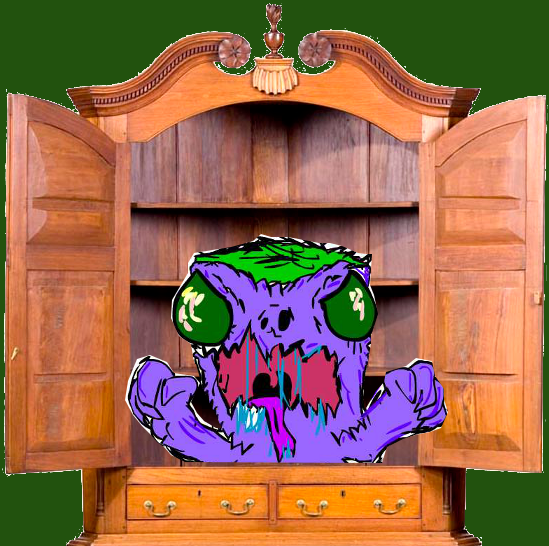
Except not really you, but the monster in the cupboard. I was going to say monster in the closet, but that now leads to coming out of the closet, which has a whole different meaning than what I was shooting for, and oh, now everything’s all tangled up. One moment, please…

So, the monster in the cupboard is your own self-doubt, self-fear and self-loathing (if you’re in Las Vegas), trying to sell you a bill of goods. I know it’s just a bill of goods because my daughter told me today that she likes my book better than Hunger Games. She might be bucking for extra allowance, but I’ll take what I can get!

The monster lives in the cupboard of your mind, next to the windmills, and sees the absolute worst in everything that you do. And it loves, Loves, LOVES to point it out to you.

Part of the monster is good. I mean, it’s the only one who makes you go back and polish that sentence once more – you know it needed it. It’s the only one who makes you question whether this book really needs this scene.

But the monster is also baaaaad, baaaad, because it can convince you that you are a miserable writer. You know it isn’t true, but the monster seems so authentic, so… so… so right.

You know that you are the monster – your parents said you were a little one when you were a kid – which means you can stop being the monster.

The next time you flop into a heap in front of your word processor, crying because you just aren’t good enough to write this book, and you really should not have quit your day job, and how could you have EVER thought that you could do this…well, you can just stop it with the Mr. Nastypants routine.

Nobody’s buying it, and you’re just being a whiney crybaby because you listened to the monster in the cupboard.

Shut the cupboard and get back to work.

59,534 Words

59534

59,534 is a pretty big number. Way bigger than six, even fifty-six. It’s so big that, if you wrote it out in word form, well, you couldn’t put a postage stamp on it. Although, really, what with email, that postage stamp business is kinda getting old school. I mean, really?

But that’s not the point. The point is that 59,534 is a milestone – no, not a millstone, although one could make the argument that if you never finish anything, but simply count numbers of words, the writing of one’s novel could become the thing itself, and the poor novel would never be finished because really we’re just churning out words to be counted. Sad, sad.

But that’s not the point. The point is that I set out to rewrite this novel of mine to 60,000 words. I’m still a good 15,000 words from the end of the rewrite and I’ve hit 59,534. On the one hand you could say, gee whiz, you bozo, you didn’t hit the mark. But, on the other hand, you could say, dude, you like, totally obliterated the milestone. Shredded it. Like a cheap taco, you know?

Oh, and these are good words. Full of passion and verve, with only one passage so far that my daughter has pointed out as dullsville. I’m headed over to dullsville next week, taking the slow bus, to fix up things there. As long as she stays awake I’m good.

But that’s not the point. The point is that, as writers, particularly budding novelists – oh, how I hate that word “budding”. Makes it sounds like all you need is raindrops and sunshine and lovely windy days and, badda boom, etc., look mom, I produced a novel! Bud this. Novels are nothing but the results of blood sweat and tears, and more than a lot of all three of them except the blood part. They are hard, hard work that, even though it’s fun to write and when you’re in the moment there is nothing sweeter than your characters telling you what to say and what they see and you are really there, really in that place, the sweat dripping off your nose because the steam engine is just six inches away, and the smell of the grease fills your nostrils, and the bossman keeps bellowing “shovel, you lazy dogs!”, they are angst-filled folios cobbled together from hopes and dreams and genuine, genuine art.

But that’s not the point. The point is this: although nobody reads my stuff – if your are reading this, be a pal and turn out the light before you go – I am celebrating almost hitting my goal of 60,000 words. Yaay me!

Tomorrow I’ll cross the 60,000 words no prob. But by then the goal will have shifted to completion. Completion of the 7th and best rewrite of what started out, so long ago, as a simple short story meant to describe a warm day. I guess that’s the point, isn’t it?

Get Uber-Rich Overnight by Writing Online

Writing online is tough. Not wrestling with a live python in your underwear tough, or figuring out how a python got in your underwear in the first place tough, but pretty difficult just the same. You write some wonderful, brilliant, exquisite piece that could not possibly be more perfect, you send it off to the publishing site, and you wait. And you wait.

If the site was Associated Content, you knew that a board of editors, or some guy sitting in his pajamas horking down a tuna fish sandwich, or a piece of software that simulated same, scrutinized your work to see if it was worth a nickel in SEO. Son of a cricket, that could take a week! At the end of that agonizing, just-beat-me-in-the­-head-with-a-frozen-pizza wait, you got an offer, maybe $1.06, maybe some amazing amount, like $14.23. Martha, we’re buying a boat!

If the site was Triond, dude, you could be published within, like ten minutes. The money was not an issue – gee, son, those are pretty small wages… it’s okay, Dad. I’m gonna publish a gazillion of ‘em! – but you were right out there in the big old world, and there was always the possibility you, or your work, could go viral.

In those days, which seem like maybe twenty years ago but was in fact just last year – old school is so, like, last week – that was how you did it. But the year went by, the rock-out died, Susie went and left me for some other guy, and writing online got tougher. How can this be, you ask… didn’t Al Gore invent the Internet with a capital I to make life easier?

Scratchin’ for online work, I hooked up with Writers Access, which is pretty cool. Real, live editors look at the stuff they challenge you to write – here, describe a filing cabinet in 150 words, be chatty, professional, and make it sound interesting. Oh, and don’t use the word “filing” – nobody does that anymore – and we’ll toss some shekels into your PayPal. Some of their challenges are quite that – we’d like you to create a web page devoted to offroad motorcycling – and they’ll pay you $50 to do it. I go there every now and again.

But, for the creative soul, the Internet with a capital I should be a place where you can set your work free, just like Free Willy and Butterflies are Free, and Schindler’s List… you get the idea. So you start your own site.

Crickets.

Dude, you need content. So you write your brains out and publish it yourself – yeah, that looks pretty good – and you buy your own URL and get a hosting plan. Here I am!

Crickets.

Maybe, and this is huge maybe to which I am not willing to commit, maybe the days of schlock are over. Maybe you can’t just pen what you want and push it out to the greedy masses who are waiting to devour it, because maybe the masses never really did that in the first place.

Maybe your work has to be good. Maybe it has to be better than good – downright the best work you’ve ever done. And maybe you submit it to legitimate sites, and there are dozens, that pride themselves on publishing excellent, well-wrought work.

Fade out crickets, fade in the sound of thoughtful, interested people that select a very narrow band of input, reading your work and thinking, yes, thinking about it.

Wow. That’s even better than $14.23 upfront.

I think I’m discovering that there is no overnight, get uber-rich uber-quick, slick Willy scheme to make a fortune as a writer. The secret is good work, excellent, hard work.

Rats.

Make Yourself A Movie Trailer

Imagine that your novel is a major motion picture…it’s not that hard, is it? This movie has fantastic actors, a brilliant script, breathtaking cinematography: it’s a stunner.

Now imagine the movie trailer…you’re sitting in the theater trying to ignore that kid three seats away that keeps bellowing “mmmwaaa” like a drunk lamb (it turns out that they like beer…who knew?), and alternately slipping on spilled soda and sticking on some tacky substance that releases a regular waft of tutti-frutti. The theater darkens…the room falls silent.

“Mmmmwaaaaa!”

Except for that.

An image flickers on the screen. You gasp, dude, it’s your trailer…

“In a world gone mad…one man…one woman…one deli sandwich (extra pickle-lily no on the jalapenos)…from the people that brought you…”

The theater goes silent in anticipation.

“Mmmmwaaaaaa!”

Except for that.

That’s what your book is like if your are not…don’t have a…haven’t written a…

It probably never happened in history that some writer just sorta wrapped up a manuscript and dropped it off at a publisher’s house and went to bed to wake up the next day to find that he was a phenom and the Daily Enquirer had already saved column 1, page 1 for him. Of course not…the Enquirer is a tabloid.

All that to say that, mega publisher or no, don’t force your first book to stand on its own. Start today, right now…good heavens, you mean you haven’t started yet?!?…to build a name for yourself, make a coherent framework in your career into which the book will fit. It doesn’t have to be a huge name…the book will do that if it’s good…but it should enough oomph to fill out the dust jacket.

“Author John Reinhart lives in Ventura, CA with three dogs, four cats, five rabbits, and the ocasional sheep. He has a nifty collection of rubber bands and really likes padded socks. This is is his first novel.”

In the trailer, “from the author of nothing prior to this” just doesn’t fly. “From the publisher of Hairball dot com…” now that has something going for it.

In the good old days of Harcourt Brace, they took the nifty picture of you at the typewriter smoking a cigarette and looking authorly, and did all that behind-the-scenes Madmen stuff because they had invested a bunch of money in you.

The money’s gone, which means you, my dear, must do the Madmen stuff yourself.

“In a world gone mad…one man…one woman…one clever backstory to get you to buy my book…”

“Mmmmmwaaaaaa!”

Beating the Biscuits out of the Bears

Snarling Bear

What are you supposed to do when you’re hiking along a trail, happy as a lark in a predator-free environment, when, son of a biscuit, there’s a bear, like, right there, growling and frothing and pawing the ground like a bull, although he’s only seen those on TV because we know that bulls and bears only get together in the stock market, ready to have you, yes you, for lunch?

You don’t run, right? Run, and, bango, the bear’s looking for bread because he’s ready for a you-sandwich. No, no, no. You make yourself look much bigger than you really are, right? You need to suddenly grow six inches and six sizes and froth at your mouth and shake your head like, dude, there is something really wrong with you. If you do that, chances are pretty good that the bear will remember that he’s on one of those low-carb diets, and really, you look a little fluffy, like maybe you’re stuffed with mayonnaise, and well, gee, maybe he left the kids on the stove and, maybe some other time, huh?

In the world of online writing, the bear is the vast void of the Internet, the inescapable sea of voices, writers just like you, well, almost a lot like you, sort of, that yell dude, it’s me! Read my stuff! Just like the frothing fellow on the trail, this bear eats you – well, your work – and away it goes, and you find yourself looking down the path wondering how come you worked so hard but got nothing but bear-bite marks on your keester. And, just like the trail-growler’s lunch, you die, because, as writers, we all die when our work goes nowhere.

So, you gotta be big…bigger than big. You have to be a phenom. And maybe you’re just a tiny little phenom, like not so big a phenom that we read about you in the tabloids at the supermarket – really? Are you the batchild? – but big enough to have your voice heard over the moaning, bad-writing multitudes mewling for attention. Because you’re a better writer than that.

Bears live in creepy caves that most often have a boatload of icky spiderwebs. While the world wide web has nothing to do with bears, although, of course you and I know that it does, it, too, hangs out on servers, which are like creepy, sort of icky boxes of hot metal and plastic. But I digress. Don’t let that keep you from climbing across the world wide web like a thousand-legged spider, because that’s how it really, really works: all of the silken webs tie together, and you can use ‘em to catch more than just flies.

When you write for a publisher, look for ways to get the same piece published at other sites. Start your own site. Start your own blog. Publish the same piece in as many places as you can think of. Spread everything you write just as far as your imagination can take you. Each piece you write then becomes a web, and you become the spider at the middle.

The robots that look for similarities across the web see you, yes, you. Your name rises in the search rankings. Eventually, and this is no joke, you become someone. Yours is not the mewling voice, not the blather of the multitudes. Yours is the voice of authority.

Are you famous? Well, somewhat.

Because yours is the voice that beat the biscuits out of the bear.

Phineas Begins Anew

Grayscale

I’ve added the first chapter of my most recent rewrite of Phineas Caswell, the novel, variously called Marigold’s End, Phineas Caswell, The Journal of Phineas Caswell, and The Treasure of the Tres Hermanas. Those are the ones that come to mind – I guarantee there are more.

My brother told me a story once about an old man who carved elaborate, beautiful wooden doors. He would sit at them day after day, whittling, cutting, shaping, without end. Someone asked when he knew a door was done. His answer was simple: “when someone takes it away from me.”

Yuck.

Phineas, the novel, is headed for online publishing: I’ve been told precisely 753 times that this story doesn’t lend itself to the young-adult publishing model. I was actually told that by the head editor at Disney – yes, that Disney.  I believe that one was the Journal of Phineas Caswell

Suzanne, the love of my life and my editor (all the same person), prompted this last rewrite. And believe me, this is the last one – I’ve twisted this poor kid so many ways from Sunday his name may as well be Larry.  Reach inside, she suggested, but not for what you know, what you feel.

Beyond queasy, I didn’t know quite what she meant, but eventually figured it out.

Chapter One, over on the page called Phineas the Novel, comes from down inside. It comes from a place of regret, of something lost than can never be regained. It’s not a generated feeling –  I have some regrets, believe you me. I sold that hillside, ocean-view house for $175k when today you can’t  touch it for under two million… just kidding (although, I did sell that house, and I do regret not having two million bucks).

My daughter cried when she read it and said “you can’t start a children’s story this way.”

Tells me we’re on to something!

Do me a favor and visit the Phineas the Novel page and let me know what you think.

Thanks!


Confessions of a Paid Churnalist

DSC_1987

I’ll admit it: the money was dreadful. Some months, most months, I was lucky when I made a dollar. A buck, a petty king’s ransom, for my heroic writing efforts. Pieces carefully crafted, worked, worked again, researched, pieced together from a number of sources, and for what… in the Content Farming heyday perhaps $15 – not bad for a 500 word essay.  Now, no upfront pay, but perhaps $0.83 in royalties when someone stumbles across it.

I was a big wheel at Triond, an online content farm that pumped my work out to dozens of online sites. Yes, they paid me, and it was exciting. I have well over 100,000 reads on my work now, all of it the produce of farms designed to drive online advertising results.  But the big wheel at Triond has ground to a halt, as Triond itself slows down, its servers somehow tangled up in an unending maze of tumbling wait icons.

Triond, Associated Content/ Yahoo Voices, Factoidz, the places where I could write and find ready publishing, gone. The era of the free-form content farm has passed.

In fact, it’s not a surprise that the era of free-from content farming has passed: it was sort of a scam. Triond is still going, but their site is seriously dysfunctional. All of these sites pursued the flawed business idea of flooding search engines with search-term rich content in an effort to lure advertising dollars to them.  The scam consisted of using robots to lure robots to generate money, and it worked, sort of. The advertising robots got smart and stopped falling for the crop of search-term articles from the content farmers, and the money stopped flowing.

I did good work. I was careful with my facts and figures, and I traced my sources. And I turned a blind eye to the dreadful writing of my starry-eyed colleagues, encouraging them, helpfully pointing out places one might say “we weren’t the ones” in the place of “we wasn’t…”.

In the end, though, it was churnalism – the rehashing of press releases into news. I found a lot of really good press releases, and really did develop stories, but, alas, it was still based in someone’s press release.

If you have read this far, perhaps you, too, thought you were the one who was going to make it big in online writing. Man, I had over 200 articles going at once. At once!

Good dreams die hard. Maybe the era of free-form content farming has passed. But maybe that tricky old Internet will come up with a new way for hard working churnalists to make a buck!

A Paying Venue

Image: WriterAccess.com

Here’s good way to make a buck as a freelance writer. You know that writing opportunities abound on the Web – you can write all day long, on virtually any subject, and find a way to publish it. But making a nickel at it… well, that’s a little different.

Writer Access (writeraccess.com) pays you to write copy for their customers. You’ll see from their website that they offer themselves as sort of a writer bank, from which you, Mr. Customer, can hire freelance writers to do your job.  They’ll pay you, o Freelance Writer, a percentage of what they make. That can range anywhere from $1.75 for a 150 word piece of advertising copy up to $37 for a full web page. They pay you within two weeks of their receiving funds from their customer.

You have to qualify as a writer for them by submitting a thorough resume and completing an online questionnaire. Once they accept you, you must complete a really tough Writer’s Test, not designed to wash you out but to rank you among their scadillions of writers.

And they have scadillions of writers. New jobs are posted almost daily. They come in batches from companies seeking writing services. Sometimes the jobs can number in the low hundreds. If you are not diligent and scoop up the jobs right away, they will quickly vanish into the hands of other, more aggressive writers.

Writing topics are assigned by the company seeking the job, and range from monster truck suspensions to things you need for your new apartment to medical supplies.

Once your piece is written, it is reviewed by Writer Access’s editors to make sure it hits the customer’s target. The customer then reviews it and either accepts it or turns it back with a request for revision. Once it’s all done, the company accepts the piece and pays Writer Access, and Writer Access pays your PayPal account. It’s smooth, engaging, and pays pretty well.

The key is to visit their site often, and dive on jobs the minute they appear. Some may be technically beyond you, such a blog post discussing the best way to use a certain kind of vacuum pump, but others, such as advertising copy for a table lamp, might fit perfectly.

Don’t expect to pay your rent through Writer Access, because jobs come and go, but make them just one of your resources and have fun.

You will be amazed at what you can do!


Back on Examiner Again

Back on Examiner!
Back on Examiner!

Writing online for certain publishers is always a great rush. I enjoy watching the number spiral up at ScienceRay.com whenever there’s a chance to post an exoplanet piece. And getting published at Examiner.com is always a delight.

Examiner does a great job of making you feel like a part of their writing team. You get the job title of “Examiner” for whatever city you live in – I am the Santa Barbara NASA Examiner. At $.12 in earnings, the title hasn’t quite justified the expense of business cards, but it is nice to have one. Here’s the latest of my pieces published by them, the first in three years!: http://www.examiner.com/article/nasa-announces-forum-on-manned-missions-to-mars-1

The world for writers has changed, and will remain so just as long as the Internet stays free. When access to the world wide web is taxed, this wonderful opportunity to share your thoughts with the world will be lost.

On a slightly different note, the folks doing all that exoplanetary research have made an outstanding discovery: an Earth-sized, rocky-core planet orbiting another sun. You can find more about it here: http://scienceray.com/astronomy/earth-sized-exoplanet-discovered/


The Laughtrack is Not Dead

Edie and Eddie

You remember those sitcoms from the 60’s and 70’s, don’t you? The ones with the canned laughter, like Bewitched and Gilligan’s Island?

Try out this experiment and see what you think… watch Edie and Eddie Open House, here:  https://www.youtube.com/watch?v=RCNUVClEp8w, and then watch Edie and Eddie New House, here: http://youtu.be/iQWdxj3pgKE.

Which one did you like better? The laughtrack comes from a pantomime video made by a Spanish fellow, and has just enough audience ambiance to make you think that maybe, maybe, someone really is watching.

In theory, you are supposed to like the laughtrack version better, because someone else is laughing. I’ll let you be the judge of that.

Don’t judge the quality of the video: it’s crummy. The point of the exercise is the audio, not the video. Concentrate, would you?

Let me know what you think!

[polldaddy poll=7981700]

What’s in a Name?

Marigolds End

While we write our novels one at a time, we writers have to think about each book as part of an enterprise. How many books are in the Harry Potter series? Septimus Prime? The Name of this Book is a Secret? If a publisher is going to look at you, of course they’ll look at your talent as a writer, and at the ideas in your book. But they are looking beyond it, too. Is this an idea that has legs? Will there be more than just this one book? Do we want to invest our publishing machinery on a single book?

To that end, my book, PHINEAS CASWELL, is now titled MARIGOLD’S END. It ties in with the story, has a dramatic hook, and has the legs to be part of a series, which it will be. Number one in a series.

The energy behind the new title bled over into a new cover, which I think is exciting and intriguing at the same time. Now we’re getting somewhere!

Eliminating Was

007

Writing for the now, writing with action and verve, can be a challenge. Lets’s try that again: it can be tough to write good action sentences. Passive sentences certainly have their place in expressive, contemplative and descriptive passages. But they can spell death for an action scene.

Lothar was waiting behind the door, anxiously clutching the hatchet. VS Lothar anxiously clutched the hatchet on the other side of the door.

The second sentence implies action and shifts the focus to Lothar, where the first sentence describes what was on the other side of the door.

I issued this challenge to myself in the reworking of Phineas : eliminate the word “was”.

To accomplish it, I used Word’s Find feature to examine each instance of the word and come up with a better alternative. The word absolutely fits in some circumstances, such as in dialog. But, in most cases, a better word choice, and perhaps a more expressive sentence structure, can usually be found. I mean, you can usually find a better word choice!

Was is a pervasive word that can drop an anchor on your action passage.

The Exoplanet Mystery Continues

Image: NASA.gov
Image: NASA.gov

The readership puzzle surrounding exoplanets, those planets that orbit stars other than our own, continues to deepen.

My articles with the word “exoplanet” in their title have an immediate and extensive readership compared to those that do not, even though the article search terms are the same.

Readership numbers at Science Ray, my science article publisher, leap through the roof when an exoplanet piece publishes: my daily readership shot from 150 to 2,200 with this latest piece. The numbers are slowly declining as the piece ages, but the boost in the daily average remains mystifying.

I feel like Butch Cassidy: Who are these guys?

A New Cover for Phineas

Marigold

The world of book publishing has changed with the advent of online publishers like Amazon and Smashwords. Those of us reared in the old school of agent/publisher/bookstore have to rethink our method of distribution.

Part of the online distribution involves attracting potential customers with an attractive, alluring book cover. Traditional book publishers have teams of artists that know what will sell, what will appeal to which audience.

When you shift the publishing burden onto your own shoulders, YOU are that team of artists.

A few caveats: first, and most important – I have every intention of getting this book published through traditional means. My sincerest hope is that one of the Big Five will like it and pick it up and one of these days I’ll be in a Barnes and Noble, and, hey, that’s ME!

Another caveat: I am no graphic artist. I’m a pretty good technical illustrator, but fine art and I are distant cousins at best.

Final caveat: this is not the final cover.

All that being said, the reason I’m presenting this cover here is to show you what can be done cheaply and on the slick. The ship is a 1/72 scale model, The Black Swan, by a Russian company called Zvezda. It’s not quite done yet. In fact, she’s the same ship as in the masthead of this site.

I lifted the ocean from a painting of an American frigate – I don’t think it was in the public domain, but I’m using so little of the painting I think the artist, who is probably long dead, would be able to identify his fine, fine artwork.

Phineas, here with longer hair than in the story, is actually my daughter. The image was lifted out of a shot of her and her mom at the Mission San Gabriel two years ago. I thought the pose was right, and, well, at ten years old, she didn’t have a female shape yet, so she could pass for a boy.

The pieces were all assembled in GIMP, a free image manipulation program available at GIMP.Org.  Once I got the image blended to where I liked it, I exported it as a JPG file. Then I opened the JPG with my old Illustrator 2.o, added the titles (which are in a font called Lithos Pro) and exported the completed file as a PNG.  I remember someone telling me that size is important in graphics, so I sized the PNG at 8 inches tall and 6 inches wide.

So, it’s not the final cover art, but it’s a good first shot. I’m hoping I won’t have to use it or its cousins because a major publisher and their team of artists will take over all of that.

Still, it’s amazing what you can do with a few easy graphic pieces, some software, and a couple of hours.

An Exoplanetary I Told You So

StarTrek-Gorn

The Kepler space telescope recently discovered a planet orbiting not one, but TWO suns. This new exoplanet may not be a very nice place,  but conceptually,  it could be a fascinating place.

Luke Skywalker’s home planet of Tatooine may be in a binary system, which explains why there are two suns in the sky as he woefully ponders his future over the swelling John Williams score in that scene that every guy knows by heart: “the future awaits”.

The “I told you so” comes because I wrote a screenplay a long, long time ago about the beings on a planet that orbited a binary system. Their circumstances were not as wild as those on Keper 413-b, where the seasons change with a frightening unpredictability and speed, but there was one clincher: every few thousand years the icy planet’s orbit took it between the two suns, changing it from an ice ball to a fireball. The resident beings had been modified from simple lizardlike animals into highly intelligent, sensitive beings by consciousless meddling humans. Where before they simply dealt with the stunning climatic change at an atavistic level, now they had to face it with sentience. It was a good story, but a crummy screenplay.

Still, you can ignore the prescience, can you? The farther we explore the universe of exoplanets, the more we will find that our wildest fantasies  could actually be memories!

Crafting a Good Logo is not an Easy Thing

ReinhartHollow

My daughter is raising market rabbits for 4H. Market rabbits? you ask. Yes, rabbits that will go to market to be weighed for their size, their fullness of body, and for their ability to provide good meat. Or, in our case, good looking rabbits that look like they’ll breed plenty of little ones.

To sell the rabbits after the county fair, my wife and I wandered back and forth over a landscape of names for our little rabbit raising empire: Reinhart Ranch? Reinhart Barnes Rabbitry? Barnes Bunnery? Like all good compromises, no one is ecstatic with the final choice, but all agree it has potential: Reinhart Hollow.

My wife is exploring the depths of producing a line of “delicious jams and jellies”, to quote Despicable Me 2. So, where else would you find these delightful comestibles other than the happy farms in Reinhart Hollow. See? It works.

For our logo, pictured above, we worked with what a hollow actually is…I had envisioned a gap between hills, but Suzanne saw it as a tiny place, perhaps a knock in an oak tree. Working with an older version of Adobe Illustrator, we pieced together the oak tree concept in the logo. The font is Juice ITC. Instead of the usual solid line, I tried using one of Illustrator’s artistic brushes for the font. I think the the final version is a chalk line.

We debated back and forth over centered text, right or left justified, box, no box, leaves, no leaves…days of making something so simple come out right.

In the end, a logo says a lot – it just has to be good.

Phineas Caswell, Chapter 16

001

I like this chapter: there’s a lot of imagery and excitement. Most of all, though, I like the way the wind underlines Phineas’ sense of urgency. I hope you enjoy it.  Phineas has gotten away from Red Suarez, Maldonado, and the man in purple, and reunited with Louise and Taylor. Following Louise’s advice, the trio has stowed away on a ship called the Marigold

Chapter 16

Phineas scampered, double quick, up the remainder of the rudder and through the dark hole into the ship itself.

“You made it just in time,” Taylor whispered. “Listen.”

“All hands,” a voice cried out on the deck above their heads. “All hands, prepare to make sail!”

“Make sail?” Phineas whispered in alarm. “Where are they sailing to?”

Read More…

Droppington Place – A New Neighborhood

Droppington

I’ve often wondered, but have been too lazy to explore, the link between the words journey and journalist. Both have the same root word, which means “day” in French.

Root words notwithstanding, this site has taken a most interesting road to get here: Droppington Place.

It began as a blog about a garden railway. My wife and I bought a house that had a working G-scale railway in the backyard. It was pretty cool, but rough, and not very well designed, which made running it with our young kids a bit of a challenge. The kids grew older and lost interest, and dogs and cats and nature all took their toll.

The blog chronicled the restoration of the railway from its semi-buried condition to an operational railroad. Along the way I realized I don’t like G-scale: at 1/18th scale, more or less, it’s too big for my taste. I say more or less, because the actual scale of G-scale is rather ambiguous, ranging from 1/18th to 1/32nd. Give me HO, at a constant 1/87th scale.

The URL for the blog, called  PoolsideRails.com, was devoted to chronicling the conversion of a G-scale garden railway to HO scale. Experts shook their heads and clucked: you can’t do HO outside. Well, it turns our they are correct. I found out that I don’t have the engineering finesse to pull off an outdoor HO railroad because, really, I don’t like model railroading. I like the miniatures.

So, away went  PoolsideRails and in came a new URL called Papertecture – an exploration of HO scale paper buildings with a whole section devoted to HO scale vehicles: I like little cars.

While all this was going on, I began working on a novel called Droppington Place, about a disenfranchised twelve year old who finds himself in a paper world run by a homunculus, a paper alchemical copy of a human being. It’s a pretty cool book.

Papertecture didn’t go anywhere. PoolsideRails didn’t go anywhere. The blog didn’t go anywhere. Because they were meant to come together here: Droppington Place.

Your reward: according to the Online Etymology Dictionary, journey comes from the twelfth century French word for “a day’s travel.” Journalism has at it’s root the word journal, which is a French word for a day, jornal in the 14th century. Some time in the 15th century it became synonymous with the word “diary.” Go figure.

The Curious Case of Exoplanets

Image courtesy of NASA.gov

I have discovered a phenomenon about expolanets that is quite beyond logical explanation. There exists a homogenous body of readers, anonymous and unknowable, that absolutely devours information on them.

Who Are They?

Here’s what we know about them: they are older than thirty years. They are men. They are of average income. They have bachelors degrees for the most part, with a small smattering of graduate degrees. Most curiously: they read about exoplanets from their homes.

In the world of other topics, most online readership of other kinds of articles occurs during the day, from work, which is where working people are during the day. Either these gentlemen don’t work, although it’s hard to explain the average income and college degrees, or they read at night.  Are they single? Are there that many single men focused on exoplanets that can’t read at work?

Some Numbers

In the last nine months, I have written and published 16 articles on planetary science. One of the articles was about the atmosphere of Saturn’s moon Titan. The rest were about exoplanetary discoveries. Between them, the 16 articles generated over 83,500 reads. The Titan article picked up just 66, while the rest went to exoplanets.

At first my thought was that the publisher of the exoplanetary articles did a better job than the Titan publisher: but they are the same company.

My readership numbers gently decline until I publish another article: then they leap through the roof. Older articles leap up in readership right along with the new one. This is a captive audience.

Who Are They?

My audience is focused like a laser on exoplanets, and won’t read anything else. My wife thinks they may be aliens from those exoplanets, looking to see what we’ve learned.  If I were Alex DeGrasse or Stephen Hawking I would think about it, but I’m not.

Is there something larger going on with the search for exoplanets? I’ve often wondered why we would search so hard for planets that might harbor life when we have no hope of getting there.

It ends like a ’50’s science fiction move. We have no hope of going there…or do we?