An Intrepid Trek

You’re a writer. Writing is what you do. Here’s my advice: stick to that. Don’t try to build a media empire – just plain write like you mean it.

Earlier this year I got the opportunity to visit the Intrepid Museum in New York City with the fam.

As you know, or perhaps didn’t but soon will, I run another site called Marvelous Air Museums. It used to be called California Air Museums, but I kind of moved to the great state of New Jersey, where it’s much more difficult to visit the museums in California.

Anyway, never mind about that.

Well, actually, the purpose of this post is to advise you of this post: Intrepid Museum, which links to this video here.

But now I’ve given you, like, three links in the first, like, 100 words of this post, and I, like you, must find myself getting confused. What?

It could be a marketing blunder, like putting too many fonts in your online ad – makes you look like a rookie. I’m sure that’s true with links, too. Oops.

Anyway, never mind about that.

I put together that video for the Intrepid Museum in Adobe After Effects and Premier Pro, and it was a pleasure doing so.

As much as I enjoyed using DaVinci Resolve, and I truly did, the degree of freedom you get in working with After Effects is simply breathtaking.

The Adobe CC Suite is expensive – there is no doubt about that.

But, if you can bite that bullet, the leap is like jumping from one of those $29.99 department-store tool kits your parents got you when you moved out of the house to that sleek $300 Mechanic’s Tool Kit that you find at the big-box home improvement center. Put down those slip-joint pliers, my friend. There’s a socket wrench for that.

On another and related topic, I’m still running a website called Skippity Whistles. Back in the day, like, last year, my idea was to download all the stuff I had figured out how to do onto this website that you, the person stuck with the $29.99 tool kit, would find useful.

We, not the imperial we, but my wife, daughter and I, worked hard to come up with useful pieces of information for the site. As problems occurred in our real life, they would get solved and show up on Skippity.

In truth, nobody visited California Air Museums, and even fewer visit Marvelous Air Museums. But they’re swinging by good ol’ Skippity at a fairly good clip.

The difference between the sites is that there are more people who care about how to use a pair of locking pliers than there are those who care about an EA-6B Prowler.

Huh. Go figure.

Anyway, go take a look at Marvelous Air Museums and then go over to Skippity Whistles, and let me know what you think.

Although I’m a media mogul, I could use a little help sorting all this out…

A Maelstrom of Confusion

You’re a writer – you know when you’ve goofed up something in your story – wait, how DID that guy know what time it was? Of course you scramble back to work to somehow give that guy a watch or a view of the clocktower or something, right?

Even the greats sometimes miss it. In the 1946 detective movie The Big Sleep a guy named Owen Taylor gets murdered, shot up by a machine gun, right in front of detective Philip Marlowe’s eyes. This was a big film, directed by Howard Hawks and featuring Humphrey Bogart and Lauren Bacall, Hollywood’s hottest couple of the day. It was a first rate adaptation of the 1939 Raymond Chandler novel.

But who was behind the machine gun? Who shot Owen Taylor? The guys who adapted Chandler’s novel never explained it. Eventually, Raymond Chandler himself came out and said that he had no idea who killed that guy. And he wrote the book!

This weekend I was half-heartedly watching a 1967 episode of Voyage to the Bottom of the Sea on YouTube while half-heartedly putting up Christmas decorations.

If Voyage to the Bottom of the Sea is new to you, it was a TV show that ran on ABC from 1964 to 1968, featuring a nuclear research submarine called Seaview in the far-away future of the 1970’s. 

Where Star Trek, running on NBC during the same period, presented its viewers with intriguing characters and often deep philosophical questions, Voyage episodes centered around monsters and ghosts and mad scientists intent on sending the Seaview to the Bottom of the Sea. 

The episode I saw, called The Fossil Men, was preceded by an episode called The Heat Monster and followed by The Mermaid. Gives you an idea of the plot lines.

Anyway, it’s kind of cruel to point out plot holes in a show devoted to costumes and special effects, but this one caught me.

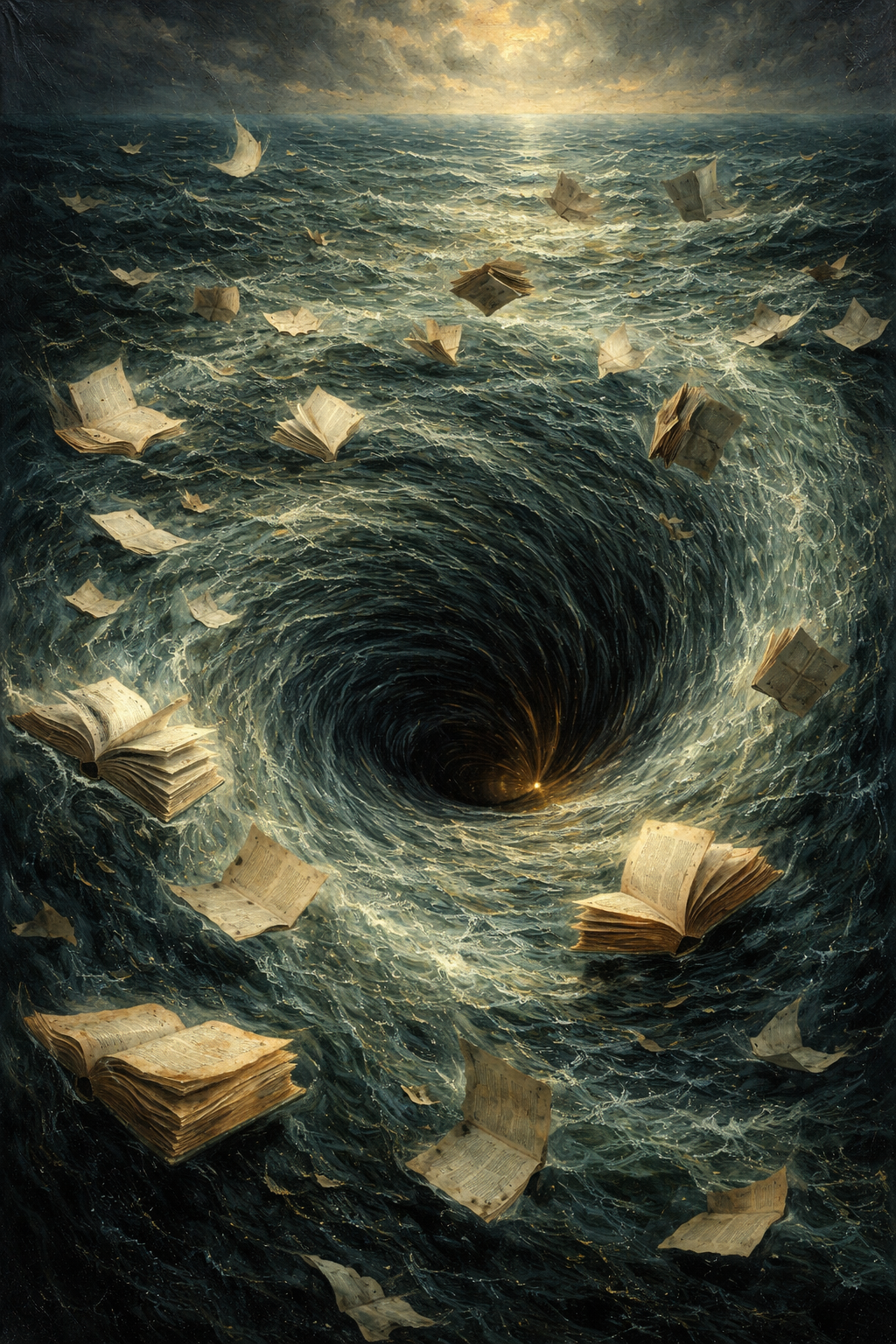
The sub’s sonar has picked up a strange clicking noise from the sea bottom, as if rocks are getting pounded together. Admiral Nelson, the resident scientist, just happened to be reading ancient sea lore about this very spot of the vast ocean (no mention of which). According to his book, sailors 200 years ago reported hearing the exact same thing just before their fleet of ships was sucked into a huge maelstrom and never heard from again. 

Duh-duh-DUH just then the sea bubbles and foams and the Seaview is herself caught in a huge maelstrom. OMG, will they ever survive? Or will they be back next week to face The Mermaid?

I paused in my half-hearted attempt to untangle Christmas lights and thought, wait a minute. The old-timey crewmen reported hearing weird noises just before their ships were sunk.  So, to whom did they make these reports? This was 1967, so the ships went down in 1767, roundaboutsy, so radio wasn’t a thing. A maelstrom’s a pretty big deal, drowning-of-sailors-wise. 

It didn’t matter to the plot of the show, of course. From what I could tell, the ancient sailors were now fossilized and wanted to sink the Seaview. Something like that.

I turned it off because my wife came home and I didn’t want her to catch me watching such drivel. 

Closing plot holes like that can sometimes get sealed up in a sentence – only one ship survived to tell the tale. That’s if you’re lucky.

If it’s a big gaping hole, it might take a chapter, even a whole rewrite to get that character around to where the story makes sense. 

Admiral Nelson has bigger fish to fry than that plot hole – maybe the answer was on the next page of that sea lore he was reading.

But it did give me pause to think about my own work. Plot holes. Hmmm. 

Where are those questions in my own work that I’m afraid to ask because I know there’s no answer because I didn’t think of it until just now? 

Uh oh.

How does he know what time it is?

Uh oh.

Trust the Story Teller

You’re a writer, you know how it goes. You’ve got a million ideas in your head – story lines, plot twists, character quirks – all waiting to hit the page one of these days.  They’re like bubbles in a stew – a thick, rich stew redolent with bits and pieces of brilliant bones and perfect plot pieces. They bubble to the top and then pop. They’re gone. If only you’d had a tiny tad of time to tell them.

Recently, I drove from California to New Jersey. My task was to deliver my Outback to my daughter in Texas, and take her Prius to my daughter-in-law in New Jersey.  The Outback will handle a Texas winter better than the Prius, and the daughter-in-law just needs to shuttle her kid – my grandson – to and from daycare. Easy peasy. 

I was cruising through New Mexico, dashing down long, straight roads between breathtaking mesas and canyons and passing Indian Trading Posts by the dozen, trying to figure out the sequel to my upcoming Phineas Caswell novel.

Okay, so… what? 

That fellow ChatGPT has assured me, you see,  that August is the best time of year to release a historical fiction action/adventure/YA novel. 

Repeat: What? 

See, August is still summertime, still time to pick up a beach read, but also heading towards the school year, time to pick up some history. Something like that. See?

All fine and well. The novel is a diary, written by a cheeky 12-year-old boy in 1705, taken to sea against his will by his bumbling but well meaning uncle. Pirates, spies, war – all the good stuff.  That’s my August-release book.

But it ends on a cliff-hanger. So, there needs to be a second book. 

Flat-topped mesas whisk by the windows, shadows shoulder their way behind the deep canyon cliffs, and the next story plays out in my head. 

There is already a short story I’d previously penned that takes place in a Portuguese port. A perfect place to start the new novel.

Armed with that one scene, and with nothing to do but look out the window and keep from crashing, the story plays out in my head.

This is new for me. I usually have to write the story down to tell it. But this new story simply rolls out, logical and lovely, as I fly down the freeway like an arrow bound for Albuquerque.

Of course you can’t drive and write – the cruise control’s good, but, come on…

So it comes down to my turning to trust my inner author. Rich scenes roll before my eyes – scenes I would have to remember. Scenes I could only see in my mind’s eye, hoping they caught the attention of my thought-keeper.

Here, seven weeks later, comes the task of finally putting to paper the plans I’d poured out in northern New Mexico. The images that exploded in my eyes remained, and the story simply poured itself onto paper as real and writable as it had on the highway.

Now I have before me an outline, nothing more. Scene after scene – this thing happens, then that. It’s the structure, the bones.

It occurred to me this morning that these sentences are nothing more than writing prompts, like those offered by every website that purports to power up your inner author. 

You’re a writer. You know how it is. If someone asks you to explain why the silly snowman sits behind the bush, you know you can come up with a story. 

The prompts, the outline, are space-keepers, aren’t they? Here’s a whole book, complete in its condensed form. Like a suitcase stuffed with springs, when the time comes to write it,  you open the case, and the prompts pop out to create a full and fantastic book. 

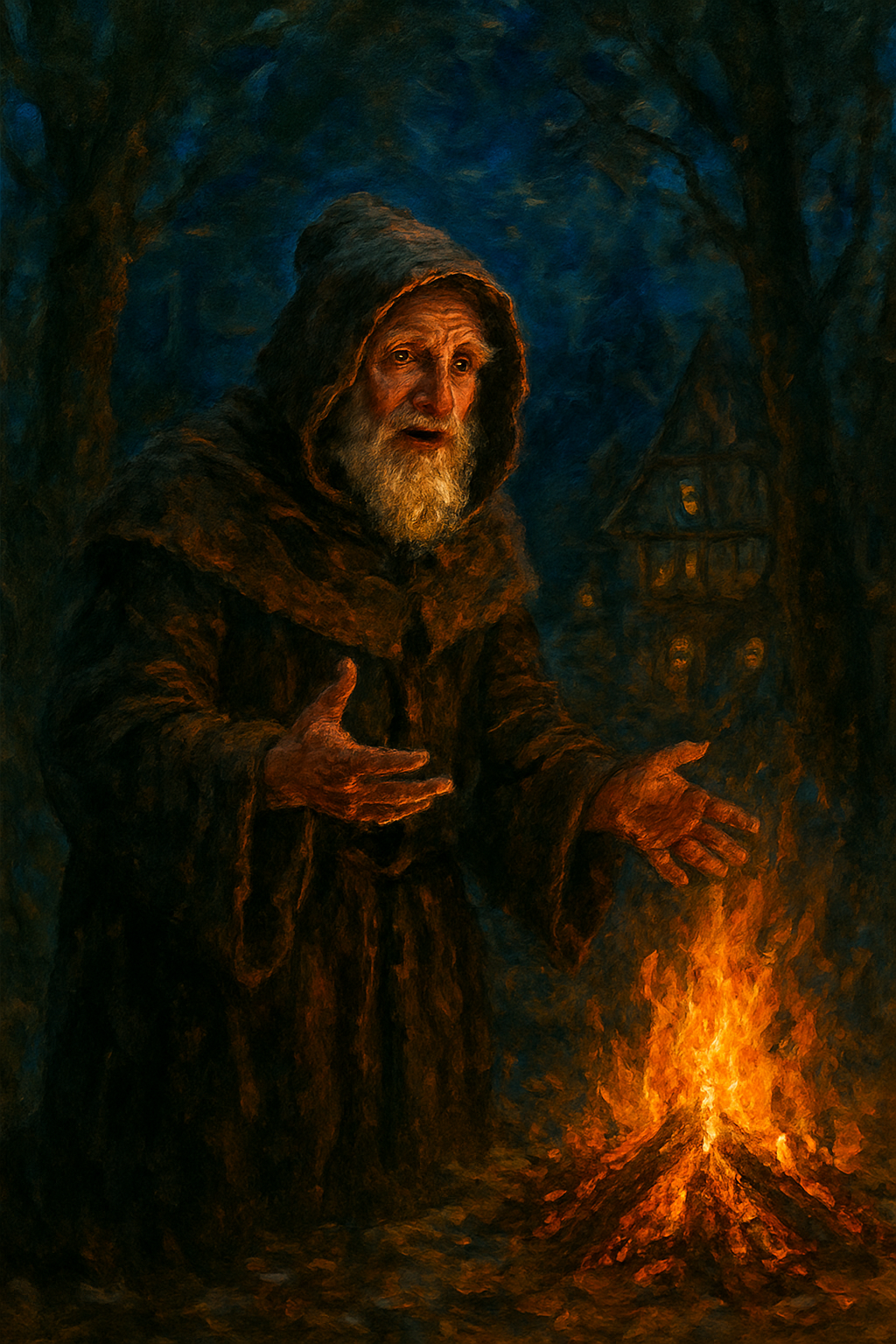
That storyteller, aged and ancient and ever hiding inside you, will sit down by the fire to weave his words into the best book you’ve ever penned. 

Because you’re a writer.

Have faith.

Hitting Pause Again

Nobody tells you anything about anything, am I right? I mean, I asked for free advice from somebody who didn’t know anything and got a ton, but it was all, like, useless. I’m actually kinda ticked…

Here’s something you didn’t know, I’ll bet. Or maybe you did know, and I am the one who doesn’t know anything. 

There’s a time of year to publish your book. Just like the little green leaves and the little buds and the birdies, yadda yadda yadda, there’s a season for your book. Can you imagine?

It’s all about the migration of people. 

You don’t publish your book at the beginning of July, for instance. Why? People migrate away from book-buying and go on vacation.

HOWEVER, you DO publish your romance in May or June, because it’s a good vacation read, and you’ll catch ‘em before they migrate away. Crazy, right?

You don’t want to publish at the end of the year. It’s the holidays and nobody’s buying books, unless you’ve got a bang-up Christmas or Hanukkah book or something. People have migrated away from reading and are all about fruitcake.

But you DO publish in January if yours is a self-help book. The people have migrated back to reading again.

My book, my original Phineas Caswell novel, a piece of historical fiction, is perfect for late August/early September, when the leaves fall and folks are ready to cozy up for a good read.

Won’t take it to the beach, won’t use it to better themselves, won’t enjoy it as a scary thriller. Nope. Historical fiction – the kids are going back to school, time to read a good, interesting piece of history. 

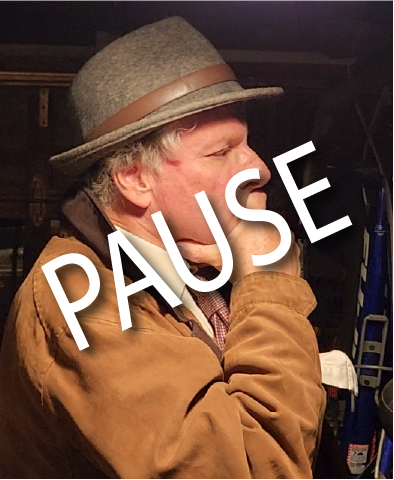
So, for all my book publishing plans, I have to hit the PAUSE button for a bit and wait for the year to roll around to the right spot. 

That’s okay, because I have a lot of work to do in preparing the marketing materials. But who knew there’s a CALENDAR to this stuff?

Well, if you didn’t, now you do. I didn’t, but now I do. 

Happy holidays, and put down that book. 

Hoisting Anchor, Mate

You’re a writer, you know how it goes. A project gets into your bones and the world just seems to conform around it. Wow, I wish I knew what that meant.

Since last we talked, a multiplicity of whoop-dee-doos have collaborated to turn my life into a whirlwind of chaotic synchronicities. Not sure what that means, either.

First, let’s talk about Disneyland, shall we? I went all by myself (my much better half had to work) and had a terrific time.

The writer’s story in my little adventure is a ride called Rise of the Rebellion.

Before R of the R, my idea of a fantastic ride was Indiana Jones. In that one, you’re strapped into an open SUV sort of vehicle that physically bounces around through an epic assortment of hair-breadth near misses. The SUV lurches and throws you this way and that while simulated darts zip past you and a dragon breathes real fire. Awesome, awesome stuff.

Rise of the Resistance, however, changes the entire narrative of what a theme park ride can be. This ride combines that same physicality with stunning interactive graphics, physical theatrical sets, animatronics, and live actors to actually tell a story.

And not just a story, but one that includes you as a character. You don’t just see the story. You participate in it. The ride takes a full 15 spell-binding minutes to get through.

When it was over, I took myself to the Many Adventures of the Winnie the Pooh to calm myself down. Boy, that worked. Oh bother.

After that, I rode Indiana Jones. The ride’s scenario, for lack of a better word, is told while you’re waiting in the queue. It seems a busload of tourists got lost in the jungle. Your task is to find them.

The ride is still cool, still wild, but felt like a chaotic jumble of action sequences. I was thrown about and entertained, for sure. But you have to make several logic leaps to equate the ride with the scenario. I don’t think we found anyone other than Indiana Jones.

For us writers, the message is clear: stringing scenes and episodes together doesn’t necessarily tell a story. Then again, the story might simply be wild twists and turns, which can certainly be fun all by themselves.

Then came the kid’s birthday, that young man in New Jersey who just turned a year old. A dapper little fellow with 4 teeth and the sparkling command of a language composed of the words “duh,” “oooh,” and “nah-nah.”

My wife and I both want to be the sort of grandparents that are there to take him to soccer practice and give his parents a night out every now and again. Plus, when the kid runs away from home, we’d like him to run to our house.

Well, quite by accident, we stumbled across The House, a sweet little bungalow built in 1936 just a block away from the million-dollar houses that face the Arthur Kill. That’s the kill – okay, fine, the waterway – that separates New Jersey from Staten Island. Yes, THAT Staten Island.

The price is right, but the window of opportunity is very short, like, thirty-or-so days.

You know how it is with your parents’ house – it’s nice but needs a little sprucing up? That’s our house, except we’re sort of in need of an EPIC sprucing up! Roof, flooring, kitchen, paint – I’m sure I’ve left a dozen things out.

But, once we sort all that out, we’ll be hoisting anchor, mate. Bound for the East and truly parts unknown.

That’s one journey.

Another journey is me moving from being a 9-to-5er as I’ve been for the entirety of my working career to a part-time, remote contractor. Ask my wife, she’ll tell you I’m remote already.

BUT, and this is a big but, so to speak, there is one more journey that has already begun: my new book.

I’m using my business partner, a guy to whom I refer as JaPeetey, to help me market my novel Phineas Caswell: The String of Pearls. Here’s the book’s cover:

The cover the soon-to-be-released book Phineas Caswell: The String of Pearls.

I’m still working the details, but you can see what I’m about.

ChatGPT knows how to market indie books like this. Of course it does. It draws on all the successful marketing plans to give you answers. So, I’m using Chat GPT to help me lay out the marketing steps for my book. He’s my buddy, JaPeetey.

I’ve done everything so far to self-publish my books except to do it right. Now, with this move to the hinterlands of the Wild East, I’ll have the time to focus and concentrate and follow JaPeetey’s direction.

It ain’t rocket science. It’s Marketing!

If you’d like to help out and read an advance copy, I’d be delighted to offer you a free final copy in exchange for a review. Just fill out the form below and I’ll send you a PDF right away!

Thank you so much for reading all the way down to this point. It means the world to me.

← Back

Thank you! I'll send you a PDF ASAP!

Will you write me a brief review in exchange for a published version of Phineas Caswell: The String of Pearls?(required)

Why Writers Shouldn’t Talk

Hey, hello! Thanks for reading along! What follows this paragraph is the transcript from a video I shot today – it will be a podcast pretty soon. What’s cool about it is that the transcription process worked… you’ll see. I shot the video and then transcribed the audio at a place called TurboScribe. You get three free transcriptions a day. Here’s what I shot…


 Transcribed by TurboScribe.ai. Go Unlimited to remove this message.

Hello, I’m writer, author, and host John D. Reinhart. And you’ve stumbled onto this moment in This Writer’s Life.

So, before we go any farther, you may wonder, what’s the difference between a writer and an author? Well, in my head, a writer writes.

You’re a writer, you write. If you’re writing a book, you’re still writing. You write the book.

It is the authorly part of you that compiles all that writing into the book. Right, it’s the organizer kind of a guy. In a website situation, nobody writes a website, they author a website.

They bring their own written work or the work of other writers, they compile it all into a website. That’s the difference.

The host part, well, me and you, we’re looking at it.

So, here’s the thing. I’m in my garage. I’m doing the laundry.

And it occurred to me what I’d really like to be doing is writing a post for my website, because I feel like I should be doing that, but I can’t because I’m doing the laundry.

So, then I got the bright idea to say, well, why don’t we go speech to text, right, and take video-audio combo and make a post out of that. So, that’s what I’m trying.

And I will tell you the truth. Speaking what you want to say is so much more difficult than writing what you want to say.

I mean, I’m a good writer. I’m not such a good speaker. And this is kind of what I found out.

You’re a writer. You put things in order. You build the sentence that you want. And you realize, eh, that’s not what I want to say. You move things around. You come up with a whole new word. Flip it around, build a whole new paragraph based on that word. That is what writers do.

But think about impromptu speakers like President Obama.

He comes out there and he right off his cuff, makes these long speeches that people write down. Because when you speak impromptuly or however you speak, that’s what you said. And you can’t go back and flip it around and change it.

That’s the big difference between speaking and writing is that, as what I find, I’m not a public speaker. I’m not an impromptu speaker. In fact, I have to tell you this truth.

I’m using a script. So, this is text to speech to text. That’s how well this works for me.

Not my dog. So, if you don’t try something new, you don’t learn anything. So, that’s my little experiment on speech to text.

No, thank you, sir. Thank you for watching. I’ll catch you next time.

 Transcribed by TurboScribe.ai. Go Unlimited to remove this message.


Yes, it’s a little weird, I know. It’s creepy to see how many times I use the word “so” when speaking impromptu, even with a script!

The upshot of this experiment, aside from a shameless plug for TurboScribe and a podcast episode, is that the spoken word works great for speakers, but us writers, we probably want to just keep on writing!

Thanks for reading along…

Oh, uh, One More Thing

You probably remember Columbo’s trademark like “oh, and one more thing…”

It always came right near the end of the Columbo murder mystery series, back in the 1970’s. Peter Falk played this sort of bumbling detective who appeared to be misguided throughout the whole episode. But then, at the last, just as the murderer is about to get away with it, Columbo turns and says something like, “Oh, and one more thing. I thought maybe you could help me understand how, if the bedroom door was locked, your fingerprints are on the bedside lamp.”

Sometimes the murderer would say “Oh, you’re a clever one, Columbo,” or they’d stare at him, or they’d run. Sometimes they did all three. Of course, Columbo had all the exits covered.

So, I’ve been putting together a video review of the Estrella Warbirds Museum in Paso Robles for California Air Museums.

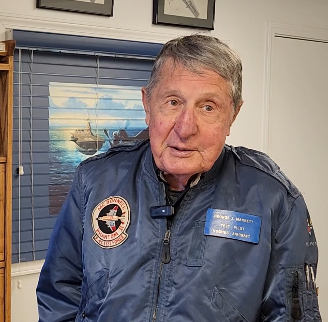
It’s a good video, featuring sections of our interview with author George J. Marrett, and looking at all kinds of stuff.

I got it all done, all buttoned up, and uploaded it to YouTube. If you haven’t done that, you have about four pages of questions to answer about the video, and you have to wait about 20 minutes for it to upload. You have to type in tags, and a description, and all kinds of stuff.

And then my daughter said: “You know, it should have subtitles.”

Ah. Subtitles. 

So, for a five-minute script with lots of voice-over and interview, it takes about an hour to add closed captions. YouTube presents you with a transcript of your video, and the AI is pretty good, although it couldn’t figure out the name Paso Robles. Pasa Rubbles. Pa saw rabbles. So you have to correct it, and you have to manage the timing so that the words show up as they are spoken in the video.

Now we’re in for a buck-and-a-half, timewise, at YouTube.

“I think you should refer to the author’s books,” my wife suggests.

In thinking about it, I realized she was right.

Back to DaVinci Resolve to edit the video. Dug up some graphics, added some voice-over, inserted 30 seconds devoted to the books, reworked the music at the end, rendered the video out again.

Went back to YouTube, downloaded the subtitles file so I could add it to the new video, deleted the video I’d just uploaded (it actually warns you that this video will be deleted forever – I’m kind of surprised it doesn’t go FOREVER-ever-ever-ver-er-r….), uploaded the new video, answered the four pages of questions, and was just about to push the PUBLISH button again, when my wife cleared her throat in that way that she does when she has an idea that she thinks is brilliant but you might not like but you should because it really is a good idea.

“One more thing…”

All right, Columbo, what is it?

“What if we cut the guy’s the clever comment that opens the video and put it at the end instead.”

As she explains it,  I’m nodding thoughtfully, although I’m thinking OMG you want me to shuffle the entire contents of the video ahead by, like, fifteen seconds? But my captions’ll be screwed! Don’t you ever want to get this published?

It took FOREVER to shift everything around in DaVinci. And I had to start all over again with the captions in YouTube.

But, it was a brilliant idea, and the video has a ton of charm that it wouldn’t have if she hadn’t played the role of Peter Falk.

All of this has a writer’s tale in it, as you can imagine. Even though we think of our writing as a closed-loop system: we sit in our cold stone garrets, frantically typing away, knowing they’ll never understand our sacrifice, in truth it can only ever be a system of give and take. Suggestions, comments, ideas come in, grudging changes go out, and the work is always, always better for it.

Oh, and, uh, one more thing… Thanks for reading!

No Guardians at the Gate

Cops and robbers. Parents and kids. Bosses and employees. There’s an hierarchical order to things. Officers and crew. Master and Commander. Editor and writer… Wait – not so fast.

Back in the early part of this century, I was the owner of a struggling business. It was awful. If you’re not a business person, and you find yourself owning a business it. is. the. worst. Dreadful, I tell you.

Luckily, the Great Recession wiped us out! I was so thrilled!

But that’s not the point of this post.

Back in those days, the Internet was unfolding like a reverse-engineered origami swan, and it was desperate for content. Desperate!

Guys like me, without any nerve or experience, suddenly found themselves writing articles on this, on that, how to do this, how to make that, how to create… you get the idea.

And we were paid – sometimes a tenth of a penny per word – but we were paid. My weekly paychecks ranged between fourteen dollars on a good week and about 38 cents…

But that’s not the point of this post.

So, the world wide web was a wild west for wily writers. You could get published same day for just about anything.

I became the science editor for two or three sites – my favorite was a site called Triond. Oh, we got along famously. I wrote over 200 articles on the Moons of Jupiter, the Moons of Saturn, the Mo… you get the idea.

I’m sure you’ve heard the word churnalism? If you rewrite stories that have been written by someone else and add your own special spin to them, you’re not a journalist. You’re just churning up somebody else’s work – you’re a churnalist.

Ah, those were heady days, being a seriously underpaid churnalist, cranking out somebody else’s ideas and expected huge rewards. Sigh. How I miss them…

Fast forward to the Roaring Twenties, and now it’s all about books. You can publish your book for free!

I know, I’ve published two!

Smashwords, the company through which I’m publishing my books, has merged with Draft2Digital, a company that distributes your books all over the English-speaking world.

I’m enjoying the experience so far. Haven’t sold a copy, but mighty oaks come from tiny acorns.

And now D2D, as they refer to themselves, has offered to print my book.

What? Print? My name and likeness, right there on a paperback book? What? FINALLY?!?

My brilliant wife and I talked all about it, me on the oh-please-oh-please-oh-please side, she on the let’s-think-about-this side.

Publishers have editors that read books and decide what is and is not crap.

Who edited my book? What about yours?

E-books are often free, making them comfortably less than a dime a dozen. They consume digital resources, but that’s all.

Literary agents will tell you they get 10,000 queries a year. Based on what I’ve written, I know that by far the highest majority of those queries are from crap books.

Crap books.

So, D2D will print my book. They’ll print your book. They’ll print that guy’s book.

But that guy’s a crap writer (not like you and I).

So, here’s his shiny new book, right on the shelf next to ours. His opens with “This is how I spend my summers, over at uncle Bob’s house where my cousin Larry has like a big dog and this blue Toyota that doesn’t run so good. Anyway…”

Our books are good, earnest efforts with great plots and wonderful characters and creditable dialog.

But there’s nothing to separate them, no differentiator between our brilliant work and that guy’s joke of a junk book.

The buying public picks up that guy’s book, mutters in dismay, and quickly backs away from the book rack.

“Good heavens,” they gasp. “What a bunch of junk books!”

You and me, our books are great! Don’t judge us by that guy’s cover! But you know they will.

There we sit, side by each, our pearls, his swine.

My thinking is this:

In digital publishing, caveat emptor. Let the buyer read the description and download the free chapters and choose from there.

In physical publishing, that book had better be worth the ink and the paper and the resources to produce it.

Sadly, we know that that guy thinks his book is that good. But you and I know much better.

My wife is right. If there is no longer a guardian at the gate, no Random House holding sway over what gets printed, if the individual writer sets the standard for what shows up in paper, doesn’t it sort of feel like all is lost?

D2D doesn’t charge you anything to print your book. They make their money when the copies actually sell. But what happens to those copies that don’t sell?

I would imagine they go on sale, and then on super sale, and then on deep discount, and then on closeout, and then on clearance, and they finally sell for, like, a dime or something. Better that than throw them in the dumpster – at least D2D makes a little money on it.

Is that what awaits our books, yours and mine? We end up selling every printed copy for a dime each to some clearing house that shreds them up for the paper they’re printed on? All because of that guy’s crap book?

Congratulations! Your book sold 200 copies! Your share of the profits comes out to 6 dollars and 41 cents, because D2D took the first 15% of the dime and the bulk-book aggregator took the next 25%. Oh, and you won’t get a check until you sell $100 in books, but, hey, congratulations!

Call me a dreamer, a starry-eyed hopeful, but I’ll be building my audience the old-fashioned way – through digital publishing and advertising and doing nothing – until I’m discovered by an old-school publisher who has a strong editorial voice and a marketing staff that will just set the world on fire.

Wait, that guy sold 400 copies?!? Hey, wait a minute…
Character Hijackery Part II

It’s been a while, but I previously posted a bit on how the voices in your head sometimes take over your story. Oh, wait, I just said what this entire post is about. Rats.

Continue reading “Character Hijackery Part II”

Finishing Things

I’m working on my third million dollars. Yes, I gave up on the previous two…

Continue reading “Finishing Things”

Twinklings of the Past

You’re a writer. You know how it goes. You work your keester off writing something that you just think is the bee’s knees, the cat’s pajamas, the Maharajah’s… uh, well, you get the idea.

But life happens and stuff happens and somehow it just doesn’t seem to be the big hit you expected. And then, one day…

Continue reading “Twinklings of the Past”

On Giving Up

When is giving up really giving up?

You’re a writer. You know how it goes. You work your keester off to create what you think is a great piece of art – and it is a great piece of art because you put your heart and soul and God knows how many hours of mindbending labor into it. And then you burned a gazillion more hours rewriting it – getting the characters just right, moving scenes so that it flows just as smooth as butter on a hot bun.

Continue reading “On Giving Up”

Character Thievery

Damn their eyes, these characters!

They say things you didn’t expect, do things you didn’t think of, steal your gosh darn story right out from under you.

Continue reading “Character Thievery”

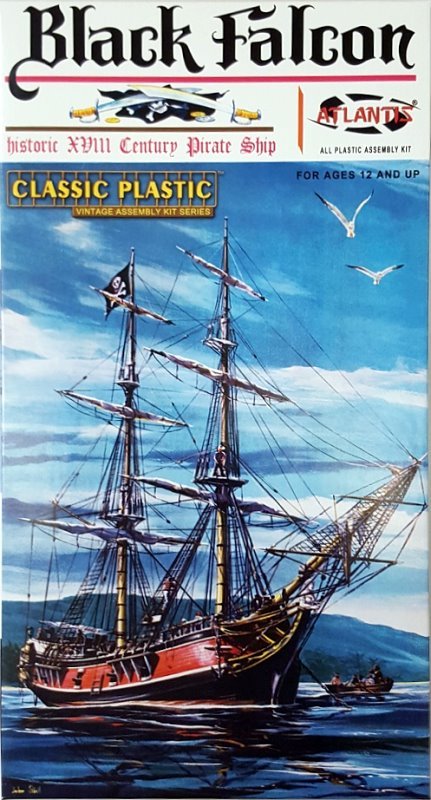
The Curse of the Black Falcon

I grew up in the pre-digital age, spending many an early adolescent hour at the worktable, building plastic model kits. Airplanes and ships – those were my specialties…

Wait, wait, wait… don’t go skipping away thinking this is some nostalgic, back-when-I-was-a-kid kind of thing.  Just hang tight for just another couple of paragraphs or so and you’ll see that this applies to you – yes you.

Continue reading “The Curse of the Black Falcon”

Forget the Setup, Eddie

What’s the difference between a gorilla and a pound of oranges?

Once, in a galaxy far, far, etc., I had my first novel roll across an editor’s desk at Random House. The editor liked the book, but suggested a small gaggle of changes before they would sign it.

Continue reading “Forget the Setup, Eddie”

Smelling Like a Duck

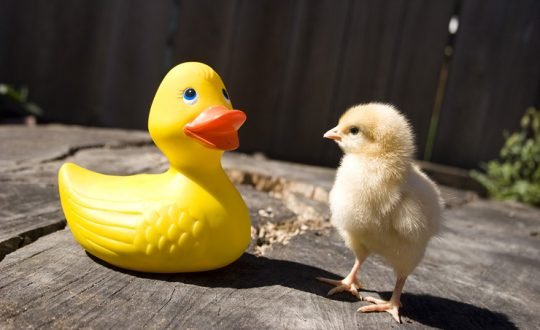
If it looks like a duck, and floats like a duck, but doesn’t smell like a duck, is it a duck? Or is it a decoy? A fake duck? Perhaps a wannabe duck.

You’re a writer – you know how it goes. You pour your heart and soul into your work, you polish every single word, and then you launch it out into the world. But… how?

Once I was in a restaurant and the waitress asked me what I wanted. I told  her I’d been thinking about the turkey sandwich, to which she replied “and what did you decide?”

I used to think that the difference between writers and folks who thought they’d like to take a stab at writing is that writers write. I still believe that to be true, but perhaps not as thoroughly true as I once thought.

Suppose you wrote your brains out, but shoved all your work into the furnace and sent it up in flames? If no one reads it, did it have meaning?

Obviously it did to you, but only to you. You’re a writer – you have a story to tell. If you don’t tell it, or if you tell it only to yourself, well, are you a writer?

It’s  a long way to get to the point that we must publish. My books are at Smashwords – yes, that was a shameless plug, but it illustrates a point.

Once upon a time we would hawk our words to agents who would hawk our words to publishers who would bring our words to the world at large. In Shakespeare’s time, Will had to hawk his words to his publisher – there was no agent – and together they hawked his words to the world.

I’m thinking that Mr. Shakespeare’s paradigm has returned, now that the writer’s world has turned into a Wild West of Self Publishing.

I found this great website, run by Joanna Penn, called the Creative Penn.  Her site is full of good ideas and great tools and is generally a lot of fun to wander about. While I don’t know Ms. Penn, and only recently discovered her site, I believe there is a lesson there for us all.

You, my writer friend, and I, unless we are to be mistaken for decoys, or wannabe ducks, must actively, and intensely, pursue the task of hawking our words to the world. It’s up to you and me.

Unless we do that, I believe that we are deceiving ourselves into thinking that we are somehow successful authors for having published ourselves. While that is truth, it an incomplete and rather shallow truth.

You, my friend, and I, must embrace the fact that if we do not actively market our work, we do not, in fact, smell like a duck.

.

.

.

.

.

#writersofinstagram #bookworm #bookstagram #writing #booklover

Crows are Smarter than People, but don’t Sizzle

I have proof! It’s true! They are way smarter than I am!

See, I’d seen an ad during the Super Bowl, like, four times, for the McDonald’s Cheesy Bacon Fries, and each time I thought to myself “dang, that’s cool!”

Now, my darling, wonderful wife is out of town, and I find myself with a day off (please don’t tell my wife I did this – she’ll have the I-told-you-so of a lifetime, and I’ve already given her so, so many. It’s safe to post this, because she never reads my stuff. If you don’t tell her, we’re cool).

So, It’s a lovely day at the harbor here in Ventura, and there’s a McDonald’s just a few blocks away. I don’t feel all that hot from an abusive weekend in Las Vegas (being volleyball parents isn’t quite what it’s cracked up to be),  and, hey, I mean, it’s McDonald’s, right?

The first challenge is that the Cheesy Bacon Fries come in a box with a knife and spork.  Uh oh, the gullet says. This could be danger. Then I crack open the box.

So, when we were in Montreal, we discovered a Canadian dish called poutine – fries, cheese curds, brown gravy, and meat, all piled onto a plate. It is heaven on a cold day.

Ronald’s version doesn’t have the brown gravy, but it’s the same thing.

The first taste is really great – man, warm salt and fat. Kind of bacony, a little bit potatoey, and a strong dose of cheesy.  Even as I chew it, I’m thinking this is not a very good idea.  Kinda of like eating the cake that’s been out on the counter for a couple of days. It might be okay. Might.

So, about the crow. He flies up and takes station on the lamppost, right above my car. He looks at me with that look that crows have – inscrutable, but intriguing.  He wants a fry. He’s scared away all the pigeons, and the seagulls haven’t spotted the McD bag yet.

I make sure he sees me waggle a bacon-encrusted cheesy fry out the window, and give it a toss onto the grass. He dives on it the second it’s down.

Now, seagulls are smart. Once, my daughter and I played fetch with one.  We  had found a golf ball on the beach, and tossed it into the sand down next to the waves. A gull swept down, scooped it up, and dropped in right in front of us. I threw the ball again, and the bird brought it right back. We played like this for maybe 15 throws, until  he dropped the ball way out in the water and flew away.  Huh. Game over.

But seagulls will eat just about anything. You can make them explode with Alka Seltzer tablets – but please, please don’t. I can’t think of a more awful way to die.

This crow however, perhaps ponders a more awful demise in eating the cheesy bacon fry. He holds it in his beak and stares at me with disdain, his black eye asking “how could you?”  He hops onto the back of a bench, the fry firmly held in his beak, and looks thoughtfully out to sea.

The arrival of a flock of seagulls startles him, and he bolts out over the harbor in a stunning show of aerial mastery. He swings over me, the cheesy bacon fry wagging in his mouth, and then out over the water.

With every sign of intention and purpose, he drops the cheesy bacon fry into the bubbling waves, and off he goes.

What does this story have to do with writing books? Everything, my friend, everything and more.

If you , like me, publish your own work (my books are at Smashwords) there’s a huuuuuuuuge lesson here:

I bought the McDonald’s Cheesy Bacon Fries, knowing full well that it was just a box of salt, fat, and a strange orange semi-liquid cheese.  No, I couldn’t eat them, because, well, ick. But I gave McD’s my money for the experience. It was all sizzle, and surely no steak.

It’s the sizzle. It has to be the sizzle – sizzle so alluring that it makes you buy a product you really know you shouldn’t have, just because, well, because there’s so much sizzle!

On the health side, I’ll fly with the crows.

But on the marketing side, I’ll take a page from McDonald’s!

Please don’t tell my wife.

Hashtags of sizzle:

#McDonald’s #authorsoninstagram #droppington place #marigolds end

It’s Cool When Worlds Collide

You remember that dorky sci-fi movie from the ’50’s “When Worlds Collide,” right? If you don’t,  count yourself lucky. Earth was gonna get smashed by an asteroid, see, and so the scientists build these giant spaceships to fly away into space, see, and, well, you get the drift.

You’re a writer – you know how it is. You’ve got your work out there, doing its reader-generating thing, and you’re looking at your pile of ideas, wondering what’s going to call you next.

Same thing here.

Except, well, the ideas and facts work in funny ways, don’t they?  Check this out.

My next book, please don’t tell anybody, is all about Blackbeard the pirate. Very in-depth, but fun, too, because, well, hey, it’s what I do.  I’m still knuckle-deep in research, but I ran over a really cool, really helpful set of truths.

Was you a pirate in the early 1700’s, you were a rough-and-tumble sort of chap. Climbing rigging, whacking people with cutlasses, yelling “arrrgh”, that wasn’t for oldsters.

So, Captain Charles Johnson, in his book A General History of Pirates, which he penned in 1724, may have made a goof when he wrote that Blackbeard was born in 1680. Kevin Duffus, in his recent book The Last Days of Blackbeard, reasoned that such a birth year would have made the pirate 38 years old at the height of his career – quite old for an active  in those days.

More likely, Duffus writes, that he was born in 1690.

Record skidding noise…

Wait. My character Phineas Caswell, from my novel Marigold’s End, was born in 1694. Er-ma-gersh, I can see the next novel to follow this Blackbeard piece: how cool would it be to get Phineas aboard young Blackbeard’s ship, before he turned pirate? Phineas is twelve, Blackbeard is 16, both are fresh to the sea… this will be great!

So, chasing one idea leads to another. One novel collides with another… when worlds collide!

Nah. It doesn’t work for me, either.

A New Boss

You’re a writer, you know how it goes. You settle on a project, or maybe two, and you burn the midnight candle until it’s just a smoldering stub, and you tell everybody what your project is and how it’s your end-all-be-all raison d’etre and stuff…

But it isn’t. You fight the words and wrangle them into place. You beat yourself silly trying to find that structure, that style that sets you apart.You work until your mind bleeds to find the description that’s never been made.

But it doesn’t come.

It’s all the same hack.

I know. I’ve been hacking at the same project for, like, ever…

What to do, oh what to do.

Here’s something terrible that I shouldn’t tell you, but maybe you’ll see it.

I invented a producer, my writing boss. I gave her, (she’s a she) the complete and total task of managing my writing.

With Sydney (her name’s Sydney) in charge, I can mentally offload the task of managing my production to her. It sounds crazy, and I’m certain that is, but it has made my writing much easier.

Sydney’s a breeze to work for, because she doesn’t really exist, which means she hardly ever yells at me!

Yes, it’s nice to have a boss in the writing biz, even though, and I know you’ll agree, it’s crazier than a bag of wieners.

Now I just have to figure out to hit her up for a raise!

Character Hijackery

Imagine setting up something really, really complex, like an Ocean’s 11 style casino robbery, or maybe a game of Sorry – okay, maybe not that one – but something really complex, that you’ve puzzled over for months until now, now, this very minute, you’re ready to go. To pull the trigger, dial the phone, hit Execute, or RUN, or whatever it is that sets your plan in motion. Good for you.

You’re a writer, you know how it is. You slave away over your work, because you love it, and it’s good for you, and because you have something that needs to be said.

I’m working on Novel Number 3, tentatively called The Terrible – it’s a joke that plays out in the… rats, I’ve given it away. Well, forget that part.

So, it may seem like I’m rambling, but I’m giving you crumbs. Clues, if you will. Because you’re smart, and you’ll piece it all together.

Did you get anything yet?

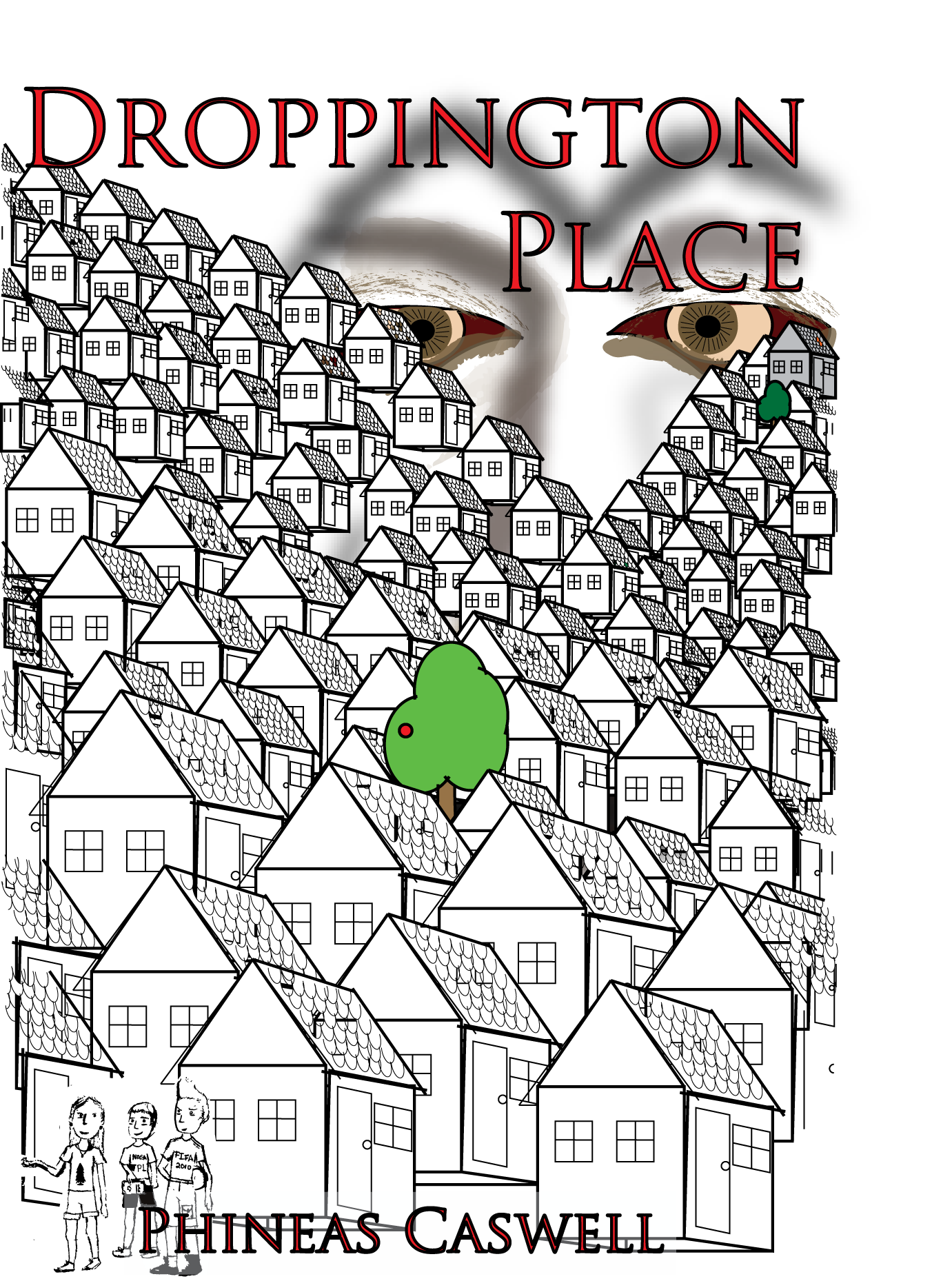
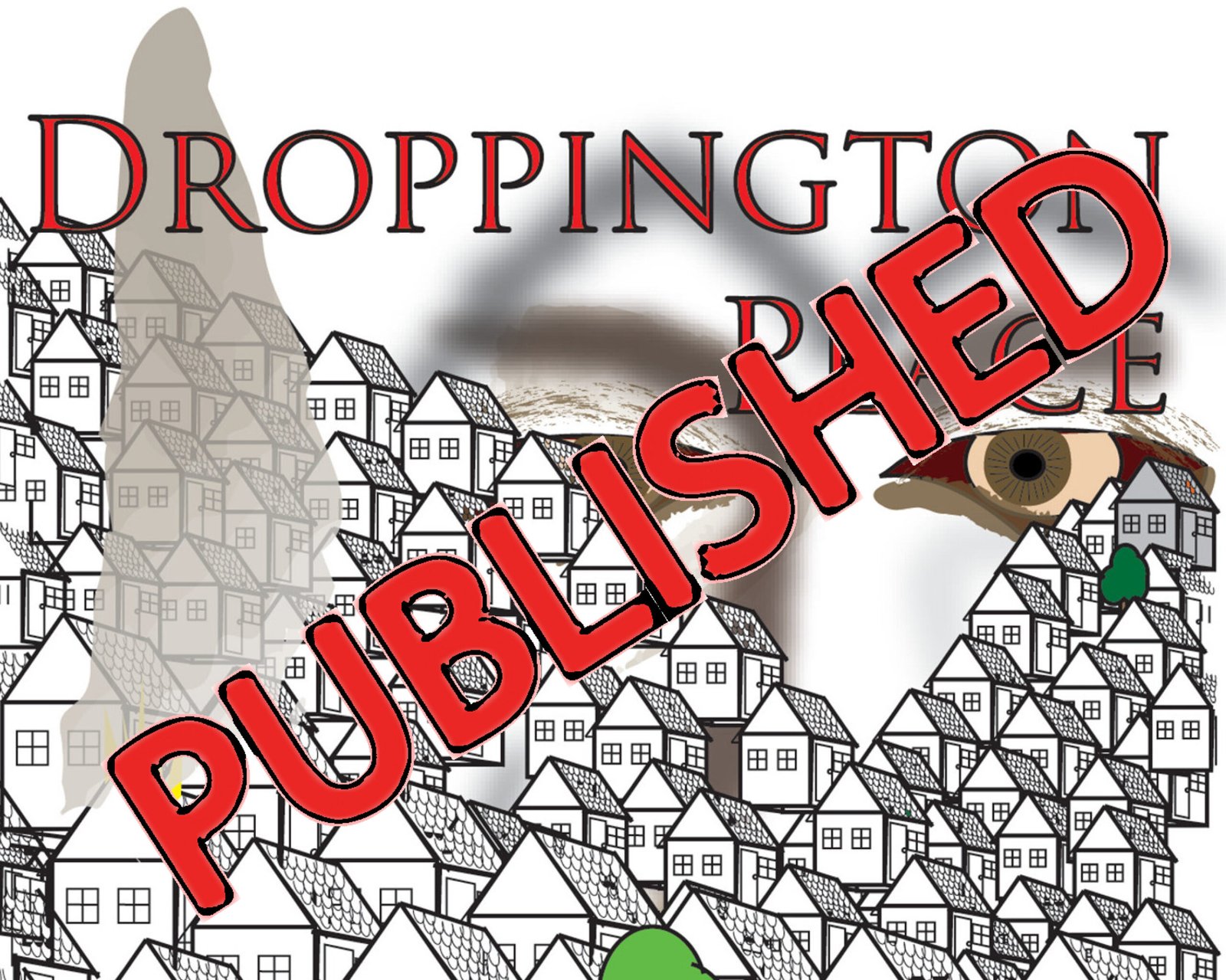
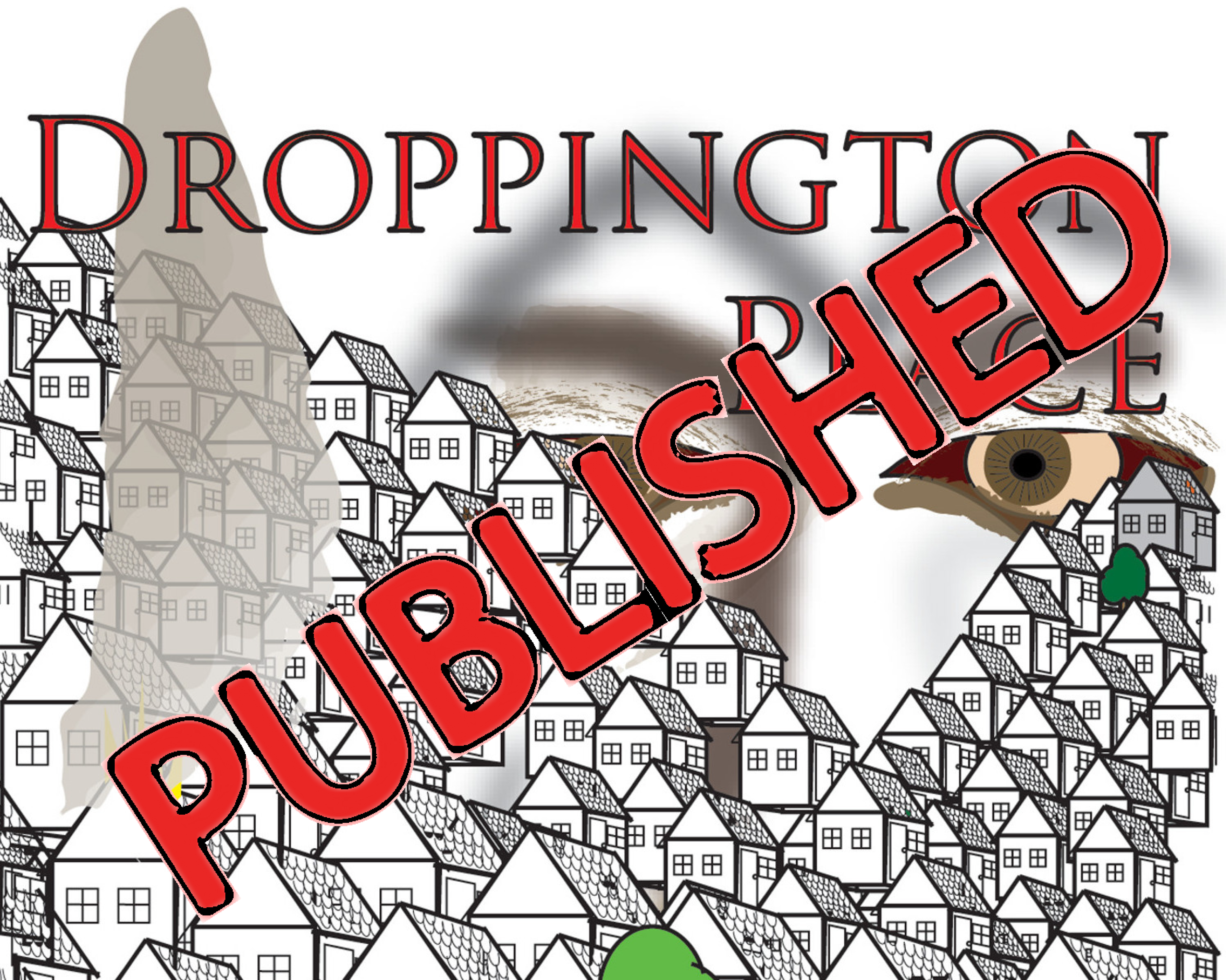
Sigh. Okay, here it is. I’ll use little words: I’ve started a third novel. My first, MARIGOLD’S END, is under revision, my second, DROPPINGTON PLACE, is self-published, and I can’t sit here on my hands and just die, can I? I mean, can you?

This third novel is carefully laid out, with four strong central characters. Well, it was four, but, just yesterday, I needed a transition piece, a moment that both gives us time and place and setting, but that also starts the storytelling ball rolling.

So I created this simple fellow – not much more than a name, really – to carry the news of the French ambassador’s arrival. Not so bad, huh? Except that he needed a little background, and a little definition, a little purpose…

And then the son of a biscuit stole my whole story! He’s none of the four dried up, dowdy guys I’d so carefully designed. He’s young, he’s brave, and he’s innocent.   Suddenly, the four guys are bit players to this kid’s story. What the heck? It’s like Ensign Checkov taking over the Enterprise! R2D2 piloting the Millennium Falcon. Wait, what?

All seriousness aside, I’ve been thinking about this story for a while now. My first novel was a labor of love – and very, very hard to write, rewrite, and… I think I’m on the seventh version. The second novel was just plain fun – I wanted to explore Elizabethan words, and magic, and make a young adult story that was positive and generous.

This new one, tentatively called The Terrible (I think I mentioned this already – please try to keep up), is my story. It’s my… my way of giving back. It’s set on the French/Spanish border in the year 1657. No, it’s not the Three Musketeers, but that book has always been my go-to for inspiration and grounding.

So, The Terrible is the story I was created to tell. It’s the novel that I became a writer to write. It’s the story – I think. I know you have a story like that – it’s why you write.

If it turns out bad, I’ll come up with some clever way to dismiss it. But, it won’t be bad, because this is the story. This is my story.

But, and here’s the part that is just crazy, this new guy’s story isn’t mine. I’m somewhere in this book, but I haven’t found out where. You know the guy has power, because he took over my whole dang life story just by getting named!

More to follow…


Going Responsive

Responsive websites? I always thought your website was responsive if you just answered your emails.

You’re a writer – you know how it is. You toil and slave over your book, you publish it yourself, you get your website, your Facebook page, your logo… and then, who knew, it’s useless if your website isn’t responsive. Useless. Who knew?

While, the standard, desktop, not-so-responsive website still has value if you’re a corporation that sells oodles of things that deserve their own big pictures and stuff, the little screen, however, is clearly the road ahead.

So, what does it mean to “go responsive?” It simply means that you scale your website to look good on mobile devices. That’s it.

Sort of. Once you scale your whole website down to that itty-bitty size, you realize that your whole outlook about your website changes. Gone are the stacked images, the carefully layered pages that had a certain snap to them. Gone are the cool, zoomy galleries of your favorite pictures.

Those big, splashy pages have been replaced with simple, easy-to-read, direct-to-the-point, cell-phone sized articles and galleries and images.

It’s great news if you’re a writer, which you are. All you have to do is write! You don’t have to be a web designer? You just write – that’s really what you and I do best anyway!

PhineasCaswell.com has been a desktop site for quite a while. I built it with Open Element software – free!!!   But, Open Element doesn’t support responsive websites yet. Rats.

For around $30 USD, I found Serif’s WebPlus – I’m running x7, whatever that means. It has a set of really simple templates for making a responsive website. It was seriously easy to make the conversion.

I’m trying to sell my novel, Droppington Place. It’s aimed at the young adult market, which is comprised mainly of mobile device users. Market? Meet website. Website. Market.

As you know, I’m a big proponent of Gorilla Marketing – do nothing and hope for the best. I did a little something by going responsive, and now I don’t have to do anything else. My site is ready for the world to beat a path to my door.

Ah, success.

Oh yeah, I forgot to mention my other Gorilla Marketing project – you’ll like this. It’s called Soon to be a Major Motion Picture. All you have to do is download Droppington Place – do it for free, if you’d like. Encourage your friends to do the same. If your friends tell their friends, who tell their friends, who tell…you get the idea… why, we’ll be way over a gazillion reads, which is more than enough for any savvy movie studio or book publisher to jump on the bandwagon and make Droppington Place into a major motion picture. Brilliant!

So, download Droppington Place, and go tell all your friends.

This is gonna be great!

Goodbye, Baby

DP FinishedStand by to eject bathwater on my mark.

Standing by, sir.

And…mark.

The bathwater is terminated.

Nice shooting, Lieutenant.

Roger that. The baby is outta here. Repeat: the baby is out of here.

Big ten four. Stand by for towelage.

Uh, negatory. Sorry. No can do.

Disregard that. Stand by to commence towelage on my mark.

Uh, sorry, skipper. No can do.

All hands, stand by. What’s with this gloomy Gus guff, Lieutenant. I believe I gave you an order.

Ten four on that, skipper. But, we don’t have, a, well…

Don’t tell me you ran out of towels.

Negative, sir. It’s just that, well, we ejected the baby with the bathwater.

Mongo Santamaria! You’re telling me we tossed the kid out the window?

Like a bullet, sir.

Well, there goes the towelage. All hands, prepare for battle stations. Angry mom at eight o’clock!

It turns out, writing a book is great fun. And it is great fun. Even though your imaginary friends, all those little voices in your head, drag you through the very depths of despair and pain and agony, the fact that you share that with them, that you are a witness to their travails – is an honor and a delight.

Oh, sure. That’s the cat’s pajamas, that part. Like ice cream for dinner every night of the week. Best of all, you tell all your friends that writing is the pits, it’s the worst – you feel like a zombie…hour after hour, typing, thinking, scribbling, coffee, beer, whatever. While, actually, your inner you goes “teehee, this is the best!”

Welp. The party’s over. They ate the pretty balloons. It’s crying time again, and you’re gonna leave me – I can see that faraway look in your eyes. Why must we get offa this cloud?

BECAUSE I PUBLISHED MY BOOK!!!

Yes, there is one more moment of glee, and that is when you join the Club of Shakespeare. All the world is a willing audience, hungry for your written words, longing for your thoughts, your ideas… and, once the book is published… Yo, lookit me, feedin’ the masses!

It’s a cerebral joy, and stunningly short-lived. I found no Disney at my door. Discovered Dreamworks dreaming of someone else. Ran across Random House randomly choosing someone else’s house.

No, the party’s over. Now comes the drudgery, the mind-numbing torture, of figuring out how to market this darned thing for real. It’s no longer a game, or a funny idea. Now it’s work, work, work, to get this product sold and out, into the sunshine where it belongs.

What? What’s that? How can you find it? Well, bless your generous soul, you have come to the right place. Let me pull your chair closer to the fire. Move it, dog. Make way for this most spectacular person.

Because you are you, and you’re a friend, I’ll let you have the book…for free!

No strings attached. Freebie. You go. Although, if you found it in your heart to write a dazzling review, I’m sure no one would be opposed to that…

Find DROPPINGTON PLACE here: https://www.smashwords.com/books/view/618049

Now, this is important: type in the coupon code NJ38D. When you do, the most wonderful book you’ll download with your free coupon will be yours – for free!!!

Of course, you could also visit the author’s site, PhineasCaswell.com.

Now, to find that baby…

You are the One – Bring Your Wallet

Cow

In the writing business… that is, the business end of the writer’s business, although the writer’s business isn’t business at all, but art – this gets so confusing – not the business of writing art, the business of selling the art, which is a business unto itself, but we’re not talking about that. Actually we are, sort of… you’re a writer, you know how it is…

Restart.

If you are a writer, and you don’t have an agent, you need one. Yes, you can self-publish your novel, but who is going to sell your book for you? You? You’re a writer. You need an agent.

Finding an agent, well that’s the business end of writing. But agents don’t seem to drop out of trees, even if you’re absolutely, fantastically talented. I know this from personal experience. That dog don’t hunt. That ship has sailed. You can’t handle the truth.

So, you advertise, in a million different ways. You blog. You join writer’s circles and clubs and chats, and comment your brains out on other people’s stuff. You work like a monkey to get your name at the top of an agent’s mystical list, the agent’s short list, the who’s who of writers in the agent’s Rolodex. Rolodex – boy, that’s a piece of history, huh? Raise your hand if you know what a Rolodex is… uh huh, as I thought. Paltry, paltry.

At the end of the day, you have to face it: you’re marketing – advertising – in the hopes of getting an agent to look at you and say “wow, now THERE’s a talent!”

In the world of Gorilla Marketing, all this effort, all this subtle, almost not work at all, is aimed at just one person. Millions of readers, or in my case, half-dozens of readers, see your blog and comments, read your name… and move on to something else.

It’s like being a daisy in the middle of the tall grass – oh please, Ms. Cow, pick me, pick me! You stand up tall, doing your flowery best to grab a little bit of bovine attention… oh, puleeze…. Of course, nobody wins in the cow analogy. Literary agents are insulted, and you get eaten if you win. But, you get the point.

The point is that if Toyota gets you to run down to your local dealership and buy a car because you saw a good ad on TV, it doesn’t matter if they wasted the time of 30 million other viewers, so long as you buy the car. No, you don’t suffer from incontinence, but some poor sap does, and those commercials might just be the ticket… say, I didn’t know they made underpants like that!

The point is this: you market your keester off, in the hope that one, just one, single set of eyeballs, sees your stuff and says a quiet “bingo.” And when that one sees your stuff and mutters and magic phrase, all your Gorilla Marketing effort pays off, and the future is yours to pave.

Well, here’s to you, my marketing friend. May you hear a whispered “bingo” soon!

Now, if you’re an agent, you can find the first two chapters of my book here: PhineasCaswell.com.

Thank you.

Tomorrow Never Comes

Carousel_of_Progress_1940

Well, I don’t suppose it’s true that tomorrow never comes. If that happened we’d all be sorta stuck in a perpetual Groundhog’s Day scenario – say, haven’t we met, you know, today?

Disneyland of the late ‘60’s had The Carousel of Progress, a huge, revolving theater that brought you scenes of an exciting future life. The song that thrummed between the scenes told us “there’s a great big, beautiful tomorrow, waiting at the end of every day.”

At the end of this day, I’ve got to clean out the cat box – I hate cats – and do the dishes, and fix the pool pump. At the end of the day that follows this one – I won’t say tomorrow – I’ll have to fix the pool pump again, clean out the cat litter box – I hate cats – and catch up on the roughly 714,000 other little things that need doing every single day.

If, like me, you work a nine-to-five, those magic windows of sit down and think time, of play with the words time, of what-if time, well, they’re sort of like the windows of the apartment building across the street – you can look into them from here, but they are oh so hard to open.

Tomorrow is just like today, and will just the same as yesterday and the one that follows. Trudge, trudge, trudge right into the grave. Sigh.

Waaa-waaa-waaa-waaa

That’s the dinkey-toons answer. That’s the gee-I’d-like-to-be-a-writer-if-I-could-just-find-the-time answer. That, my dear writer friend, is the excuse.

The truth is that you’re a writer, and you know what that means. What time is it? Time to work, day in, day out.

Why are you changing the cat box – I hate cats – when you could be working? The dishes’ll get done, they always do, and the pool pump is a Sunday afternoon item. What’s the rush? Why put those mundane things ahead of your important, life-giving work?

Tomorrow comes when you make it come. It will be the best tomorrow you can imagine because you earned it – you worked hard and busted your knuckles to build it.

A tomorrow in which you are a passenger is just another day. The tomorrow that finds you creating, crafting, working – that’s the one to live for.

So, my literary friend, tomorrow doesn’t come. You have to bring it on.

Don’t Look Back

CapnJohn

You’re a writer. You know how it goes.

We work our brains out on a piece, twisting it, turning it, ripping it up, tossing it out, starting over again. And that’s just the first paragraph. It’s like trying to knit with a garden hose. Or a snake. Or your cat’s tail.

Eventually we win the day – the paragraph, she’s perfect. Not one word out of place – the Pulitzer committee is about to call any old second – gosh, I hope they have my cell phone number. I’ll just said the ring to uber loud so I won’t miss the call… you know, if I’m in the tinkletorium or something.  Maybe I’ll take it in there with me…just in case.

The words, they flow like spilled milk on a linoleum floor.

Hello? Pulitzer folks? Oh, it’s you, Mom. Can’t talk – I’m doing brilliant work right now. Have to keep the line open for the ol’ PC – of course you don’t tell Mom that, but it’s in your head.

And then pass the days, the weeks, the months. We sort of give up on the Pulitzer folks – clearly they don’t have our cell phone number.

And then, quite by accident, we glance at a sentence in our epic piece, the piece of OMG-This-Is-BRILLIANT literature, and we spot a typo. The guy’s name is Phil, not Phirl.

First comes disbelief: how did we miss that? How come spell checker didn’t get it?

Then comes justification: well, that’s why we hire editors, right? Don’t they catch stuff like that?  What’s one typo? Nobody’s perfect.

But, a piratey ghost enters the room. What do we know about pirates? Thieves and brigands, right? Out only for themselves, right? Ne’er do well cads. What do we know about ghosts? Scary, totally dead folks, right? This is a bad combo.

The piratey ghost tells us we’re a lousy writer. We glance at a single page of a 75,000 word tome, just one page, and we spot Phirl. Holy crackers, how many Phirls’ are in there? What else did we miss, if we missed Phirl? Real writers at least spell their character names right. Real writers don’t make stupid mistakes like this. Rookies and dimwits do stupid stuff like this. No wonder we have our day jobs.

And, the thing about piratey ghosts is that they speak with such conviction…with the occasional whoo-OOOOO-ooo thrown in to remind you that they have otherworldly connections. They must be speaking the truth. I mean, why would a piratey ghost lie?

Well, you’ll find not one but TWO chapters of my Phineas Caswell novel, MARIGOLD’S END, over there on the left. Chapters 9 and 10. And, in copying ’em onto this site, I spotted a, well, a slight… well, it’s fixed now.

They are both bang-up chapters. Full of that stuff that makes you go -say, that’s good stuff. Bang up. Read ’em, let me know what you think of ’em. I’ll sit right here by the Comments box. And, if you’re on the Pulitzer committee…

Aaargh, and whoo-OOOOO-ooo, matey. Ye cannot write yer way out of a Martha Stewart luminary. Har HARRR!

But you’re a writer. You know how it is. You know that 99% of the goomers who want to be writers are sitting at home wondering why they’re not writers. You did it. You wrote a book. Or several books. You did it.

Begone, piratey ghost entity! Take your snide comments with you! Blast your infernally eternal ectoplasmic hide! Pick on someone who hasn’t written a book – someone who hasn’t ground their keyboard to dust looking for just the right word, precisely the right image, the heart, to make a scene come to life. Begone, useless spirit. You ain’t nothin’ but a bit of bad cheese!

Take heart, my writer friend. You are writing – bingo, you’re ahead of the piratey ghost. You work and work and work to make your stuff better and better. You might inadvertently type Phirl instead of Phil, and sort click on ignore by mistake when the spell checker finds it. It happens. Around here, a lot.

Take heart. Omelettes are not made with complete eggs. You have to whisk the batter to make a pancake.

Don’t look back, except to see how much you have accomplished.


Stupid piratey ghost.


Time and the Fragile Character

image

You’re a writer. You know how it is.
The time to write…when is the right time to write? Now? Nope, busy reading this post. When you finish this post? Maybe. But, if you’re like me, there are a million other things to do. More important things. Scrub the toilets. Sort the recycling. You know, I’ve been meaning to seriously detail my Barcalounger.

And so, there the project sits. The characters have all gone speechless…nothing to say because you’re busily sorting the soup cans in the kitchen. Arranging the forks just so in the silverware drawer.

Life can be so crazily hectic that it becomes nearly impossible to cleave out the time to work on a project. And yet…and yet…maybe not so, grasshopper.

There is another agent in the mix…something to which you and I should pay attention. You won’t like it.

Once upon a time, a motivational speaker said that everybody’s tired. Tired of this, of that. Too tired to make a change. But, she said, what if I gave you a hundred thousand dollars of mad money? Then you wouldn’t be so tired, would you? You’d feel fresh and vibrant, alive with joie de vivre.

So, it ain’t the tireds. It’s the motivations.

That book gathering dust on your word processor? It ain’t the lack o’ time, me bucko. It’s the lack of motivation.

Well, jeepers Mr. Monkeypants. How do I fix that?

Good question, Sullivan.

Abuse some characters. Chop ’em up, or blow ’em up. Or make them say things so horrific that their world is forever altered.

Does it mess up your story line? Oh, heck yeah. Does it mess up the whole book?

“No,” Mr. Monkeypants says firmly, “your book was already messed up. That’s why you were busily knitting underwear for the pet salamander you were thinking about renting. That’s why counting the holes in the colander is more appealing that working.

Your. Book. Stinks.

It stinks so badly that even you, yes you, don’t want to put energy into it.

Admit it. Face it. Fix it.

Kill somebody. Blow something up. Sink the ship, burn down the house, turn Uncle Ray into a zombie. Ch-ch-change it.

Challenge your characters and you challenge yourself.

And if your book is so boring that you’d rather sort socks than write it, you need a good stiff challenge.

The time is there…are you?

Okay. I’m, like totally out of breath after writing that stuff. How about you?

You’re not writing your book because you’re reading this post.

So, I’m not working on DROPPINGTON PLACE because I’m writing this post. My bad.

Promise me you’ll do something to spark interest in your work.

Thank you. Now I have to figure out which guy to kill in my book! Continue reading “Time and the Fragile Character”

Take a Team Across the Stream

image

You’re a writer – you know how it goes.

You’re working feverishly on a project, everything fits like fingers in a bowling ball. And then, when you absotively least expect it…whammo, like a two-by-four to the forehead: the deadly stall. A character says something that reveals a plot hole so big you could fit a Buick in it.

In DROPPINGTON PLACE we simply ran out of story. It was great fun, and everybody was lively and having a good time. And then, around 42,000 words or so, Arvy, a perfectly nice kid who was sadly turned to paper, paused and looked at me.

“I’m bored.”

“You can’t be bored!  You’re, like, a key player in this thing.”

“Yada, yada, yada…key player this. If I’m such a hotshot, give me something to do.”

A quick review of the Something To Do cabinet revealed empty shelves. And there Arvy sat, with so pained an expression he was impossible to look at.

That’s okay, because we can just change horses right here in the middle of the stream and work on another project that’s been a’hangin’ around.

A couple of weeks on the new project, just starting to feel it, and, son of a biscuit, here’s a new idea: something for Arvy to do.

“Leeme see, lemme see, lemme see!”

“Sit down, Arv…or, I guess sort of fold yourself ‘cuz you’re, like, made of paper…we need to plot this out a little bit.”

“Well, I categorically demand that you cease work on your new project and give me a challenge!”

So, we drop the reins on the new horse and leap back on the first one.

Their must be some old story about fording a river and changing horses in which something bad happened. I’ll bet you it has to do with Conestoga wagons. Let’s pretend it does, okay?

So, like, what’s the point?

I know, right?

The point is this: when you hit a creative wall with a project, it’s perfectly cool to start a new one. If the old one calls during the new project, it is equally cool to go on back to it.

One suggestion: make lots of notes on each project. Although today the plot thread is perfectly clear, tomorrow… well, after all, tomorrow is another day!

Frankly, Scarlett, I’m changing horses!

Shifting Gears in the Sea Lane of Time

Rowboat

You’re a writer. You know how it goes. You run like a monkey on a story, and then, blammo, like a ton of jelly, the story stops. The characters all turn and look at you expectantly.

“Well?”

“Don’t ask me! You’re the character! You’re supposed to tell me what to write! I’m just the translator.”

So, there you sit – the words of your last sentence dangling in the air like the tail of a kite that is slowly, slowly sinking down to the ground. Crash.

What do you do? What do you do? I get in a really bad mood, and am foul and cranky until somebody says something. It’s like a Mexican standoff, and there’s no way I’m going to blink first. No, senor, it is you who must say the first word…

A better option, and one I read somewhere and therefore cannot take credit for, is to embrace a different project. I’ve started the detailed synopsis for SAN CRISTOBAL’s DEFENSE, another Phineas Caswell adventure.

In this new book, see, Phineas and Uncle Nev…. hey, wait a minute. I see what you’re doing. Nice try, bucko, but it won’t sell soap. I’m not telling you about this new book until you read the first one. Well, okay, you don’t really have to read it. But you do have to wait for all of the chapters to get published.

But I’m not giving away the ending, which I would be if I told you about the San Cristobal. Paradoxically, I am giving away MARIGOLD’S END, one measly chapter a week, but not the ending. However do serial writers do it? Serial killers, well, that’s pretty straight up. And cereal killers – I have one of those in my very household.

Which leads us to the point of this diatribe: Chapter 6 of MARIGOLD’S END is now on the Pages part of this site. If you’ve been keeping up, and I know you have, the author cleverly introduces the reader to the intriguing lore of the sea through the eyes of a twelve-year-old-dude-I-don’t-wanna-be-a-sailor kind of young man. In Chapter 6, we find that learning to be a sailor isn’t always about the wind and the waves. Sometimes, it’s about men.

Oh, so NOW you’re interested, eh? Shoulda seen that coming!

Enjoy the chapter – it was great fun to write.

Good luck with your writing, and, remember, if you get stuck, do what I do, and throw a tantrum start another project.

Publicity, One Chapter at a Time

ConnectDots

Are you ready for the next installment of MARIGOLD’S END? I’ll bet you are – you there, my writer friend, sitting on the edge of your seat wondering, wondering, wondering whatever happens to Phineas next.

At least, I hope it’s you. Nobody else in the room, that I can see. Yep. It’s you. Try to form a line there, would you please? A line of one rather resembles a dot, doesn’t it? Well, please form an orderly dot.

Writing is a lonely business. Your garret, or office, or room, or swimming pool deck, wherever you do your writing, fills up with characters, talking, laughing, fighting, sleeping, doing whatever it is that they do. Then you turn off the word processor, and, voila, it is only you.

No one is very much interested in you while you write, because, frankly, you are uninteresting when you write. Not as a person, mind you, but as company, because you’re in the room filled with all those interesting characters. The real people around you just sort of hang in limbo until you snap off the word processor. Oh, THERE you are!

So you, my dotted friend – dotted by virtue of being a line of one – are the witness to the publicity and hoorah surrounding the release of Chapter 4. Hoorah!

Chapter 4 introduces us to the life of a sailor. Chapter 1 introduced us to Phineas, Chapter 2 to the perils of traveling by boat in the early 1700’s, and Chapter 3 to the indescribable job of seasickness. Now we’re past all that and exploring the Kathryn B, and what it means to be a sailor.

In MARIGOLD’S END, you learn about the new world into which Phineas is thrust only through his eyes – a challenge to write, but hopefully not to read. Like you, Phineas’ learning comes through total immersion. It be sink or swim in the briny deep. You’ll find it over there, on the left, under MARIGOLD’S END, the Novel. See, it sort of drops down, ready for reading’!

So you, dear dot of a writer-friend, are in for a treat.

Let me know what you think. Drop me a line, leave me a comment, send me a mental note.

If you are a new dot, please be so kind as to stand next to the other dot, thereby forming a line.

A line! They’re lining up to read my work!

I KNEW this day would come!

Now, if I can just get ‘em to pay!

Writing Forever

shake

I know you know this, so I guess there’s not much point to telling you about it. But, well, there it is, isn’t it?

I’ve been hating on my book, DROPPINGTON PLACE. Okay, well, not on the book itself, but on the writing of it. Some days it’s a blast, and the words flow like sweet cherry wine. The next day comes the roadblock, the stumbling block, the block of ice that freezes our soul and stalls us just plain dead in our tracks. I hate that block, too.

In my story, the characters explore a surrealistic world made entirely of paper. Their path takes them down, well, a path. So, how do we walk down this path?

Walking, and walking, and walking becomes so dull that even I can’t stand to write it.

Instead of walking and walking, the camera drifts up into the sky and looks down on them, telling us where they’ve been and what they’ve seen.

And THAT, my writer friend, is exactly where the roadblock landed. Flooomph, like a big rock in the highway to Interesting Storyland, we stepped out of the lives of the characters, the story became wooden and dull, and no fun to write. And, if you don’t have fun writing a piece, however is your reader going to enjoy it?

Ding-dong. Hello, Mr. Dimwit? Your brain is calling.

It’s a scene, of course. The answer is to place scenes along the path. Scenes that move the story forward even as they move the characters down the road. Cool, huh?

Biggity-big-big-bigger question.

Why do this? Why do you care about great paragraphs, and storylines, and why is it so important for you to put your thoughts on paper?

Why? Why must you publish your book? If writing is so important to you, why don’t you just write and write and let it go at that.

Okay, so maybe it’s not the writing, is it? It’s the reading.

You write your ideas and stories so that others will enjoy, will learn, will see the world in a new way. Isn’t that so?

So, here’s the rub: if you are so concerned about your reader seeing the world in a new way as a result of your work, why put your name on it? Okay, so it’s not just the reading. It’s the fame.

Before we go too far into our writer’s tools and processes, let us get this straight:

You and I are reaching for the brass ring of immortality.

Think about Shakespeare, a household word. Shakespearian theater. It defines a whole category of acting, of playwriting, of presentation. Why isn’t that you?

It could be. If your book is successful, if you find the right combination of story and character, you, my dear reader friend, could be the next Shakespeare, your name whispered and hailed and venerated for generations to come.

That’s immortality for us.

But it’s more than that, isn’t it?

Writing is a business. Success is not measured by finished works. It’s measured by works sold. Sold. Sounds bad, but it is the business.

Sell a million books and you’re doing good. Sell a million books a year and you’re on your way. Sell a million books a year and get a movie deal, and household wordism isn’t far away.

Isn’t that what you want? That’s what I want. I don’t think it will happen, but that doesn’t make me want it any less, or make me work any less hard in trying to get there.

So, go finish your book. Write well. I’m finishing mine. Maybe you’ll read it – maybe I’ll read yours. Maybe yours is so good that Disney is dialing the phone this very instant to make you the next Stephen King.

Hey, it could happen! Immortality could be that close. I’m sitting by the phone.

Designing a Book 


CarlsHouse

At first you think, whoa, I am, like, so going to write this book that it’s just going to be the best darned thing anybody has every gosh darned read. Then you sit down at the word processor…

It was a dark and stormy night…backspace, backspace, backspace

You may wonder why I’m dead… backspace, backspace, backspace

You’re not the boss of me, Timmy snarled… backspace, backspace, double backspace, control-X

All right, so, that knock at the front door is clearly not your muse, come to enlighten you…

My book, DROPPINGTON PLACE, has gone through iteration after iteration, the story orbiting around plot point after plot point, through about 17 “hot-dang, this’ll be good” rewrites, and finally sat down and breathed out.

That’s when Byron, the protagonist, stepped in. It turns out he really did have a story to tell – something serious he wanted to say. His story is actually pretty good – a little calm compared to previous editions of his book, but pretty good.

In the original story, Byron finds himself transported to a world of paper, run by a magical being called a homunculus. However will he get back? Assisted by two human friends and a couple of paper people, he eventually gets the homunculus to send him home. Yawnzers, kids. It’s a cool idea, but, like the paper world he visits, seriously flat.

Byron recently announced that he was not happy in the 3D world. His father has left. His mother has “episodes” that pull her emotionally far away, and he misses his best friend, left behind when they moved to a new town. He finds his escape from his woes by building paper houses.

The paper world into which he is thrust holds much more mystery for him, and might even be a place in which he can find respite. We spend most of the story wondering, with him, if the place is real or a dream. The homunculus is a paper copy of a 15th century playwright, and stands in as sort of a father figure for Byron.

We still have all the interesting paper stuff going on, and there’s a bad guy, but that’s no longer what drives the story.

The motor behind the story is Byron’s emotional arc, as he learns to cope with the many difficult issues he must face.

Fine, fine, well and good. Jeepers, mister, you’re a GENIUS, but having a character arc don’t do crackers for the structure of the book.

To remedy that ill, I broke the cracking-good synopsis for DROPPINGTON PLACE into chapters, to wit:

 “…

Chapter 2

At first the fascinating paper world is appealing, as it provides an escape from the woes of the real world. But, after seeing a 3D human like himself turned into a 2D paper person, he realizes he is in danger.


Chapter 3


Searching for a way out, he meets Hailey, a strikingly bright and hopeful 12 year old, who hopes to assist the tiny man requesting help. She uses her knowledge of magic, gained through reading a series of young-adult novels, to explain and understand the paper world. Together they witness Hobbs turn a 3D human into a 2D “flatso” as Byron calls them. They realize that Hobbs is the way out, and decide to visit his castle, Hobbs Manor…”


Now Byron can say all the stuff that’s important, but the rhythm of the book is a flow that can be managed and developed. Each character can say their important stuff, but this outline tells them when to say it.


There is a danger, my writer friend, of getting too detailed in the outline – I know some writers who fall into this sinister little trap. They write and write, not on the book, but in the outline, and solve all of their puzzles so thoroughly that they now see no need to write the book!


So, sketchy and loose, detailed but easy-peasy, that’s the road for Byron!

Thank You, Mister Gates

Photo: designapplause.com

Oh, Bill… whatever would we have done without you? Can you imagine tapping out a novel on an IBM Selectric? Or on a rusty old Underwood? Or, gasp, scrawling it out longhand? That Dickens, huh? Now there is dedication!

When you tippy-tap your messages out on your cell phone, you don’t use words like ululate, or hypertension, or Zoroastrianism. Too tough to tippy-tap out on that tiny keyboard. Yet Mr. Dickens scrawled out deliciously delightful words longhand. In truth, most people find it easier to block print letters than to try to spell on those itty-bitty keys. Someone, probably aliens, must be laughing their dang-fool heads off – look what I got the humans to do!

In Phineas Caswell’s world, the wind she blows us aback, and we can sail forward no more. We brace the yards around to catch the wind. We loose the heads’ls. We work the rudder and bring her head around to pick up the breeze. We change tack, gather speed, and off we go.

Mr. Gates’ spell-checker has finished MARIGOLD’S END, something few humans have yet to do.   The rough-and-tumble Englishmen in this book all drop their aiches, as in “‘ow was I to know?” And Louise, she is French, and she drops ‘er aiches, and she uses French words. And Red Suarez espeaks Espanish…Ay, caramba! But, for all that, the spell checker found out those embarrassing oopsies we try to hard to avoid. Next comes a grammar checker.

Software can never replace the human eyeball and skill set and judgment, but it can certainly point you towards questionable work.

So, thank you, Mr. Gates. Your PC has revolutionized the world, and your spell checker has brought a change of tack to an otherwise stalled project. ‘ats off to ye, lad!

De-Energizing Anti-Inertia

Photo: HowWeDrive.com

Time rolls like a jelly-roll, right down the hill with the biological waste-matter, for we all know poop rolls down hill. That’s why your boss can give you dreadful assignments with such cheerful abandon, because poop lands on the desks of bosses with the express goal of rolling down the hill to your desk. If you are a boss, good on ya, mate, because you can roll your poop to the next level below. But I digress.

Time and energy are inextricably intertwined. Don’t think so? Why don’t you drive at 85 mph down the interstate when you’ve got six hours to get there…unless you are one of THOSE, who can’t drive 55… was that Sammy Hagar? Wasn’t he horrible? Or was that Hagar the Horrible, who drove too fast in the… but I digress.

What stands between you and your finished work – and by finished I don’t mean lookee there, Slim, I rot me a boook! – I mean a finished and produced piece that, if not published, is well down that road. In fact, let’s take it a half-mile farther down the road and say your work is not finished until it is published, and easily accessible by the world at large.

Wow. That’s a big goal. You took the time and heart and effort to write your book, didn’t you? Good on ya, mate! That’s your heart and your art, and, even though we tell our friends and admiring toadies that it was tons of work, you know in your artistic heart that it was fun. Go ahead, admit it. We probably won’t tell.

There was so much inertia to get the book done – day after tedious day (wink) of writing to tell the story, get those characters’ voices out there- be free, my creepy inner friends – with a single goal in mind: The End.

Publishing it. We-heh-heh-heh-ell, now, that’s just a whole new kettle of friskies, in’it? How do you do it? My proofreader moved on before he finished my book – well worth the nothing I was paying him, I say. An editor? An EDITOR? Those cost around a thousand bucks, my ramen-eating friend. And then, say we finally get the thing proofed and plop down half of the house payment and get it edited: crickets.

I came of age in the business world – you probably did, too. We know how to get things done, you and I. Mimeograph this, would you? Did you order more ribbons for the Selectric?   Can you smell the ditto machine? Publishing… oy, now, that’s going to use our business acumen, and other parts of the egg.

All the inertia is lost. A wide set of skid marks veer off the shoulder and into the bushes on the other side of the ditch. Maybe it’s off the road, or maybe it’s running down some hidden lane only the driver knows. Whichever way it’s going, it aint towards success.

The hardest part of this book-writing exercise is the now, right here. The thing is done, but there is nowhere to go with it. I’ll let you know if I get out of the bushes.

Afraid of Being Scared

image

Even the bravest fellas fall victim to the heeby-jeebies, don’t they? Now matter how many mummies you’ve faced in closets, doncha think there’s one creepity creep that just plain scares the crackers out of you? I’m sure Cap’n Kirk must have had, like, ten minutes of total flip out when they told him he would have to fistfight the Gorn, didn’t he?

I mean, if said creepity being didn’t exist, wouldn’t you be sort of like Superman, or Evil Kneivel? You’d be, like, bring it on over breakfast, wouldn’t you? Gasoline and cigarettes for lunch? Whawhooof – dang, lookit that fireball! Doesn’t scare me.

It turns out that finishing the book, while difficult, was nothing compared to the next challenge, the real issue, the stay-awake all-nighter of all time. You’re a writer – you know. Having somebody read it. Duh-duh-DUH!!!

There must be ten million what-ifs running through my head…what if they don’t like it…what if I left a bajillion typos…what if they don’t get my hero…what if they put it down and tell me I’m STOOOPID?

The difference between a novelist and someone who says I’ve always wanted to write a book is that the novelist writes it. They face out the evil task and do the deed.

The difference between a novelist and a published author must be this next step of leaping across the yawning chasm of what-ifs and approaching the external reader challenge calmly and professionally. Thank you, sir, may I have another?

It’s not that I haven’t had other readers – one of my daughters actually liked it. The other hasn’t quite gotten around to finishing chapter two. My wife almost finished if, and my sister got well past the middle. Perhaps it’s too long…

So, it’s down to paying a stranger to read it. I’ll give you fifty bucks to read my book…wanna buy a watch?

Maybe they could give me some tips and pointers about the book…except that I am so beyond the tips and pointers phase. That phase was, like, two rewrites ago. This book is the bomb, the deal, the cat’s sleeping gear.
This one is better, brighter, more connected. This one is good.

Soooo, what would a reader do? Find my errors, I guess. Tell me they didn’t get it, I imagine. Probably tell me it’s too long, maybe.

I’m not afraid of the reader. I’m afraid of the rewrite if they don’t like it. Or, should I pull a Captain Kirk and boldly go to publishing?

Do you see? Can you feel the terror? Can you see how hard this part is? This is literally like seriously hard, like trying to land a B-52 on a football field at night during a hurricane hard. Passing a watermelon through your nostril…well, maybe not that hard. But hard!

So, Mr. Knievel, you may have the motorcycle and the cool jacket…wait a minute. That’s just costumery stuff to make us think that you’ re brave, but maybe you have the heebie-jeebies, too. Maybe some things make Superman do a little squirt in his shorts, too. THAT’S why he wears that cape!

There’s no antidote for the heebie-jeebies but to do what you’re supposed to do.

Be brave, little Piglet.

Oh, Owl, I’m afraid I’m scared!

The End of the World

It could all be whipped away from us in the very blink of an eye, this trusty old world of ours. I might not even be able to finish this post because the dumb old world ending thing might happen fir… st. If you’re a fan of Dr. Who, it almost happens every week.

On a totally different subject, my wife and I were talking about absolute cold… well, I was babbled about it and she was very nice… absolute cold. So cold that all of the heat is drawn out of the molecules, down to the quarks and their cousins falling to infinitesimally small particles of nothing, but not falling because there is no energy. No energy, no heat, but absolute cold. Maybe that’s the end of the world.

Or, maybe it happened today, when my daughter told me that maybe I should reconsider my book – you have a good idea, there, but maybe you should write it this way. Excuse me? Excuse me? Excuuuuuuuuse me? You’re my kid. You’re supposed to think it’s better than Gone with the Wind, for crying out loud. Maybe it would be better if…?

It’s not the end of the world, but, you’re a writer, you know how it feels.

This afternoon was supposed to be a nice editing session, powering through the last quarter of the book, reworking working sentences into elegant, beautiful descriptions of the human condition.

He pulled the trigger. The pistol exploded in fire and smoke. The pirate swore and ran for the ladder. Lah dee dah dee dah.

Maybe she’s right. Maybe I should sit down and write a book like J.K. Rowling, or Stephen King.   Yes, perhaps I’ll try that. Maybe I’ll just write version seven of this stupid book off as a whim, one that’s lasted a good six years, and do something else. I hear that wallpaper’s easy to hang. Taco Bell’s hiring.

It’s not the end of the world. But some simple conversations can cool your heart until the quarks cease their tiny orbits.

Now, I’m not complaining. I am sharing this with you, dear writer, because the day may come when a loved one delivers to you the blow that ends your world, your entire universe.

But you know that you’re good – you just have to hold onto that, because you ARE good, dear writer. And tomorrow the sun will come up and the absolute zero in your heart will thaw, and your muons will start their crazy dance, and life will go on.

And you’ll think about what you’ve been told, and you’ll put it into the salad bar of your mind, right next to the windmills, and continue your work.

See? It wasn’t the end of the world.