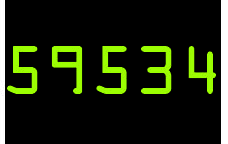

59,534 is a pretty big number. Way bigger than six, even fifty-six. It’s so big that, if you wrote it out in word form, well, you couldn’t put a postage stamp on it. Although, really, what with email, that postage stamp business is kinda getting old school. I mean, really?
But that’s not the point. The point is that 59,534 is a milestone – no, not a millstone, although one could make the argument that if you never finish anything, but simply count numbers of words, the writing of one’s novel could become the thing itself, and the poor novel would never be finished because really we’re just churning out words to be counted. Sad, sad.
But that’s not the point. The point is that I set out to rewrite this novel of mine to 60,000 words. I’m still a good 15,000 words from the end of the rewrite and I’ve hit 59,534. On the one hand you could say, gee whiz, you bozo, you didn’t hit the mark. But, on the other hand, you could say, dude, you like, totally obliterated the milestone. Shredded it. Like a cheap taco, you know?
Oh, and these are good words. Full of passion and verve, with only one passage so far that my daughter has pointed out as dullsville. I’m headed over to dullsville next week, taking the slow bus, to fix up things there. As long as she stays awake I’m good.
But that’s not the point. The point is that, as writers, particularly budding novelists – oh, how I hate that word “budding”. Makes it sounds like all you need is raindrops and sunshine and lovely windy days and, badda boom, etc., look mom, I produced a novel! Bud this. Novels are nothing but the results of blood sweat and tears, and more than a lot of all three of them except the blood part. They are hard, hard work that, even though it’s fun to write and when you’re in the moment there is nothing sweeter than your characters telling you what to say and what they see and you are really there, really in that place, the sweat dripping off your nose because the steam engine is just six inches away, and the smell of the grease fills your nostrils, and the bossman keeps bellowing “shovel, you lazy dogs!”, they are angst-filled folios cobbled together from hopes and dreams and genuine, genuine art.
But that’s not the point. The point is this: although nobody reads my stuff – if your are reading this, be a pal and turn out the light before you go – I am celebrating almost hitting my goal of 60,000 words. Yaay me!
Tomorrow I’ll cross the 60,000 words no prob. But by then the goal will have shifted to completion. Completion of the 7th and best rewrite of what started out, so long ago, as a simple short story meant to describe a warm day. I guess that’s the point, isn’t it?



 John D Reinhart