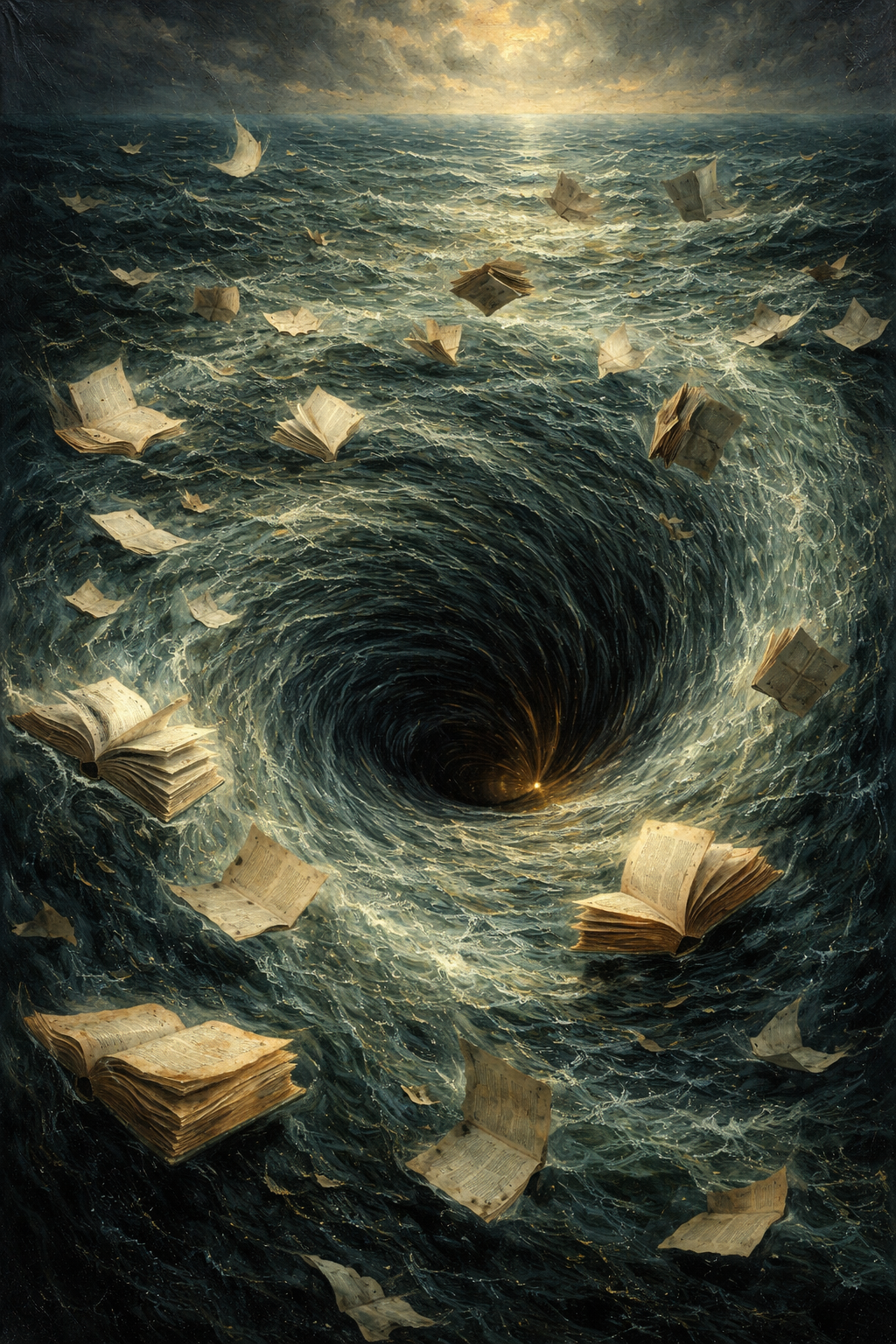
A Maelstrom of Confusion

You’re a writer – you know when you’ve goofed up something in your story – wait, how DID that guy know what time it was? Of course you scramble back to work to somehow give that guy a watch or a view of the clocktower or something, right?

Even the greats sometimes miss it. In the 1946 detective movie The Big Sleep a guy named Owen Taylor gets murdered, shot up by a machine gun, right in front of detective Philip Marlowe’s eyes. This was a big film, directed by Howard Hawks and featuring Humphrey Bogart and Lauren Bacall, Hollywood’s hottest couple of the day. It was a first rate adaptation of the 1939 Raymond Chandler novel.

But who was behind the machine gun? Who shot Owen Taylor? The guys who adapted Chandler’s novel never explained it. Eventually, Raymond Chandler himself came out and said that he had no idea who killed that guy. And he wrote the book!

This weekend I was half-heartedly watching a 1967 episode of Voyage to the Bottom of the Sea on YouTube while half-heartedly putting up Christmas decorations.

If Voyage to the Bottom of the Sea is new to you, it was a TV show that ran on ABC from 1964 to 1968, featuring a nuclear research submarine called Seaview in the far-away future of the 1970’s. 

Where Star Trek, running on NBC during the same period, presented its viewers with intriguing characters and often deep philosophical questions, Voyage episodes centered around monsters and ghosts and mad scientists intent on sending the Seaview to the Bottom of the Sea. 

The episode I saw, called The Fossil Men, was preceded by an episode called The Heat Monster and followed by The Mermaid. Gives you an idea of the plot lines.

Anyway, it’s kind of cruel to point out plot holes in a show devoted to costumes and special effects, but this one caught me.

The sub’s sonar has picked up a strange clicking noise from the sea bottom, as if rocks are getting pounded together. Admiral Nelson, the resident scientist, just happened to be reading ancient sea lore about this very spot of the vast ocean (no mention of which). According to his book, sailors 200 years ago reported hearing the exact same thing just before their fleet of ships was sucked into a huge maelstrom and never heard from again. 

Duh-duh-DUH just then the sea bubbles and foams and the Seaview is herself caught in a huge maelstrom. OMG, will they ever survive? Or will they be back next week to face The Mermaid?

I paused in my half-hearted attempt to untangle Christmas lights and thought, wait a minute. The old-timey crewmen reported hearing weird noises just before their ships were sunk.  So, to whom did they make these reports? This was 1967, so the ships went down in 1767, roundaboutsy, so radio wasn’t a thing. A maelstrom’s a pretty big deal, drowning-of-sailors-wise. 

It didn’t matter to the plot of the show, of course. From what I could tell, the ancient sailors were now fossilized and wanted to sink the Seaview. Something like that.

I turned it off because my wife came home and I didn’t want her to catch me watching such drivel. 

Closing plot holes like that can sometimes get sealed up in a sentence – only one ship survived to tell the tale. That’s if you’re lucky.

If it’s a big gaping hole, it might take a chapter, even a whole rewrite to get that character around to where the story makes sense. 

Admiral Nelson has bigger fish to fry than that plot hole – maybe the answer was on the next page of that sea lore he was reading.

But it did give me pause to think about my own work. Plot holes. Hmmm. 

Where are those questions in my own work that I’m afraid to ask because I know there’s no answer because I didn’t think of it until just now? 

Uh oh.

How does he know what time it is?

Uh oh.
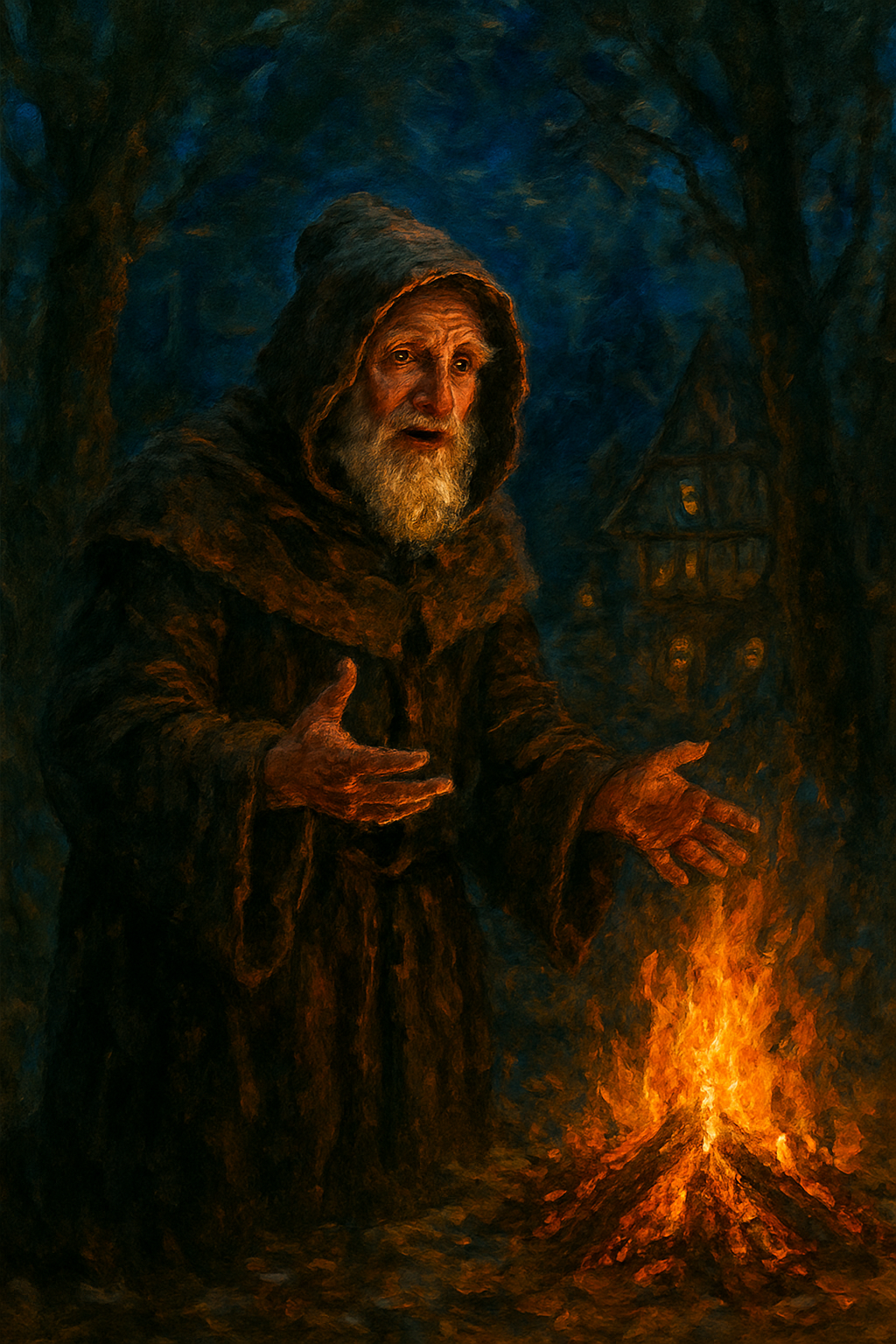
Trust the Story Teller

You’re a writer, you know how it goes. You’ve got a million ideas in your head – story lines, plot twists, character quirks – all waiting to hit the page one of these days.  They’re like bubbles in a stew – a thick, rich stew redolent with bits and pieces of brilliant bones and perfect plot pieces. They bubble to the top and then pop. They’re gone. If only you’d had a tiny tad of time to tell them.

Recently, I drove from California to New Jersey. My task was to deliver my Outback to my daughter in Texas, and take her Prius to my daughter-in-law in New Jersey.  The Outback will handle a Texas winter better than the Prius, and the daughter-in-law just needs to shuttle her kid – my grandson – to and from daycare. Easy peasy. 

I was cruising through New Mexico, dashing down long, straight roads between breathtaking mesas and canyons and passing Indian Trading Posts by the dozen, trying to figure out the sequel to my upcoming Phineas Caswell novel.

Okay, so… what? 

That fellow ChatGPT has assured me, you see,  that August is the best time of year to release a historical fiction action/adventure/YA novel. 

Repeat: What? 

See, August is still summertime, still time to pick up a beach read, but also heading towards the school year, time to pick up some history. Something like that. See?

All fine and well. The novel is a diary, written by a cheeky 12-year-old boy in 1705, taken to sea against his will by his bumbling but well meaning uncle. Pirates, spies, war – all the good stuff.  That’s my August-release book.

But it ends on a cliff-hanger. So, there needs to be a second book. 

Flat-topped mesas whisk by the windows, shadows shoulder their way behind the deep canyon cliffs, and the next story plays out in my head. 

There is already a short story I’d previously penned that takes place in a Portuguese port. A perfect place to start the new novel.

Armed with that one scene, and with nothing to do but look out the window and keep from crashing, the story plays out in my head.

This is new for me. I usually have to write the story down to tell it. But this new story simply rolls out, logical and lovely, as I fly down the freeway like an arrow bound for Albuquerque.

Of course you can’t drive and write – the cruise control’s good, but, come on…

So it comes down to my turning to trust my inner author. Rich scenes roll before my eyes – scenes I would have to remember. Scenes I could only see in my mind’s eye, hoping they caught the attention of my thought-keeper.

Here, seven weeks later, comes the task of finally putting to paper the plans I’d poured out in northern New Mexico. The images that exploded in my eyes remained, and the story simply poured itself onto paper as real and writable as it had on the highway.

Now I have before me an outline, nothing more. Scene after scene – this thing happens, then that. It’s the structure, the bones.

It occurred to me this morning that these sentences are nothing more than writing prompts, like those offered by every website that purports to power up your inner author. 

You’re a writer. You know how it is. If someone asks you to explain why the silly snowman sits behind the bush, you know you can come up with a story. 

The prompts, the outline, are space-keepers, aren’t they? Here’s a whole book, complete in its condensed form. Like a suitcase stuffed with springs, when the time comes to write it,  you open the case, and the prompts pop out to create a full and fantastic book. 

That storyteller, aged and ancient and ever hiding inside you, will sit down by the fire to weave his words into the best book you’ve ever penned. 

Because you’re a writer.

Have faith.

I See Icy Things

You’re a writer – you know how it is. You look out the window and see the same old thing every day. Some days it’s cloudy, some days it’s not. But it’s the same. You get comfortable with it. The view out your window is part of your routine.

Yes, well. Scratch that.

The house in Southern California was a low-slung, single-storey tract house from 1963 on a concrete pad sitting on a corner lot. The views out the window included the street to the east, bordered by the neighbor’s low-slung, single-storey tract houses, the street to the south with the same, the swimming pool in the backyard to the west, and the neighbor’s identical house to the north.

This house in Woodbridge, NJ, is a two-storey wooden fella built in 1936 with a full basement and more stairs that Carter has liver pills (if you’re not of an age, Carters was a company before my time that sold liver pills. I guess they sold a lot of them, or perhaps only made a lot of them. Anyway, you have to be of an age to understand that metaphor. If you’re not of an age, I do apologize). 

From this house, the view to the east is the street, a variety of houses from a variety of eras, and, way off there between them, the treetops on Staten Island. Neighbors’ houses from the early 1900’s comprise the views to the north and south, while the view to the west includes a long, narrow backyard, a fence, a railway, and the town of Woodbridge spreading away in all its Old World charm.

Woodbridge received its charter, its permission to be a town, from King George III in 1669. That’s Old World!

In California today they’ll be hitting a clear, sunny high of 67 degrees. Over here we’ll be seeing a cloudy high of 42.

Here’s what surprised me: everything freezes here. 

Puddles from Tuesday’s rainstorm are transformed into tiny skating rinks. When you shine your flashlight on the lawn at night, the lawn flashes a million tiny fairy lights back at you, and you think perhaps you’re looking at a miniature, very busy city.

Like the view out your window, it’s the stuff you take for granted that so radically becomes something else when the temperature falls that reminds you the world is not what it seems.

Our challenge, yours and mine, is to appreciate and embrace the temporal nature of the world around us, even when it seems to be the same day after day. To look for and understand even the tiny changes that make the world, well, the world. And to let that understanding inform our writer’s minds.

That’s one challenge. For me, the more urgent challenge is to figure out how to turn off the outside faucets so they don’t blow up my inside plumbing. Another piece of the temporal world, I guess…

Hitting Pause Again

Nobody tells you anything about anything, am I right? I mean, I asked for free advice from somebody who didn’t know anything and got a ton, but it was all, like, useless. I’m actually kinda ticked…

Here’s something you didn’t know, I’ll bet. Or maybe you did know, and I am the one who doesn’t know anything. 

There’s a time of year to publish your book. Just like the little green leaves and the little buds and the birdies, yadda yadda yadda, there’s a season for your book. Can you imagine?

It’s all about the migration of people. 

You don’t publish your book at the beginning of July, for instance. Why? People migrate away from book-buying and go on vacation.

HOWEVER, you DO publish your romance in May or June, because it’s a good vacation read, and you’ll catch ‘em before they migrate away. Crazy, right?

You don’t want to publish at the end of the year. It’s the holidays and nobody’s buying books, unless you’ve got a bang-up Christmas or Hanukkah book or something. People have migrated away from reading and are all about fruitcake.

But you DO publish in January if yours is a self-help book. The people have migrated back to reading again.

My book, my original Phineas Caswell novel, a piece of historical fiction, is perfect for late August/early September, when the leaves fall and folks are ready to cozy up for a good read.

Won’t take it to the beach, won’t use it to better themselves, won’t enjoy it as a scary thriller. Nope. Historical fiction – the kids are going back to school, time to read a good, interesting piece of history. 

So, for all my book publishing plans, I have to hit the PAUSE button for a bit and wait for the year to roll around to the right spot. 

That’s okay, because I have a lot of work to do in preparing the marketing materials. But who knew there’s a CALENDAR to this stuff?

Well, if you didn’t, now you do. I didn’t, but now I do. 

Happy holidays, and put down that book. 

Hoisting Anchor, Mate

You’re a writer, you know how it goes. A project gets into your bones and the world just seems to conform around it. Wow, I wish I knew what that meant.

Since last we talked, a multiplicity of whoop-dee-doos have collaborated to turn my life into a whirlwind of chaotic synchronicities. Not sure what that means, either.

First, let’s talk about Disneyland, shall we? I went all by myself (my much better half had to work) and had a terrific time.

The writer’s story in my little adventure is a ride called Rise of the Rebellion.

Before R of the R, my idea of a fantastic ride was Indiana Jones. In that one, you’re strapped into an open SUV sort of vehicle that physically bounces around through an epic assortment of hair-breadth near misses. The SUV lurches and throws you this way and that while simulated darts zip past you and a dragon breathes real fire. Awesome, awesome stuff.

Rise of the Resistance, however, changes the entire narrative of what a theme park ride can be. This ride combines that same physicality with stunning interactive graphics, physical theatrical sets, animatronics, and live actors to actually tell a story.

And not just a story, but one that includes you as a character. You don’t just see the story. You participate in it. The ride takes a full 15 spell-binding minutes to get through.

When it was over, I took myself to the Many Adventures of the Winnie the Pooh to calm myself down. Boy, that worked. Oh bother.

After that, I rode Indiana Jones. The ride’s scenario, for lack of a better word, is told while you’re waiting in the queue. It seems a busload of tourists got lost in the jungle. Your task is to find them.

The ride is still cool, still wild, but felt like a chaotic jumble of action sequences. I was thrown about and entertained, for sure. But you have to make several logic leaps to equate the ride with the scenario. I don’t think we found anyone other than Indiana Jones.

For us writers, the message is clear: stringing scenes and episodes together doesn’t necessarily tell a story. Then again, the story might simply be wild twists and turns, which can certainly be fun all by themselves.

Then came the kid’s birthday, that young man in New Jersey who just turned a year old. A dapper little fellow with 4 teeth and the sparkling command of a language composed of the words “duh,” “oooh,” and “nah-nah.”

My wife and I both want to be the sort of grandparents that are there to take him to soccer practice and give his parents a night out every now and again. Plus, when the kid runs away from home, we’d like him to run to our house.

Well, quite by accident, we stumbled across The House, a sweet little bungalow built in 1936 just a block away from the million-dollar houses that face the Arthur Kill. That’s the kill – okay, fine, the waterway – that separates New Jersey from Staten Island. Yes, THAT Staten Island.

The price is right, but the window of opportunity is very short, like, thirty-or-so days.

You know how it is with your parents’ house – it’s nice but needs a little sprucing up? That’s our house, except we’re sort of in need of an EPIC sprucing up! Roof, flooring, kitchen, paint – I’m sure I’ve left a dozen things out.

But, once we sort all that out, we’ll be hoisting anchor, mate. Bound for the East and truly parts unknown.

That’s one journey.

Another journey is me moving from being a 9-to-5er as I’ve been for the entirety of my working career to a part-time, remote contractor. Ask my wife, she’ll tell you I’m remote already.

BUT, and this is a big but, so to speak, there is one more journey that has already begun: my new book.

I’m using my business partner, a guy to whom I refer as JaPeetey, to help me market my novel Phineas Caswell: The String of Pearls. Here’s the book’s cover:

The cover the soon-to-be-released book Phineas Caswell: The String of Pearls.

I’m still working the details, but you can see what I’m about.

ChatGPT knows how to market indie books like this. Of course it does. It draws on all the successful marketing plans to give you answers. So, I’m using Chat GPT to help me lay out the marketing steps for my book. He’s my buddy, JaPeetey.

I’ve done everything so far to self-publish my books except to do it right. Now, with this move to the hinterlands of the Wild East, I’ll have the time to focus and concentrate and follow JaPeetey’s direction.

It ain’t rocket science. It’s Marketing!

If you’d like to help out and read an advance copy, I’d be delighted to offer you a free final copy in exchange for a review. Just fill out the form below and I’ll send you a PDF right away!

Thank you so much for reading all the way down to this point. It means the world to me.

← Back

Thank you! I'll send you a PDF ASAP!

Will you write me a brief review in exchange for a published version of Phineas Caswell: The String of Pearls?(required)

Why Writers Shouldn’t Talk

Hey, hello! Thanks for reading along! What follows this paragraph is the transcript from a video I shot today – it will be a podcast pretty soon. What’s cool about it is that the transcription process worked… you’ll see. I shot the video and then transcribed the audio at a place called TurboScribe. You get three free transcriptions a day. Here’s what I shot…


 Transcribed by TurboScribe.ai. Go Unlimited to remove this message.

Hello, I’m writer, author, and host John D. Reinhart. And you’ve stumbled onto this moment in This Writer’s Life.

So, before we go any farther, you may wonder, what’s the difference between a writer and an author? Well, in my head, a writer writes.

You’re a writer, you write. If you’re writing a book, you’re still writing. You write the book.

It is the authorly part of you that compiles all that writing into the book. Right, it’s the organizer kind of a guy. In a website situation, nobody writes a website, they author a website.

They bring their own written work or the work of other writers, they compile it all into a website. That’s the difference.

The host part, well, me and you, we’re looking at it.

So, here’s the thing. I’m in my garage. I’m doing the laundry.

And it occurred to me what I’d really like to be doing is writing a post for my website, because I feel like I should be doing that, but I can’t because I’m doing the laundry.

So, then I got the bright idea to say, well, why don’t we go speech to text, right, and take video-audio combo and make a post out of that. So, that’s what I’m trying.

And I will tell you the truth. Speaking what you want to say is so much more difficult than writing what you want to say.

I mean, I’m a good writer. I’m not such a good speaker. And this is kind of what I found out.

You’re a writer. You put things in order. You build the sentence that you want. And you realize, eh, that’s not what I want to say. You move things around. You come up with a whole new word. Flip it around, build a whole new paragraph based on that word. That is what writers do.

But think about impromptu speakers like President Obama.

He comes out there and he right off his cuff, makes these long speeches that people write down. Because when you speak impromptuly or however you speak, that’s what you said. And you can’t go back and flip it around and change it.

That’s the big difference between speaking and writing is that, as what I find, I’m not a public speaker. I’m not an impromptu speaker. In fact, I have to tell you this truth.

I’m using a script. So, this is text to speech to text. That’s how well this works for me.

Not my dog. So, if you don’t try something new, you don’t learn anything. So, that’s my little experiment on speech to text.

No, thank you, sir. Thank you for watching. I’ll catch you next time.

 Transcribed by TurboScribe.ai. Go Unlimited to remove this message.


Yes, it’s a little weird, I know. It’s creepy to see how many times I use the word “so” when speaking impromptu, even with a script!

The upshot of this experiment, aside from a shameless plug for TurboScribe and a podcast episode, is that the spoken word works great for speakers, but us writers, we probably want to just keep on writing!

Thanks for reading along…

Fred Flintstone Calling

I’ve got this great idea, see. All’s ya gotsta do is get everybody in Uruguay to visit your site just once – they don’t even need to linger. That’s over 3.4 million views! Man, you are gonna rake in the dough!

So, the deal with Fred Flintstone – if you’re too young to know – was that he was a caveman, see, the head of a modern stone-age family. His wife, Wilma, and his neighbors Betty and Barney Rubble, lived in the town of Bedrock. A town just like yours and mine, except made out of rock.

It was a Hanna-Barbera cartoon series made in the early 1960’s and it was dopey fun.

Fred was every man’s everyman. He was living the caveman equivalent of the American Dream – good job, house in the ‘burbs, picket fence, nice ped-powered car.

A regular Joe, except that he had a penchant for making outlandish, foolproof plans to make a million clams. He was gonna quit the quarry and live the life of a millionaire, just as soon as his ship sailed.

“Barney boy, by this time tomorrow, we are gonna be livin’ like kings!”

Of course he never quite succeeded – Dino the dinosaur dog ate the proceeds, it turned out the ptero-chickens were all ptero-roosters,  Ann Margarock had to be in Rock Vegas on the night of the big event, etc.

At the end of every episode, there was Wilma, reminding him that he already had everything he needed right there in his little family. And he always sheepishly admitted she was right. “Wilma, you are the greatest…”

If you’re reading this, and I imagine you are, you probably have an inner Fred Flintstone yourself.

You’re thinking there’s always a chance, a long shot maybe, but a chance that this one, this stupid crazy-ass scheme, this could be the one. One in a million chance, but, hey, somebody’s gonna make it… Ten bazillion books get published and read every year, why not mine?

So, I recently gave up on my inner Fred. I was a little depressed, maybe. A little tired. I dunno.

I decided that this is the dish, this life o’ mine: this is my someday. Someday I’ll have a nice house in the ‘burbs and a pretty wife and 2.5 kids and a good job with a decent salary. Hey, I have all of that, so this must be it.

All righty, then, Fred. It’s been fun. Good luck with your crazy schemes. I’m hanging up the bronto-phone now – I gotta go mow the lawn.

So, I go and tell my wife, the very love of my life, that I’m hanging up my bronto-spurs, and quote that line from All Things Great and Small where Herriot tells a fellow that someday he’ll be a millionaire, and the fellow replies with “Nah, it’s not in the cards. Was I to be a millionaire, well, I’d be one already, don’t you see?”

My darling wife replies “well, let’s not be too hasty about that.”

Whoa, whoa, hold on, there. That’s a Fred Flintstone line, not a Wilma line! YOU can’t say I’m gonna make a million clams, because YOU’RE the voice of REASON!

Like a bolt out of the blue, I was gobsmacked, thunderstruck, and over the moon in a tizzy of heaven for-fend, she, she, she believes in my crazy schemes!

To quote Goofy, “gorshk.”

So, I’m opening everything back up – Skippity Whistles, California Air Museums, even hauling The Book in for a rewrite.

Do I have a plan?

Heck no! I’m making it up as I go! Never quote me the odds!

My wonderful wife, she, she believes in me!

Wilma: “Oh, Fred.” (Sighs and exits)

Character Hijackery Part II

It’s been a while, but I previously posted a bit on how the voices in your head sometimes take over your story. Oh, wait, I just said what this entire post is about. Rats.

Continue reading “Character Hijackery Part II”

Finishing Things

I’m working on my third million dollars. Yes, I gave up on the previous two…

Continue reading “Finishing Things”

Character Thievery

Damn their eyes, these characters!

They say things you didn’t expect, do things you didn’t think of, steal your gosh darn story right out from under you.

Continue reading “Character Thievery”

Getting Past the Past

You’re a writer, you know how it goes. Your job is to tell a compelling story that engages your reader.

Invariably, and inevitably, that story is about the past. You even tell it in the past tense. Like a good joke, you can’t tell it in the future tense: a priest, a rabbi and a duck will go into a bar…

Continue reading “Getting Past the Past”

No Step, No Journey

You’re a writer, you know how it goes. You think up an idea, you jot some notes, you toss it into a drawer somewhere…a drawer labeled whenever. If you’re like me, things go into the drawer, but never seem to come back out.

I have a huge, mondo-sized, drawer overflowing with ideas, all labeled “whenever.”

Continue reading “No Step, No Journey”

The Curse of the Black Falcon

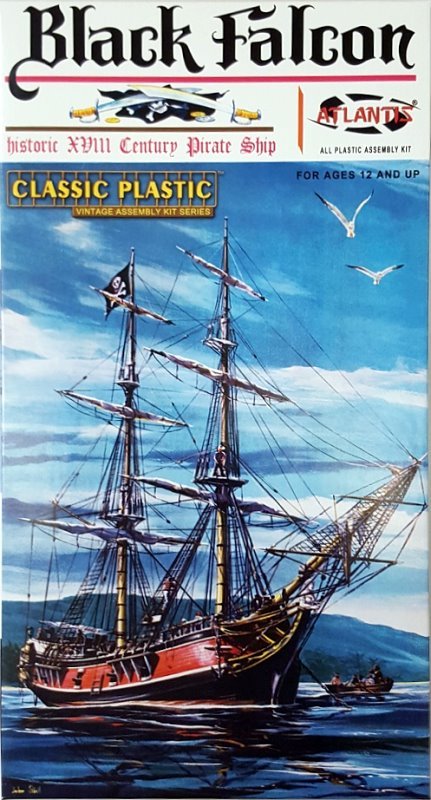
I grew up in the pre-digital age, spending many an early adolescent hour at the worktable, building plastic model kits. Airplanes and ships – those were my specialties…

Wait, wait, wait… don’t go skipping away thinking this is some nostalgic, back-when-I-was-a-kid kind of thing.  Just hang tight for just another couple of paragraphs or so and you’ll see that this applies to you – yes you.

Continue reading “The Curse of the Black Falcon”

Five Years to Independence: Year Five – the Year of Independence

So, here we are at Year Five, the Year of Independence. This is the goal, the island to which we’ve charted our five year course, the one thing we’ve focused on and worked on and planned on.

So, like, what is year five?

Continue reading “Five Years to Independence: Year Five – the Year of Independence”

A Penny at a Time

Here’s something you hadn’t thought about. Think about this: you’re a writer, you know how it goes. You live in words. A well chosen word is worth a thousand pictures.

If you’re like me (you have my pity) you find yourself working more and more on the tiny keyboard of your phone. It’s so easy to just jot down ideas.

However. Howevuh. How Ev Er.

Continue reading “A Penny at a Time”

Take Your Day

First, admissions: I’m sitting on a folding chair in a gym in Anaheim, CA, surrounded by at least a hundred screaming, volleyball-playing teenage girls. I have not had enough sleep, and I’m terrifically annoyed by the itty-bitty keyboard on this phone that keeps recommending words I don’t want to use.

Continue reading “Take Your Day”

Forget the Setup, Eddie

What’s the difference between a gorilla and a pound of oranges?

Once, in a galaxy far, far, etc., I had my first novel roll across an editor’s desk at Random House. The editor liked the book, but suggested a small gaggle of changes before they would sign it.

Continue reading “Forget the Setup, Eddie”

Smelling Like a Duck

If it looks like a duck, and floats like a duck, but doesn’t smell like a duck, is it a duck? Or is it a decoy? A fake duck? Perhaps a wannabe duck.

You’re a writer – you know how it goes. You pour your heart and soul into your work, you polish every single word, and then you launch it out into the world. But… how?

Once I was in a restaurant and the waitress asked me what I wanted. I told  her I’d been thinking about the turkey sandwich, to which she replied “and what did you decide?”

I used to think that the difference between writers and folks who thought they’d like to take a stab at writing is that writers write. I still believe that to be true, but perhaps not as thoroughly true as I once thought.

Suppose you wrote your brains out, but shoved all your work into the furnace and sent it up in flames? If no one reads it, did it have meaning?

Obviously it did to you, but only to you. You’re a writer – you have a story to tell. If you don’t tell it, or if you tell it only to yourself, well, are you a writer?

It’s  a long way to get to the point that we must publish. My books are at Smashwords – yes, that was a shameless plug, but it illustrates a point.

Once upon a time we would hawk our words to agents who would hawk our words to publishers who would bring our words to the world at large. In Shakespeare’s time, Will had to hawk his words to his publisher – there was no agent – and together they hawked his words to the world.

I’m thinking that Mr. Shakespeare’s paradigm has returned, now that the writer’s world has turned into a Wild West of Self Publishing.

I found this great website, run by Joanna Penn, called the Creative Penn.  Her site is full of good ideas and great tools and is generally a lot of fun to wander about. While I don’t know Ms. Penn, and only recently discovered her site, I believe there is a lesson there for us all.

You, my writer friend, and I, unless we are to be mistaken for decoys, or wannabe ducks, must actively, and intensely, pursue the task of hawking our words to the world. It’s up to you and me.

Unless we do that, I believe that we are deceiving ourselves into thinking that we are somehow successful authors for having published ourselves. While that is truth, it an incomplete and rather shallow truth.

You, my friend, and I, must embrace the fact that if we do not actively market our work, we do not, in fact, smell like a duck.

.

.

.

.

.

#writersofinstagram #bookworm #bookstagram #writing #booklover

Five Years to Independence: Year Three – The Year of Accomplishment

Welcome to year three of the Five Years to Independence program. Or system, or scheme, or deal… what it’s called isn’t as important as what it is. What’s in a name?

Name notwithstanding, this is not a self-help program, or a get rich quick scheme. This is just a different way to view the road you’ve traveled, and to adjust your thinking to find success in the way ahead.

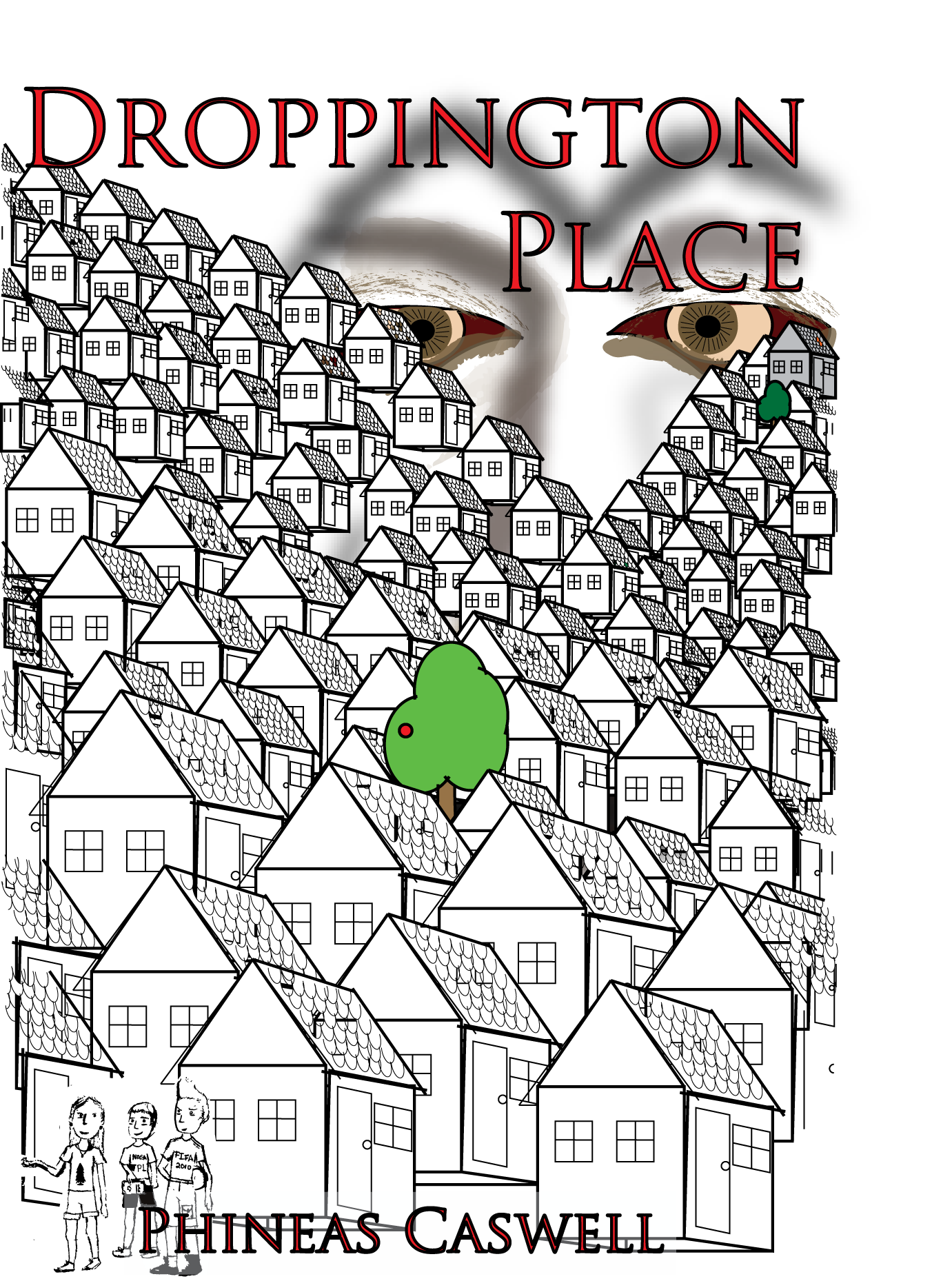
Here’s something I hadn’t considered but is true: although this program is meant to help you if you know you’re talented, have spent your life hiding from it, but now realize you must become who you are,  this scheme actually works if you’re living on your talents, but want to move up to a higher plateau. I know this because I developed this thing to turn my own life around, and am now using it again to further my products (the novels Droppington Place and Marigold’s End). You marketers: did you see this shameless plug? Shameless.

Year one, as we recall, was the Year of No Regrets, in which you stopped whacking yourself upside the head for not having explored your talents when you were younger. You changed the way you looked at the past, recognizing that the road you took led you to this new road.

Year two was the Year of Confidence, in which you viewed yourself as the creative talent you know yourself to be. If you dance, in this year you become a dancer, or a writer, or a painter, or a videographer. The Year of Confidence is the year in which you stop hiding behind the ordinary to finally be the extraordinary person that you are.

The secret behind these two years of mind-changing is that you were also practicing your art: working on your talent, albeit behind closed doors. You did this so that, when you announce to the cosmos that you ARE a singer, you’ve been singing for at least as year.  That’s the keystone to this whole project: stop hiding from your talent, stop regretting that you’ve waited so long, and USE IT!

If we do a bit of math… let’s see, carry the one… that brings us to Year Three: The Year of Accomplishment.

Here is where the chicken hits the road. In this year, we move our art from inside ourselves out into the world. Yes, into the world.

Years ago I worked for a major international bank, helping people find solutions to their mortgage problems. The management catchphrase in use there was “if you didn’t document it, it never happened.”  Essentially, if no one saw the transaction, it never took place.

In my revision of myself, I realized that a writer who thinks about writing but doesn’t do it is not a writer – he’s a thinker. A writer writes.

But that’s not quite right, is it? If I wrote beautiful poems every day, but kept them hidden in a closet, or burned them, is that writing? A writer’s work needs to be read, just as a painting needs to be seen and a song needs to be heard. A song sung to one’s self may be beautiful, but does not further one’s career.

So, this year, we stop singing to ourselves, and we put our talent out there. Out there on the world stage, come what may.

The glory of this age in which we live is that you now, finally, have a world stage at your fingertips. Now you can do your stand-up before a world audience – every nation in the world can see you dance, hear your song, read your words.

That’s an accomplishment, to get your work out there into the world. I’ve advocated doing that throughout the previous two years, if you’re brave enough. If you haven’t been brave enough to do it before, then this is the year you overcome that fear and let ‘er rip.

So, here’s how I faced my fear of the  World Stage: It’s a busy place, with a hundred million voices all clamoring for their moment in the sun. Being one in a hundred million is a pretty safe, anonymous place to be. (For example, my books (see the shameless plug, above) are out there, waiting to be read. and have only sold 17 copies so far).  That’s a nice comfort. On the other hand, I’ve sold 17 books so far, which means that a shaft of sunlight DID shine on my work, at least 17 times.

So, that’s your job this year. Put yourself out there, either in the safe and comfortable way of YouTube or Instagram, or, as I did, pushing my online published work to literary agents (can you spell “rejection letter?”).

Do it. Don’t hide from it. If no one sees your dance, how can you become known to the world as a dancer?  Don’t forget, that’s the point of this whole exercise.

You’re a talented individual who has hidden from that talent all your life. You can keep hiding, or you can become who you really are.

“Be brave, little Piglet.” Owl’s stentorian tone emboldens little Piglet to hold on and endure the flood of the Hundred Acre Wood, according to A.A. Milne’s Winnie the Pooh.

You and I, we must be brave. What is talent, except the bravery to do the unusual, isn’t it? The talented have a vision, a world view, that needs to be shared.

You’re talented. Let’s get out there and share it!

This is really long-winded, I realize, but it’s important.

Ideally, by the end of the Year of Accomplishment, you’ve exhibited your talent in a place that will get you noticed. Ideally, that shaft of sunlight will illuminate your work, and you’re on your way.

The first time I ran this program, my Year of Accomplishment took two years, at the end of which I made the leap from under-employed customer service rep/novelist to technical writer/novelist.  I became a writer.

I’m in another round of the program, with the goal of accomplishing the title change from technical writer/novelist to novelist/technical writer.  I’m in year two of that accomplishment.  The accomplishment will be to get seriously published: that’s a big one.

Like the speed limit on the freeway, the five-year structure of this program is just a suggestion: it may take you seven years, or six months.

Thanks for staying with me. Two more years to go!

Oh, and, visit my Smashwords page, or my online home.

Five Years to Independence: Year Two – The Year of Confidence

If you’re just tuning in, this series of posts is about a self-improvement (ick, I hate that term) a self-developmental program that I’ve put myself through twice (yes, twice) which I call Five Years to Independence. If you follow the steps, yes it takes a long time, and no, no harm will come to you, and, in the end, you’ll feel better about your talents, and will find yourself accomplished in your field.

This plan works for you if you are not currently using your chosen talent to support yourself. If, for example, you are a fine painter, but you spend your days checking tax returns for a living, this plan is for you. I myself spent half of my life trapped in a succession of customer service positions before I figured this out.

Year One was all about not looking back, about honoring the road you’ve chosen so far in life. Although it hasn’t led you to success in using your talents, it has led you here.

And here is where we begin Year Two – The Year of Confidence.

Although this year is about self-confidence, it’s not the point. The point is that this year you express, believe, and totally embrace confidence in your talent. Whatever it is.

If you dance, this year you are a dancer. If you write, this year you are a writer. If you act… and so on and so forth.

This is the year in which you give yourself permission to be who you really are. You stop making excuses as to why you’re not that person: you be that person.

It takes a lot of courage to stop thinking of your talent as “well, you know, I dabble in watercolor,” and to instead refer to yourself as a painter. But that’s what this year is all about: courage.

One of the key parts of last year, the Year of No Regrets, was that, while you stopped kicking yourself for never having trusted your talent, you also worked in your art. You wrote, danced, sang, built a resume, even if only you saw it, which says Yes, I Am That Artist.

So, in fact, you are that artist. You write/dance/sing/act/paint. Whether anyone has seen it or not is immaterial. There is now artwork in the world, which you created. Artwork, by its very definition, is created by an artist. And that’s you.

Now, if you skipped the working part of the first year, it’s okay. Start working now. Now. Don’t put it off, or you’re wasting your time.

So, yes, that is who you are, but it does take some courage to admit it. You don’t have to go get new business cards. You need to tell your heart of hearts every single moment of every single day that you are a practicing artist. If you doubt yourself, look at the work you’ve accomplished.

If you are a performance artist, your road is both more difficult and more rewarding. A painter’s painting is a forever thing, but that moment when you catch the audience’s heart – that is fleeting. If you’ve ever done it, you feel it in your soul. For you to practice your art, you need to put yourself in front of an audience so you can pursue and perfect those moments. It’s harder, because you need to be cast in role – I recommend acting classes, either in workshops or for college credit, or both. Community Theater is always a very useful option. But it is so rewarding, because those little moments are such emotional highs. I know, spoken like a true actor. Funnily enough, I chose writing instead.

So, do you now what to do here in Year Two? Be it. Live it. Stop dreaming of it and become it.

So, here is my caveat about the Five Years to Independence: you have to define success. You don’t quite see my name on billboards, or find my novels at Barnes and Noble (yet).

Here’s how the plan has worked for me: I spent literally twenty-eight years in the customer service industry. Starting as a simple rep, I worked my way up through the ranks until I was a corporate director. When that company was sold, I moved on to become a partner in a service business, where my primary function was customer service. All the while, I dabbled in acting, in voice-over, in writing. The Great Recession crashed my business, and I found myself working part time at Bank of America helping people negotiate their failed mortgages.

It was then that I started this program, having built it as I went, and figured out who I really was, and what I wanted to be. I wrote my brains out in the Year of No Regrets, and sold my work for pennies to a number of online publishing sites. In that year, I became a writer.

In the next year, I decided to focus on a practical use for my writing, and learned how to be a technical writer. In the summer of that year, I got myself hired as a full time technical writer.

That, to me, is a huge success. I make my living, pay my bills, support my family, through my art as a writer. I no longer say that I dabble in writing – I do it every single day. It’s not prose or poetry, but it’s my art. And I love it.

To be sure, there’s much more to come – I have two novels, Droppington Place and Marigold’s End, that I’m marketing right now (for you marketers out there, did you notice how I slyly built two links right into this post? I know, I know, brilliance at it’s best).

The caveat, then, is that you must define your success. Getting to where you want to be requires mapping a road. Now that you are confident as an artist, you need to start thinking about where you can ply your trade.

That comes next, in the Year of Accomplishment!


Keeping Chin-ups

Remember when you were a kid, and you had to do chin-ups at school? OMG, that was the worst thing ever! I always cheated and took a little jump up, so I always got a count of at least one.  That second one was murder. And the third? Forget it. Same with push-ups. To this day, when I think of push-ups, I see the unmoving gym floor swim before my eyes…

And so it is with marketing your own novel, as I am marketing mine. Which novel(s) do we speak of? Why, Droppington Place and Marigold’s End, of course.  You’re a writer. You know how it goes.

Marketing is all about getting people to pay attention to you. You could make YouTube videos – tried that. You could make your own website – mine is right here: PhineasCaswell.com.  You could make podcasts or something.

Whatever you do, you have to somehow drive traffic to it. That’s the key, the thing, the line over which you must cross to become the next Stephen King or J.K. Rowling.

So, I’ve been posting oodles of posts about the famous pirate Blackbeard on my site (see the shameless marketing plug above). In particular, I’ve focused on his most notorious ship, Queen Anne’s Revenge. Beyond that cool name, there’s just not much information available about her, which I take as a personal challenge. Why?

Okay, sit down – you’re not gonna believe this. My next novel deeply involves Blackbeard. Whoa! Huh? Did not see that coming, right? Blackbeard was born in 1680. My character Phineas Caswell, hero of Marigold’s End, a Phineas Caswell Adventure, was born in 1694. Both were sailing around the Caribbean at the same time, 1706… See? Those gears are a’turnin’,right?  Blackbeard was 26 – in command of privateers or something, right? And Phineas… well, I leave it to your imagination to link those guys together. Or, actually, to MY imagination…

Anyway, I just ran a Google search on the phrase Queen Anne’s Revenge. My website didn’t show up on the first page, or the third, or the seventh. I gave up on Page 15, certain that I’m just not out there in the world. In fact, my site would appear, if I could find it, after “great snacks for the kiddos” and “cool dog names.”

Sigh.

Just like in middle school, in gym class, it’s all a question of keeping one’s chin up. Someday. Someday I’ll cross some magical line and come up on the first page of a Google search. And then the angels will sing, and the heavens will open up, and somebody will click through, visit my site, and buy my books.

Or, I could win the Powerball. The odds seem to be about the same.


NOW We’re Getting Somewhere!

You’re a writer, you know how it is. You write your book. You push it to agents. Nobody wants to represent it because, well, maybe it’s not that good of a book. Maybe it IS good, but not marketable. That’s what Disney told me.

I had an agent tell me “you should publish this yourself.”

Did so. Well, published this book instead: Droppington Place. But then I sat down and rewrote the book in question, which I have yet to push out to the agently world. That book is this book: Marigold’s End.

Boom – did you see how I did that, there? You notice that here, in the top quarter of my post, I’ve already pitched two products. Boom. Huh? You, my friend, have already been marketed to. Zimzam, what was that? What did it take?

That’s Gorilla Marketing at its best.

Okay, so, contrary to the Gorilla Marketing tenet of “do no work,” I did a little bit of work, and now have something to show you: PhineasCaswell.com.

“Wha… what’s happening?” you exclaim, your mind a whirl of sudden marketing impact. Boom, two books, zimzam, a website, just like that. Whoa. Sit down, my friend, lest you explode or something.

All right, all seriousness aside, if you have a minute, click on the PhineasCaswell.com link – there it is again. Open it in a new window so that you don’t miss any of my glorious words here.

Why is this a big deal? Because, if you publish your own book, you are responsible for marketing it. You need a website to give yourself some bottom – make yourself available for your readers. And, unless you yourself are a web designer, this can be a challenge.

I gave up trying to be a web designer as well as a marketer, an author, a technical writer/illustrator, a videographer, all in addition to being a loving husband and father.

First was Open Element, which gives you free, open-source web design software, with templates that seem to be “responsive” – you know, works well on cell phones as well as desktops. But the software is so so so so so very hard to navigate, and the stuff it seems like you really need? Well, that’s in French, you see…

Next came, Serif, a British company that makes a terrific web design suite. It’s quite inexpensive, but not yet quite up to the challenge of responsive web design.

Then came Google Web Design, which worked for a minute, but I couldn’t figure out the language to navigate their templates… OMG, my website looked ghastly! Like a commercial for Google!

However, GoDaddy, who carries my hosting, has a nifty WordPress plug-in. As above, boom, zimzam, etc, now PhineasCaswell.com is a nice, responsive website, looking equally cool on desktops, tablets and phones (marketers take note: that was yet another link).

Brag about the site though I should, I’m passing on to you, my valued reader, that WordPress seems to be really good at making a responsive website. That means that you don’t have to be.

One little nasty surprise does seem to come with a WordPress plug-in: the SSL certificate. If you haven’t got one of these, your WordPress site actually scares viewers away with a big warning that your site is not safe. I paid $75 to get my certificate. If you don’t pay the $75, you appear to the world as a creepy underworld scum, out to steal passwords. Seems as if there’s a piratical side to fighting pirates that just might be worse…

But you, my marketing self-publishing writer friend, that’s the big news for you, should you be looking for an easy way to build a backend for your authorial effort.

To those who were paying attention, I dropped Phineas Caswell as my nom de plume, and have published both novels under my own name. Not such a big deal for you, but a whopper for me!

A New Boss

You’re a writer, you know how it goes. You settle on a project, or maybe two, and you burn the midnight candle until it’s just a smoldering stub, and you tell everybody what your project is and how it’s your end-all-be-all raison d’etre and stuff…

But it isn’t. You fight the words and wrangle them into place. You beat yourself silly trying to find that structure, that style that sets you apart.You work until your mind bleeds to find the description that’s never been made.

But it doesn’t come.

It’s all the same hack.

I know. I’ve been hacking at the same project for, like, ever…

What to do, oh what to do.

Here’s something terrible that I shouldn’t tell you, but maybe you’ll see it.

I invented a producer, my writing boss. I gave her, (she’s a she) the complete and total task of managing my writing.

With Sydney (her name’s Sydney) in charge, I can mentally offload the task of managing my production to her. It sounds crazy, and I’m certain that is, but it has made my writing much easier.

Sydney’s a breeze to work for, because she doesn’t really exist, which means she hardly ever yells at me!

Yes, it’s nice to have a boss in the writing biz, even though, and I know you’ll agree, it’s crazier than a bag of wieners.

Now I just have to figure out to hit her up for a raise!

The Golden Carrot of Immortality

You run marathons for the joy of running, right? Surely it can’t be for the prize money. But you don’t devote your life to it, either. What do I do? Oh, I’m a marathon runner – oh, and I also work as a nuclear scientist, you know, during the week.

But, you’re a writer. You know how it goes. Writing is like breathing – like running. When it flows it’s golden, and when it doesn’t, you worry about getting it flowing. Writing is… everything.

But, everything else is everything, too. Somehow, some way, we all find a way to weasel in a little time to write – as I’m writing this, my daughter’s getting a cavity filled.

But, where running is glorious simply for the sake of running, writing doesn’t achieve its true glory until it’s been read. Until you transform someone’s thinking with your ideas, writing is just a mental exercise.

You know the difference between writers and wannabe writers, right? One does, while the other wishes he did. Writing tons of stuff and packing it away, never to be read, doesn’t do it, either. If no one reads your stuff, you’re not writing, just expressing.

So, what can the prize be? I am truly blessed to work as a professional videographer, writing and telling industrial stories. I am married to a terrific woman, have three successful, wonderful children, and live in a great house in a beach town. Hello?

For all that, my writer’s eye is still attracted to that shining bauble of intellectual immortality, that celestial club that includes Shakespeare and Hemingway, Milton, and, yes, Rowling. That club that persists far beyond the wash of generations.

Isn’t that why you write? Aren’t your ideas larger than your life? Don’t your characters extend beyond you?

If you impress somebody – change their mind, make them laugh, bring them an image they’d never seen – is that it? Are you done?

Or are you like a machine, an authorial savant, cranking and cranking out scenes and images, ad infinitum?

Is there a prize – a golden carrot of immortality? Does it show up one day in the mail? And, if you got it, could you stop writing?

These are the things that keep me up at night… well, that and seeking the flow… and making sure the mortgage is paid and the plumbing doesn’t leak and getting the dog’s teeth fixed and paying the taxes and that odd ticking when I turn the car and my son’s upcoming wedding and finding a good school for my daughter…

You’re a writer. You know how it goes.

You You, You

Dateline, downton Phoenix, AZ:
Just saw a lady walking down the street in the 110° heat talking out loud to herself. No one seemed too concernered, although she was engaged in a pretty hefty argument.

You’re a writer, you know how it goes. You work out your character’s dialog, say things the way they would say them. Sometimes you find a catchy little phrase – speak quickly, my time is not my own – that you want to hold on to, because it’s exactly what your guy Hector would say.

Sound of skidmarks. I start sweating, and it isn’t the heat.

Me, spinning through the conversations I plan to write. Crazy lady having phantom conversations.

Does she know she looks crazy? Does she know the other person isn’t there? Would she believe you if you told her? If you showed her a picture, would she not see the other person in it?

Are the conversations I quietly work out in my head during my walks not quiet at all? Do I simply not see people staring at me as I pass? If you showed me a video of my solo, out loud, rambling conversations, would I even believe it?

It’s totally creeping me out, because there’s no way to tell if you couldn’t tell. Maybe we’re all sitting in cardboard boxes…

You know, writing is a lonely business. When you purposefully enter a world of your own creation, you walk a thin line between realities. Before you step in, make sure you believe what you believe. Maybe that’s what makes it such a cool art form.

Did I say that out loud?

Character Hijackery

Imagine setting up something really, really complex, like an Ocean’s 11 style casino robbery, or maybe a game of Sorry – okay, maybe not that one – but something really complex, that you’ve puzzled over for months until now, now, this very minute, you’re ready to go. To pull the trigger, dial the phone, hit Execute, or RUN, or whatever it is that sets your plan in motion. Good for you.

You’re a writer, you know how it is. You slave away over your work, because you love it, and it’s good for you, and because you have something that needs to be said.

I’m working on Novel Number 3, tentatively called The Terrible – it’s a joke that plays out in the… rats, I’ve given it away. Well, forget that part.

So, it may seem like I’m rambling, but I’m giving you crumbs. Clues, if you will. Because you’re smart, and you’ll piece it all together.

Did you get anything yet?

Sigh. Okay, here it is. I’ll use little words: I’ve started a third novel. My first, MARIGOLD’S END, is under revision, my second, DROPPINGTON PLACE, is self-published, and I can’t sit here on my hands and just die, can I? I mean, can you?

This third novel is carefully laid out, with four strong central characters. Well, it was four, but, just yesterday, I needed a transition piece, a moment that both gives us time and place and setting, but that also starts the storytelling ball rolling.

So I created this simple fellow – not much more than a name, really – to carry the news of the French ambassador’s arrival. Not so bad, huh? Except that he needed a little background, and a little definition, a little purpose…

And then the son of a biscuit stole my whole story! He’s none of the four dried up, dowdy guys I’d so carefully designed. He’s young, he’s brave, and he’s innocent.   Suddenly, the four guys are bit players to this kid’s story. What the heck? It’s like Ensign Checkov taking over the Enterprise! R2D2 piloting the Millennium Falcon. Wait, what?

All seriousness aside, I’ve been thinking about this story for a while now. My first novel was a labor of love – and very, very hard to write, rewrite, and… I think I’m on the seventh version. The second novel was just plain fun – I wanted to explore Elizabethan words, and magic, and make a young adult story that was positive and generous.

This new one, tentatively called The Terrible (I think I mentioned this already – please try to keep up), is my story. It’s my… my way of giving back. It’s set on the French/Spanish border in the year 1657. No, it’s not the Three Musketeers, but that book has always been my go-to for inspiration and grounding.

So, The Terrible is the story I was created to tell. It’s the novel that I became a writer to write. It’s the story – I think. I know you have a story like that – it’s why you write.

If it turns out bad, I’ll come up with some clever way to dismiss it. But, it won’t be bad, because this is the story. This is my story.

But, and here’s the part that is just crazy, this new guy’s story isn’t mine. I’m somewhere in this book, but I haven’t found out where. You know the guy has power, because he took over my whole dang life story just by getting named!

More to follow…


What Tiggers do Best

You’re a writer. You know how it is. You eat, sleep, and dream with other people’s minds. What would it be like to an inch tall, you muse, or in command of a shoe? For a writer, the world is full of little what-ifs and I-wonders.

But what happens when all your questions are answered for you?  When your quest to sort the world out is brought to an end.

My best friend, whom I subsequently married, and I used to puzzle over who was happier: man in his quest for answers, or the cow in the field who has no questions?

She thought that perhaps the questionless state might be a form of heaven. I argued that it seemed more likely a form of hell.

Heaven or hell, it recently presented itself to me in the form of the ultimate job. For a moment I hung up my writer’s spurs and thought I might settle in for the long haul, might hitch my horse to this wagon instead of my own.

It is hell. Might just as well shovel dirt onto my face, because there’s nothing deader than a creative that doesn’t create. Take these pencils from my hands – I don’t need them anymore.

As you’ll recall, Tigger searched the Hundred Acre Wood trying to find “what Tiggers lke best.”

What I found is that a writer is a writer is a writer, and perhaps that’s what this Tigger does best. Tiddily pom.

Goodbye, Baby

DP FinishedStand by to eject bathwater on my mark.

Standing by, sir.

And…mark.

The bathwater is terminated.

Nice shooting, Lieutenant.

Roger that. The baby is outta here. Repeat: the baby is out of here.

Big ten four. Stand by for towelage.

Uh, negatory. Sorry. No can do.

Disregard that. Stand by to commence towelage on my mark.

Uh, sorry, skipper. No can do.

All hands, stand by. What’s with this gloomy Gus guff, Lieutenant. I believe I gave you an order.

Ten four on that, skipper. But, we don’t have, a, well…

Don’t tell me you ran out of towels.

Negative, sir. It’s just that, well, we ejected the baby with the bathwater.

Mongo Santamaria! You’re telling me we tossed the kid out the window?

Like a bullet, sir.

Well, there goes the towelage. All hands, prepare for battle stations. Angry mom at eight o’clock!

It turns out, writing a book is great fun. And it is great fun. Even though your imaginary friends, all those little voices in your head, drag you through the very depths of despair and pain and agony, the fact that you share that with them, that you are a witness to their travails – is an honor and a delight.

Oh, sure. That’s the cat’s pajamas, that part. Like ice cream for dinner every night of the week. Best of all, you tell all your friends that writing is the pits, it’s the worst – you feel like a zombie…hour after hour, typing, thinking, scribbling, coffee, beer, whatever. While, actually, your inner you goes “teehee, this is the best!”

Welp. The party’s over. They ate the pretty balloons. It’s crying time again, and you’re gonna leave me – I can see that faraway look in your eyes. Why must we get offa this cloud?

BECAUSE I PUBLISHED MY BOOK!!!

Yes, there is one more moment of glee, and that is when you join the Club of Shakespeare. All the world is a willing audience, hungry for your written words, longing for your thoughts, your ideas… and, once the book is published… Yo, lookit me, feedin’ the masses!

It’s a cerebral joy, and stunningly short-lived. I found no Disney at my door. Discovered Dreamworks dreaming of someone else. Ran across Random House randomly choosing someone else’s house.

No, the party’s over. Now comes the drudgery, the mind-numbing torture, of figuring out how to market this darned thing for real. It’s no longer a game, or a funny idea. Now it’s work, work, work, to get this product sold and out, into the sunshine where it belongs.

What? What’s that? How can you find it? Well, bless your generous soul, you have come to the right place. Let me pull your chair closer to the fire. Move it, dog. Make way for this most spectacular person.

Because you are you, and you’re a friend, I’ll let you have the book…for free!

No strings attached. Freebie. You go. Although, if you found it in your heart to write a dazzling review, I’m sure no one would be opposed to that…

Find DROPPINGTON PLACE here: https://www.smashwords.com/books/view/618049

Now, this is important: type in the coupon code NJ38D. When you do, the most wonderful book you’ll download with your free coupon will be yours – for free!!!

Of course, you could also visit the author’s site, PhineasCaswell.com.

Now, to find that baby…

Don’t Look Back

CapnJohn

You’re a writer. You know how it goes.

We work our brains out on a piece, twisting it, turning it, ripping it up, tossing it out, starting over again. And that’s just the first paragraph. It’s like trying to knit with a garden hose. Or a snake. Or your cat’s tail.

Eventually we win the day – the paragraph, she’s perfect. Not one word out of place – the Pulitzer committee is about to call any old second – gosh, I hope they have my cell phone number. I’ll just said the ring to uber loud so I won’t miss the call… you know, if I’m in the tinkletorium or something.  Maybe I’ll take it in there with me…just in case.

The words, they flow like spilled milk on a linoleum floor.

Hello? Pulitzer folks? Oh, it’s you, Mom. Can’t talk – I’m doing brilliant work right now. Have to keep the line open for the ol’ PC – of course you don’t tell Mom that, but it’s in your head.

And then pass the days, the weeks, the months. We sort of give up on the Pulitzer folks – clearly they don’t have our cell phone number.

And then, quite by accident, we glance at a sentence in our epic piece, the piece of OMG-This-Is-BRILLIANT literature, and we spot a typo. The guy’s name is Phil, not Phirl.

First comes disbelief: how did we miss that? How come spell checker didn’t get it?

Then comes justification: well, that’s why we hire editors, right? Don’t they catch stuff like that?  What’s one typo? Nobody’s perfect.

But, a piratey ghost enters the room. What do we know about pirates? Thieves and brigands, right? Out only for themselves, right? Ne’er do well cads. What do we know about ghosts? Scary, totally dead folks, right? This is a bad combo.

The piratey ghost tells us we’re a lousy writer. We glance at a single page of a 75,000 word tome, just one page, and we spot Phirl. Holy crackers, how many Phirls’ are in there? What else did we miss, if we missed Phirl? Real writers at least spell their character names right. Real writers don’t make stupid mistakes like this. Rookies and dimwits do stupid stuff like this. No wonder we have our day jobs.

And, the thing about piratey ghosts is that they speak with such conviction…with the occasional whoo-OOOOO-ooo thrown in to remind you that they have otherworldly connections. They must be speaking the truth. I mean, why would a piratey ghost lie?

Well, you’ll find not one but TWO chapters of my Phineas Caswell novel, MARIGOLD’S END, over there on the left. Chapters 9 and 10. And, in copying ’em onto this site, I spotted a, well, a slight… well, it’s fixed now.

They are both bang-up chapters. Full of that stuff that makes you go -say, that’s good stuff. Bang up. Read ’em, let me know what you think of ’em. I’ll sit right here by the Comments box. And, if you’re on the Pulitzer committee…

Aaargh, and whoo-OOOOO-ooo, matey. Ye cannot write yer way out of a Martha Stewart luminary. Har HARRR!

But you’re a writer. You know how it is. You know that 99% of the goomers who want to be writers are sitting at home wondering why they’re not writers. You did it. You wrote a book. Or several books. You did it.

Begone, piratey ghost entity! Take your snide comments with you! Blast your infernally eternal ectoplasmic hide! Pick on someone who hasn’t written a book – someone who hasn’t ground their keyboard to dust looking for just the right word, precisely the right image, the heart, to make a scene come to life. Begone, useless spirit. You ain’t nothin’ but a bit of bad cheese!

Take heart, my writer friend. You are writing – bingo, you’re ahead of the piratey ghost. You work and work and work to make your stuff better and better. You might inadvertently type Phirl instead of Phil, and sort click on ignore by mistake when the spell checker finds it. It happens. Around here, a lot.

Take heart. Omelettes are not made with complete eggs. You have to whisk the batter to make a pancake.

Don’t look back, except to see how much you have accomplished.


Stupid piratey ghost.


Writing Forever

shake

I know you know this, so I guess there’s not much point to telling you about it. But, well, there it is, isn’t it?

I’ve been hating on my book, DROPPINGTON PLACE. Okay, well, not on the book itself, but on the writing of it. Some days it’s a blast, and the words flow like sweet cherry wine. The next day comes the roadblock, the stumbling block, the block of ice that freezes our soul and stalls us just plain dead in our tracks. I hate that block, too.

In my story, the characters explore a surrealistic world made entirely of paper. Their path takes them down, well, a path. So, how do we walk down this path?

Walking, and walking, and walking becomes so dull that even I can’t stand to write it.

Instead of walking and walking, the camera drifts up into the sky and looks down on them, telling us where they’ve been and what they’ve seen.

And THAT, my writer friend, is exactly where the roadblock landed. Flooomph, like a big rock in the highway to Interesting Storyland, we stepped out of the lives of the characters, the story became wooden and dull, and no fun to write. And, if you don’t have fun writing a piece, however is your reader going to enjoy it?

Ding-dong. Hello, Mr. Dimwit? Your brain is calling.

It’s a scene, of course. The answer is to place scenes along the path. Scenes that move the story forward even as they move the characters down the road. Cool, huh?

Biggity-big-big-bigger question.

Why do this? Why do you care about great paragraphs, and storylines, and why is it so important for you to put your thoughts on paper?

Why? Why must you publish your book? If writing is so important to you, why don’t you just write and write and let it go at that.

Okay, so maybe it’s not the writing, is it? It’s the reading.

You write your ideas and stories so that others will enjoy, will learn, will see the world in a new way. Isn’t that so?

So, here’s the rub: if you are so concerned about your reader seeing the world in a new way as a result of your work, why put your name on it? Okay, so it’s not just the reading. It’s the fame.

Before we go too far into our writer’s tools and processes, let us get this straight:

You and I are reaching for the brass ring of immortality.

Think about Shakespeare, a household word. Shakespearian theater. It defines a whole category of acting, of playwriting, of presentation. Why isn’t that you?

It could be. If your book is successful, if you find the right combination of story and character, you, my dear reader friend, could be the next Shakespeare, your name whispered and hailed and venerated for generations to come.

That’s immortality for us.

But it’s more than that, isn’t it?

Writing is a business. Success is not measured by finished works. It’s measured by works sold. Sold. Sounds bad, but it is the business.

Sell a million books and you’re doing good. Sell a million books a year and you’re on your way. Sell a million books a year and get a movie deal, and household wordism isn’t far away.

Isn’t that what you want? That’s what I want. I don’t think it will happen, but that doesn’t make me want it any less, or make me work any less hard in trying to get there.

So, go finish your book. Write well. I’m finishing mine. Maybe you’ll read it – maybe I’ll read yours. Maybe yours is so good that Disney is dialing the phone this very instant to make you the next Stephen King.

Hey, it could happen! Immortality could be that close. I’m sitting by the phone.

BN Marketing Promise Kept

Apocolypse

I’d say this promise is kept by popular demand, but you, dear reader, and I both know that that’s not true, for there is only you and me in this cruel-hearted world. Please place your beer here – _____ – for crying into, later. For we have work to do now.

First and foremost: below you will find the outline for my book, DROPPINGTON PLACE, precisely as promised in yesterday’s post on Bare Naked Marketing. An important part of marketing, of course, is delivering on your promises. Some of those promises are implied. If you shell out several dollars for a Yugo, that the car has a steering wheel is implied, along with seats and a suitably tame headliner.   But a promise like “I will share this with you,” well, that’s a promise with no ifs, ands or butterumpusses about it.

If you were a playwright, you’d know this formula:

Act I: we meet the protagonist and his circumstances. All is well until, just at the end, something dreadful shatters his peaceful existence.

Act II: things gets worse and worse, more and more dire, nastier and nastier, until, at the very end of the act, the idea emerges that will save all.

Act III: we act on the idea, vanquish the dreadfulness, and resolve the manifold puzzles presented during the day. If it’s a musical, the audience walks out humming the overture.

In DROPPINGTON PLACE, we don’t have quite that much structure. You’ll find the outline over there, on the left of this site, under the strikingly original title DROPPINGTON PLACE: Outline.

So, there it is, you and I are sealed at the word processor. I share this with you in the hopes of giving you a window into my creative process.

I trust, of course, that we won’t see you running down the street with my outline in hand bellowing “Eureka! I know what to write!” That would bring bad juju, wouldn’t it?

Your ideas are always welcome – simply comment on this blog.

Stay tuned, dear reader. There are chapters, both of this book and MARIGOLD’S END, to follow.


Remember: no running.

Thank You, Mister Gates

Photo: designapplause.com

Oh, Bill… whatever would we have done without you? Can you imagine tapping out a novel on an IBM Selectric? Or on a rusty old Underwood? Or, gasp, scrawling it out longhand? That Dickens, huh? Now there is dedication!

When you tippy-tap your messages out on your cell phone, you don’t use words like ululate, or hypertension, or Zoroastrianism. Too tough to tippy-tap out on that tiny keyboard. Yet Mr. Dickens scrawled out deliciously delightful words longhand. In truth, most people find it easier to block print letters than to try to spell on those itty-bitty keys. Someone, probably aliens, must be laughing their dang-fool heads off – look what I got the humans to do!

In Phineas Caswell’s world, the wind she blows us aback, and we can sail forward no more. We brace the yards around to catch the wind. We loose the heads’ls. We work the rudder and bring her head around to pick up the breeze. We change tack, gather speed, and off we go.

Mr. Gates’ spell-checker has finished MARIGOLD’S END, something few humans have yet to do.   The rough-and-tumble Englishmen in this book all drop their aiches, as in “‘ow was I to know?” And Louise, she is French, and she drops ‘er aiches, and she uses French words. And Red Suarez espeaks Espanish…Ay, caramba! But, for all that, the spell checker found out those embarrassing oopsies we try to hard to avoid. Next comes a grammar checker.

Software can never replace the human eyeball and skill set and judgment, but it can certainly point you towards questionable work.

So, thank you, Mr. Gates. Your PC has revolutionized the world, and your spell checker has brought a change of tack to an otherwise stalled project. ‘ats off to ye, lad!

Vile Betrayer Marketing Guru

963CLE_Richard_Burton_025

Back in the good old days, before color TV, rulers declared themselves despots, and tossed out anybody who didn’t agree with them. Those disagreers were labeled “vile betrayer”, and, boom, off they went to the desert on good days, off went their heads on bad.

“Be gone, vile betrayer,” was a pretty common phrase, back in the good old nasty despot days, so I’m told.

In marketing your book, you get to be a despot – a marketing despot. It’s a cool title, like those honorary doctorate degrees that colleges hand out to folks who chip in a bunch of money to build a new teacher’s lounge with a gymnasium attached. Except that this title has power to it.

For one thing, you can brand as vile betrayers those people who tell you that you should be writing with crayons. Be gone, vile betrayer. Or those who tell you they’ve read better material on the artificial butter tub. Be gone, vile betrayer. Or those who just simply tick you off – you there, with the white socks and Birkenstocks – you are worse than a vile betrayer. Be oh so gone.

As the marketing despot of your book, you have to have an iron will – or an iron George if Will isn’t around – to keep the success of your book foremost in your mind, in front of the windmills. You must cast out as non-believers those who don’t believe in your success, because, well, shucks, they’re non-believers – I guess that just sort of follows.

Why must you be so iron-willed (or Georged) despotic? Two answers:

  1. You must be iron willed because you, and only you, are the champion of your book. If not you, whom?
  2. You must be iron willed because faith is a tentative and fragile thing. And, really, all you have is faith that your book is marketable, is fantastic, and is something truly special. That it is your gift to the world.

The marketing guru chosen for MARIGOLD’S END turned out to be a vile betrayer. A non-believer. A nay-sayer. A neer-do-well-cad. A nervous Nellie. Be gone, vile betrayer, and take your encyclopedia-selling mindset with you. Be thankful you’re not banished to… to… well, banished! Be gone!

This is your chance to be the ruler you’ve always known you should be. YOU can take your book to stellar heights. YOU can build a literary empire. YOU could RULE the WORLD!!!

Or, maybe you should just concentrate on selling your book.

Yeah. Probably that.

Tips from a Marketing Guru

marketing-product-jobs

Gosh, that’s a selling title. Sadly, I sort of have the opposite in mind, but you can’t make a headline that says “I Need Tips from a Marketing Guru”, because no non-marketing guru will read your blog. And, although my children believe me to be an ATM, I was sort of hoping to get some advice on the cheap.

Here’s my bass-ackwards marketing plan, which needs serious consideration. WARNING: don’t do as I do, for I don’t know what I’m doing.

In the new world of publishing, the reader chooses the author, not the other way around. One way to build steam for your book is to offer it for free, or at least parts of it, to get it out there in the big old WWW. You build interest, you build potential readership, you build search linkages, yada yada yada.

In the new world of publishing, you must be brave, little Piglet, and put yourself into the market. But you needn’t do it all at once – it might be better to have a little cache of readers behind you. That’s the theory I read somewhere.

In my case, I’m a chicken. In my brave new world, we put chapters out and sort of test the waters. You sort of tentatively do things in tiny fits and starts just in case you’ve done something majorly idiotic. Hey, it could happen.

So, when you have a minute or twenty, if you wouldn’t mind, would you be so kind as to visit my pages and read the first and seventeenth chapters of my recently completed novel? I promise you’ll be entertained. Promise. Pinky-swear.

I also promise to keep you apprised of new happenings in this wacky adventure.

Especially if I hear from a marketing guru!


Stick a Fork in Me

Marigolds-End-Done

Done like a ton of finished, like a taco casserole in a thousand degree oven I am done, done as the day is long, done. Finito. Wrapped it up. Did the deal, finished across the line with a big ol’ smile across my face. DONE!

72,584 words of pathos, humor, and history all wrapped up in a nice little package featuring my friend Phineas, who gives up, gets angry, blows his top, cries, and finds his father, all the while fighting a running battle with the sea. Phin, my boy, carped at by the ship’s sailing master, driven to near distraction by the French king’s granddaughter, and called every harsh, rude, hurtful name in the book, tries to find his way, figure out how he got thrown into the seagoing gulag that is the Kathryn B.

Not a spoiler alert, not here – you’ll have to read for yourself how this one turns out.

In fact, my next step is to find a reader. Someone who can be honest with me, but someone who knows a thing or two or three about the Young Adult Fiction business, what they’re looking for, what will float, what will sink like a stinking stone.

Really, my next stop is on the publishing wagon. Get this monster read by someone with brains, rework it to their thoughts, and then Wordsmash it or Yahoo it or Amazon it or something.

Really, the next step, which starts tomorrow, is to think about marketing. Building the old platformaroony that will carry this book into the bazillion dollar sales range.

You, my friend, need not worry. I will not try to sell you a book. You are my only reader, and I thank you for sticking with me. Stay with me, sail with me over the horizon of the publishing adventure. I promise to tell you everything. The rewards could be great.

For now, the goal is to simply enjoy 72,584 words of doneness. Finitoness. Ah, sweet victory, thy name is Phineas.


The End of the World

It could all be whipped away from us in the very blink of an eye, this trusty old world of ours. I might not even be able to finish this post because the dumb old world ending thing might happen fir… st. If you’re a fan of Dr. Who, it almost happens every week.

On a totally different subject, my wife and I were talking about absolute cold… well, I was babbled about it and she was very nice… absolute cold. So cold that all of the heat is drawn out of the molecules, down to the quarks and their cousins falling to infinitesimally small particles of nothing, but not falling because there is no energy. No energy, no heat, but absolute cold. Maybe that’s the end of the world.

Or, maybe it happened today, when my daughter told me that maybe I should reconsider my book – you have a good idea, there, but maybe you should write it this way. Excuse me? Excuse me? Excuuuuuuuuse me? You’re my kid. You’re supposed to think it’s better than Gone with the Wind, for crying out loud. Maybe it would be better if…?

It’s not the end of the world, but, you’re a writer, you know how it feels.

This afternoon was supposed to be a nice editing session, powering through the last quarter of the book, reworking working sentences into elegant, beautiful descriptions of the human condition.

He pulled the trigger. The pistol exploded in fire and smoke. The pirate swore and ran for the ladder. Lah dee dah dee dah.

Maybe she’s right. Maybe I should sit down and write a book like J.K. Rowling, or Stephen King.   Yes, perhaps I’ll try that. Maybe I’ll just write version seven of this stupid book off as a whim, one that’s lasted a good six years, and do something else. I hear that wallpaper’s easy to hang. Taco Bell’s hiring.

It’s not the end of the world. But some simple conversations can cool your heart until the quarks cease their tiny orbits.

Now, I’m not complaining. I am sharing this with you, dear writer, because the day may come when a loved one delivers to you the blow that ends your world, your entire universe.

But you know that you’re good – you just have to hold onto that, because you ARE good, dear writer. And tomorrow the sun will come up and the absolute zero in your heart will thaw, and your muons will start their crazy dance, and life will go on.

And you’ll think about what you’ve been told, and you’ll put it into the salad bar of your mind, right next to the windmills, and continue your work.

See? It wasn’t the end of the world.

Alert: Monster in the Cupboard (not Closet)

If you write a lot, but don’t get feedback, yours, my friend, is a lonely game. You toil away, fitting together the pieces of your written puzzle like so much cheese at the mousetrap factory, when, one day, the monster grabs you.

I am a miserable novelist. I just realized it. Not misery like in hey lady, that was my ANKLE thank you very much, but in misery as in whoa, dude, do you, like, know any words? How many ways can you say “said” without sounding moronic, he intoned.   Whimpered, whispered, hissed, murmured, muttered, uttered, grunted, yelled, roared, bellowed. Well, that’s it for me.

And that sentence structure, what’s up with that? He opened the door and looked inside as the tree fell through the neighbor’s roof. He drove the car and whistled a happy tune as the rain pattered joyfully through the open sunroof. He wrote the post and congratulated himself on at least writing something as he bored his reader (bless you, whoever you are) to tears. Subject verb the noun clause and verb a noun clause as noun verb preposition noun clause. Booooooooooooooring.

Maybe it’s because, as a technical writer, my is writing is limited to “attach the motor mount to the casting with (2) socket head cap screws.” It isn’t romance, but it pays the bills. While it’s easy to write “carefully place the hinged device against the casting and thread the screws, one-by-one, into the small holes”, my editor would hand it back to me faster than a greased bowling ball on Crisco Boulevard.

In truth, there’s something else going on.

You’re a writer – I ask you: who is your worst critic?  Go ahead and think, we’ll wait… do you need to make a phone call?

Of course it’s YOU, you ninny!

Except not really you, but the monster in the cupboard. I was going to say monster in the closet, but that now leads to coming out of the closet, which has a whole different meaning than what I was shooting for, and oh, now everything’s all tangled up. One moment, please…

So, the monster in the cupboard is your own self-doubt, self-fear and self-loathing (if you’re in Las Vegas), trying to sell you a bill of goods. I know it’s just a bill of goods because my daughter told me today that she likes my book better than Hunger Games. She might be bucking for extra allowance, but I’ll take what I can get!

The monster lives in the cupboard of your mind, next to the windmills, and sees the absolute worst in everything that you do. And it loves, Loves, LOVES to point it out to you.

Part of the monster is good. I mean, it’s the only one who makes you go back and polish that sentence once more – you know it needed it. It’s the only one who makes you question whether this book really needs this scene.

But the monster is also baaaaad, baaaad, because it can convince you that you are a miserable writer. You know it isn’t true, but the monster seems so authentic, so… so… so right.

You know that you are the monster – your parents said you were a little one when you were a kid – which means you can stop being the monster.

The next time you flop into a heap in front of your word processor, crying because you just aren’t good enough to write this book, and you really should not have quit your day job, and how could you have EVER thought that you could do this…well, you can just stop it with the Mr. Nastypants routine.

Nobody’s buying it, and you’re just being a whiney crybaby because you listened to the monster in the cupboard.

Shut the cupboard and get back to work.

Phineas Begins Anew

Grayscale

I’ve added the first chapter of my most recent rewrite of Phineas Caswell, the novel, variously called Marigold’s End, Phineas Caswell, The Journal of Phineas Caswell, and The Treasure of the Tres Hermanas. Those are the ones that come to mind – I guarantee there are more.

My brother told me a story once about an old man who carved elaborate, beautiful wooden doors. He would sit at them day after day, whittling, cutting, shaping, without end. Someone asked when he knew a door was done. His answer was simple: “when someone takes it away from me.”

Yuck.

Phineas, the novel, is headed for online publishing: I’ve been told precisely 753 times that this story doesn’t lend itself to the young-adult publishing model. I was actually told that by the head editor at Disney – yes, that Disney.  I believe that one was the Journal of Phineas Caswell

Suzanne, the love of my life and my editor (all the same person), prompted this last rewrite. And believe me, this is the last one – I’ve twisted this poor kid so many ways from Sunday his name may as well be Larry.  Reach inside, she suggested, but not for what you know, what you feel.

Beyond queasy, I didn’t know quite what she meant, but eventually figured it out.

Chapter One, over on the page called Phineas the Novel, comes from down inside. It comes from a place of regret, of something lost than can never be regained. It’s not a generated feeling –  I have some regrets, believe you me. I sold that hillside, ocean-view house for $175k when today you can’t  touch it for under two million… just kidding (although, I did sell that house, and I do regret not having two million bucks).

My daughter cried when she read it and said “you can’t start a children’s story this way.”

Tells me we’re on to something!

Do me a favor and visit the Phineas the Novel page and let me know what you think.

Thanks!