The Adages of Terror

You’re a writer – you know how it goes. You spend the minutes and hours and days of your life writing something somebody will read, someday. Maybe that someday is today, or tomorrow! Maybe!

Because, you know, winners never quit, right? And quitters never win, so…

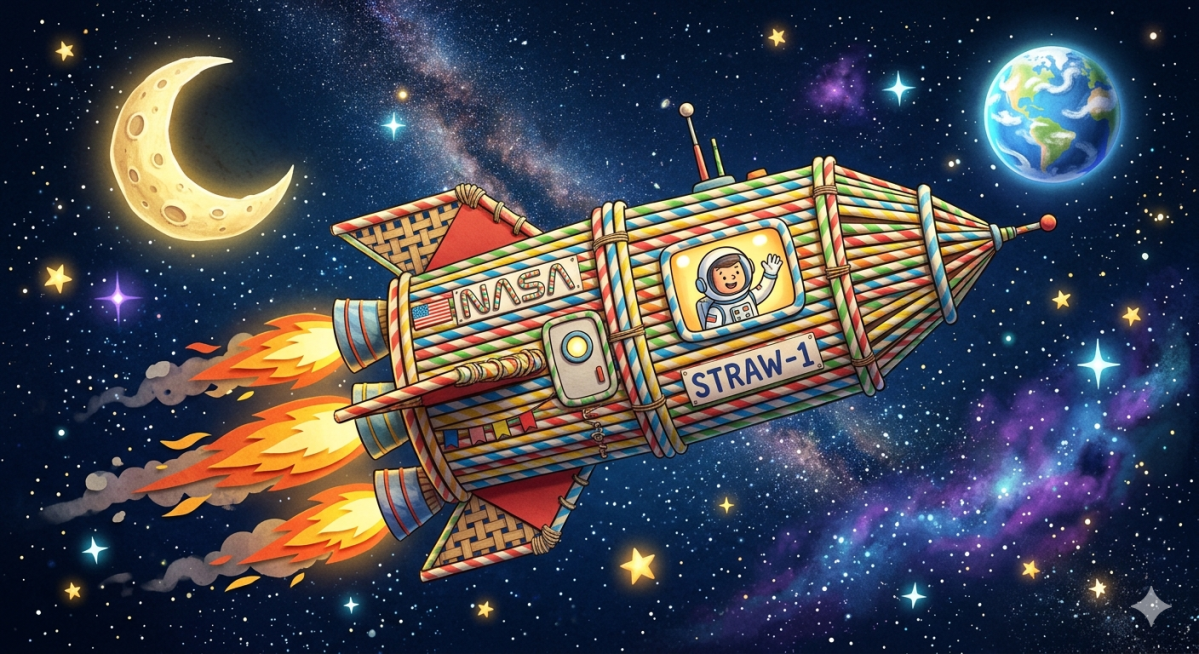
Sooo… what about the guy who is building that moon rocket out of paper soda straws. It’s recyclable, see, so when he comes back from his trip to the moon, why, he’ll just toss the whole thing into the blue bin.

Should he keep trying, because winners never quit, or should he seriously think about it and abandon the idea, in which case he’d be a loser because he certainly wouldn’t be a winner? Winners don’t quit, do they? Ipso facto…

Those adages don’t take into account what the thing is that you’re quitting, do they? Making a quilt out of live bees, roller skating over Niagara Falls, walking from New York to London? Must one, once started, continue to do these things?

So, obviously qualifications are in order.

Winners with good ideas should never quit.

Quitters with bad ideas could be winners, but only if they quit a bad idea.

See, my problem is, I fall for this empty-headed jingoism.

Live, love, laugh. Okey doke! Sing like no one’s listening – “To dream the impossible dream, to fight the unbeatable foe…”

“Must you?” my wife calls from the kitchen.

The challenge I face with the winner/quitter conundrum is: what IS a good idea?

I’ve spent over 30 years chasing out what I thought were good ideas, only to find them not so much, and eventually had to quit them. Quitters never win.

I’m running down a few good ideas right now. But, are they?

Am I building a soda straw moon rocket? Am I, in fact, making Mr. Peanut Yard Art?

If you ask an AI, like ChatGPT, they tell you it’s a brilliant idea. That’s a clever plan – no one has thought of that. It’s what sets you apart from everyone else. Your niche.

No help there.

My wife is, like, meh. I know what she’s actually thinking: “here we go again…”

Or, is it all a question of time? Is there a time limit until you reach that point where you should just quit?

Anybody with a brain will tell you building a moon rocket out of paper soda straws is absurd (plastic, well, now, that’s different…).

So, does the guy throw his soda straw rocket plans in the dustbin now? Or must he carry it all out until the rocket collapses under its own weight or consumes itself in a waxy fireball? At what point does he not be a winner any more?

I had a friend who followed the adage “If you’re not first, you’re last.”

These things are crippling, aren’t they?

Of course, the answer is that other adage – the one that says it’s the journey, not the destination.

THAT adage screws up the whole mix.

It’s okay to quit, because it’s the journey. It’s okay to never quit, because that’s the journey, too. It’s okay to be first, or last, or somewhere in the middle, because… let’s just be you and me, okay? You could spend your whole life sitting on the John, because, hey, that’s the journey.

From now on, I’m disregarding any jingo statement that comes my way. Today is first day of the res…ehhh. You’re only as happy as y… ehhh. No turn on red… ehhh.

Nope. My new plan is to take my advice ONLY from fortune cookies…

Because Clouds Aren’t Clouds

You’re no dummy. You’re a writer, and although stupid people can write, well, now, there’s no way I can actually finish that sentence, can I? So, suffice it to say, you yourself ain’t no dimwit, but are far from being the dimmest light in the socket.

The concept I’m about to share with you has huge ramifications for all of us, most especially the dreamers, poets, and giddy-hearts among us.

Yes, I’m talking to you. 

As you know, I’ve seen people with advanced meteorological degrees on TV, so I’m quite qualified to make the following bold statement. Believe me, I’ve studied this:

Clouds are not clouds. Trick o’ the eye? A mere phantasm that we all see? 

No. Just not clouds

I was sitting in my faded plastic Adirondack chair sipping tea in the spacious backyard of my recently moved-into house on New Jersey’s Chemical Coast. An airliner had just flown over, as we’re on the flight path for Newark. And a trainload of oil tank cars had just rumbled past, as we’re on the rail line between an oil tank farm and a refinery. It was, for the moment, relatively quiet. Of course I could hear the murmur of the New Jersey Turnpike a couple of miles away, but, hey,  who doesn’t, right?

And there was this cloud, just a’scootin’ across the sky all by itself. Nifty little guy at first glance.

At second glance, however, I noticed something I’d seen but never thought about before, a two-plus-two-equals-WTF? kind of moment. Something was up with that cloud.

Here on the coast the clouds often move west-to-east on what seems to be a never-ending wind conveyor that blows from the Pennsylvania mountain ranges out over the wild Atlantic. This little guy was riding the waves.

But the leading and trailing edges were boiling and roiling like a pot on a stove, and I realized the cloud was not a cloud at all, but just the condition of the wind up there at that moment. The moving cold air mixed with the warm local air to create a dew point right there. As the cold air moved west, the dew point traveled with it. 

I wasn’t watching a cloud move overhead. I was watching a moving atmospheric condition.

So, was that a cloud, or was it just a temporary dew point? 

You know I’m talking about because when you’re landing in the airliner and you see clouds below you and then the plane descends through them you never see the clouds, just thick fog, and like all of a sudden you’re underneath the clouds. and you’re like where did the clouds go?

From where I’m sitting at my desk right now on this rainy New Jersey day, the sky is pale gray – nothing but cl… moisture moving from the highest icy altitudes through warm air in such a great mass that it obscures my view of the sky.

Time. It’s always time, isn’t it? 

What is an ocean wave, really? It’s a temporary rise in the ocean’s surface caused by the passage of an energy wave from far out in the depths, itself created by tidal and tectonic movement and by the wind.

And you know that’s true because the empty plastic Pepsi bottle some idiot tossed out there rises and falls with the wave but doesn’t come in to the beach. Why? Because the water’s not traveling in a wave, it’s the energy traveling through the water that causes the uppity-down movement we call waves. That surfer’s riding on the edge of an energy wave, transmitted through the water, not the water itself.

My wife rolls her eyes when I explain this. Look at that chair, she says. It’s just a temporary arrangement of resin molecules, isn’t it? It’s gonna melt, or decay, after 10,000 years, isn’t it? Whatsamatta wit’ you?

Because it’s all time. 

For this second, that’s a wave, that’s a cloud, and that’s a chair, isn’t it. It LOOKS like a cloud, and that’s what we’ll call it. 

What does all of this mean for us writers, we giddy-hearted poets? 

When those guys with the super loud motorcycles rumble past my recently-moved-into New Jersey house, making so much noise that granma’s self-portrait on the kitchen wall trembles and threatens to fall and crash onto my cherished Love Is porcelain collection, I remind myself that this can only happen here.

Here. Nowhere else in the known universe, NOWHERE, is there that sound, that cloud, that wave. NOWHERE else. 

The entire universe has arranged and coiled and unsprung itself to the point where that guy’s motorcycle threatens my porcelain figurines with granma’s self-portrait, and that cloud looks like a cloud, and that Pepsi bottle rises towards the stars, and the surfer’s thinking “cowabunga.”

Only in that second, and only here. 

Wow. Mind blown, right?

And I lean too far back in the Adirondack chair and the back leg breaks off and I tumble over backward, spilling my cup of tea.

And the second is gone.

Stupid chair.

Curse the Inky Poo!

If you subscribe to my sister site, Skippity Whistles, I do apologize for the deluge. It’s not pretty, I know. But there’s an explanation, I promise!

If you’re freaked out by AI and thinking maybe it’s takin’ your job, you are not alone. Looking at the Google newsfeed (a mistake by itself) easily half of it is churned out by an AI somewhere.

Churnalism has reared it’s ugly head again.

So, thinking, as I am wont to do, and looking for the next Fred Flintstone Get-Rich-Quick Scheme, and goofing around with ChatGPT, I stumbled upon an IT.

As in, by George, this may be IT!!!

Or not.

Asking the Chat to write a post for Skippity Whistles was truly disheartening. It wrote a better post, with better research, and real warmth, in about 15 seconds. Not only was it good, it was SEO ready, with tags and everything.

The post was everything I shoot for, except better and had SEO.

I think to myself, so why am I struggling through writing a post on how to use a socket wrench when AI blazes past me like Inky Poo?

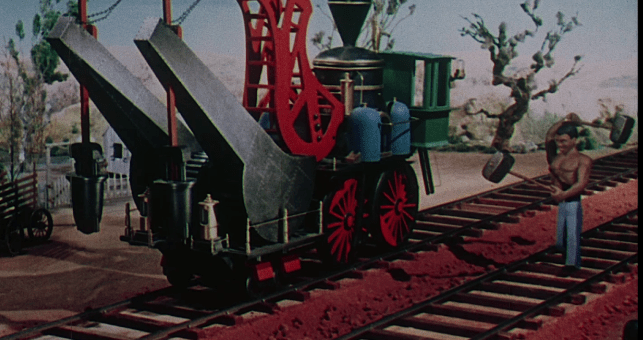
All right – Inky Poo. If you don’t remember, it’s okay. There’s a famous stop-motion movie called John Henry and the Inky Poo, made by the then stop-motion master, George Pal. In this unintentionally horrifying retelling of the legend, legendary John Henry laid railroad track by hand. The Inky Poo was a steam-powered tracklayer. Things came to a head as they do, and Mr. Henry squared off against the ‘Poo.

Son of a biscuit, it was close, but John Henry beat that old machine by an inch. And then died of exhaustion.

And that, children, is why railroads are no longer laid by hand.

What ChapGPT cannot do, like Inky Poo, is choose the route. You have to point it in the direction you want it to build, and let ‘er rip.

Suddenly my writer hat flies off into the corner, replaced with a hat that says EDITOR in big, bold letters. Now we’re GETTIN’ somewhere!

The riches in this scheme come from links to Amazon products in the text of my how-to videos. I cannot tell you how many times I’ve use the phrase “As an Amazon affiliate, I earn from qualifying purchases.”

So, now the posts have SEO attached to them, making them easy for Google to find. And I’ve got the Inky Poo dishin’ ’em out a dime a dozen. And each one says “buy me” right on it… what could go wrong?

It’s a little more subtle than that, but you get the drift.

If I still lived on the West Coast, I’d be out lounging by the pool, sipping drinkies, while Mr. GPT would be inside, churning out fine works of art.

But, today’s high in New Jersey was 21 degrees, and I don’t really enjoy drinkies, and there’s, like, snow on everything!

Sigh.

Guess I probably should go take a a look at what the robot made.

Ah, the work never ends!

The Lure of the Santa Maria

You’re a writer – you know how it goes. You want to do your research accurately, right? So you spend a week in the Taiga, freezing your keester off. Or maybe it’s a story that takes place in the NYC subway tunnels, so you, like, hide out down there for a week with the mole people.

Me? I am not that researcher. I know I should be, but I just can’t quite muster up that devil-may-care-I-can-do-it spirit. Not sure if I actually have one of those.

My wife? She’ll do it in a minute. Zip to the Taiga and be back on Monday to tell you all about it. Mole people? She’ll make ‘em besties within an hour and have to be reminded to go home. It’s just the way she’s wired.

I have no such circuitry in my system. Let me look at the pictures. Let me dream about it. Let me read up on it until I can taste it. Only then can I put a character there. And even then I’ll have to fill in the gaps.

But, even if I’d been there, I’d still have to fill in gaps, right? I mean, trying to thread a needle with frozen fingers – you and I can describe it without actually having done it, right?

This is dumb, but I’ve been thinking about making a model of Columbus’ Santa Maria as a piece of yard art. Beyond my daughter the archeologist killing me, the idea doesn’t have a lot going for it.

Wait, wait, don’t walk away. See, there are some upsides. Over at my sister site, Skippity Whistles, I’ve started zeroing in on specific tools. What better way to demo those tools than on yard art for all the neighbors to appreciate?

Nah. Doesn’t work for me, either.

In doing the research, however, I stumbled across this picture:


Now, you may not be a sailor – lord knows I am not one – but you have to admit, that is one romantic image.

She surges along, all five sails drawing, heading off on the adventure of a lifetime.

Oh, to be aboard that magical ship!

Except she’s rollng over the waves – you can see how far she’s leaned over to starboard by the water mark up her side.

Except she’s cold and damp inside, and smells like the garbage-strewn, urine-laced water that’s in her bilges and the stench of unwashed men.

And those clouds ahead can only mean one thing, and that won’t be pleasant.

Rough seas pounding over the bows, sluicing down the decks and finding every open seam to rain icy seawater onto the poor sailormen huddled below.

Howling wind shrieking through the rigging and trying to pull that poor fellow at the tiller over the side. The wind is so cold and the water so pervasive he thinks that might not be such a bad idea.

She rides the waves like a cork – the man at the tiller knows to keep her stern into the wind or she’ll roll like a bottle. But that means her bows rise far up the  back of the waves and then dive deep into the troughs and you wonder to yourself if that green water coming over the foc’sl is gonna do for you this time.

And it’s dark – not a light in that black sky to give a glimmer of hope that you’ll see the sun come up. Oh, there’s a candle lantern below deck, but the feeble light only shows the faces of your shipmates – some frightened, some hiding it.

The only light on deck is the little candle in the binnacle, illuminating the compass rose. By that steers the tiller man, west always, and by that lies your hope of surviving this storm.

And maybe you’re the captain, taking your place next to the tiller man.

Shaking your head like a dog to dash the sea water from your eyes, you strain your eyes into the inky night to see the next wave, maybe calling to the tiller man to steer port a touch.  But you must bellow over the wind’s howl.

And you are tired – so, so tired of the wind and the water and the constant motion and the responsibility for all these lives.

And still she thunders on, surging up this hill, plugging down that one.

Well, gee, mister. When you put it like that, maybe a fella might do better to sit at home and just write a book about it!

An Intrepid Trek

You’re a writer. Writing is what you do. Here’s my advice: stick to that. Don’t try to build a media empire – just plain write like you mean it.

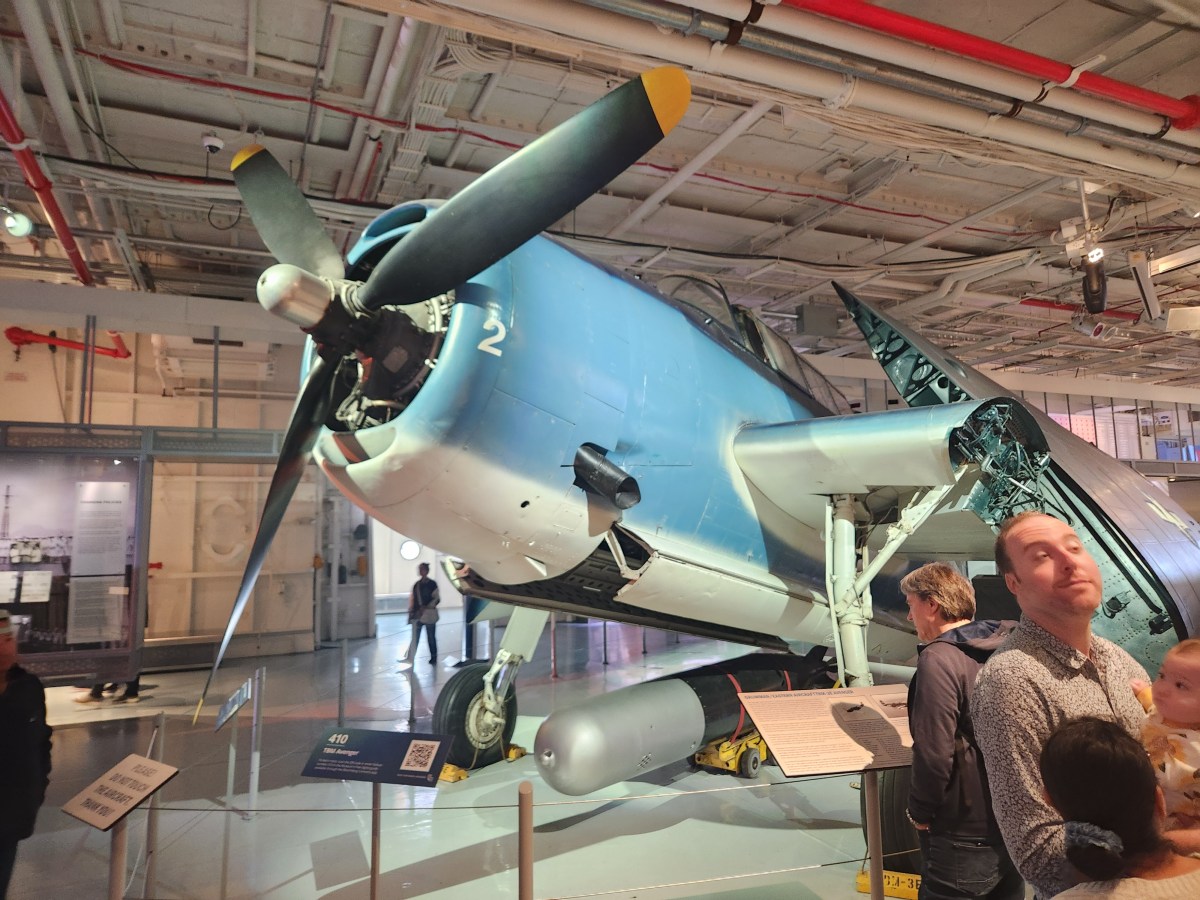
Earlier this year I got the opportunity to visit the Intrepid Museum in New York City with the fam.

As you know, or perhaps didn’t but soon will, I run another site called Marvelous Air Museums. It used to be called California Air Museums, but I kind of moved to the great state of New Jersey, where it’s much more difficult to visit the museums in California.

Anyway, never mind about that.

Well, actually, the purpose of this post is to advise you of this post: Intrepid Museum, which links to this video here.

But now I’ve given you, like, three links in the first, like, 100 words of this post, and I, like you, must find myself getting confused. What?

It could be a marketing blunder, like putting too many fonts in your online ad – makes you look like a rookie. I’m sure that’s true with links, too. Oops.

Anyway, never mind about that.

I put together that video for the Intrepid Museum in Adobe After Effects and Premier Pro, and it was a pleasure doing so.

As much as I enjoyed using DaVinci Resolve, and I truly did, the degree of freedom you get in working with After Effects is simply breathtaking.

The Adobe CC Suite is expensive – there is no doubt about that.

But, if you can bite that bullet, the leap is like jumping from one of those $29.99 department-store tool kits your parents got you when you moved out of the house to that sleek $300 Mechanic’s Tool Kit that you find at the big-box home improvement center. Put down those slip-joint pliers, my friend. There’s a socket wrench for that.

On another and related topic, I’m still running a website called Skippity Whistles. Back in the day, like, last year, my idea was to download all the stuff I had figured out how to do onto this website that you, the person stuck with the $29.99 tool kit, would find useful.

We, not the imperial we, but my wife, daughter and I, worked hard to come up with useful pieces of information for the site. As problems occurred in our real life, they would get solved and show up on Skippity.

In truth, nobody visited California Air Museums, and even fewer visit Marvelous Air Museums. But they’re swinging by good ol’ Skippity at a fairly good clip.

The difference between the sites is that there are more people who care about how to use a pair of locking pliers than there are those who care about an EA-6B Prowler.

Huh. Go figure.

Anyway, go take a look at Marvelous Air Museums and then go over to Skippity Whistles, and let me know what you think.

Although I’m a media mogul, I could use a little help sorting all this out…

A Maelstrom of Confusion

You’re a writer – you know when you’ve goofed up something in your story – wait, how DID that guy know what time it was? Of course you scramble back to work to somehow give that guy a watch or a view of the clocktower or something, right?

Even the greats sometimes miss it. In the 1946 detective movie The Big Sleep a guy named Owen Taylor gets murdered, shot up by a machine gun, right in front of detective Philip Marlowe’s eyes. This was a big film, directed by Howard Hawks and featuring Humphrey Bogart and Lauren Bacall, Hollywood’s hottest couple of the day. It was a first rate adaptation of the 1939 Raymond Chandler novel.

But who was behind the machine gun? Who shot Owen Taylor? The guys who adapted Chandler’s novel never explained it. Eventually, Raymond Chandler himself came out and said that he had no idea who killed that guy. And he wrote the book!

This weekend I was half-heartedly watching a 1967 episode of Voyage to the Bottom of the Sea on YouTube while half-heartedly putting up Christmas decorations.

If Voyage to the Bottom of the Sea is new to you, it was a TV show that ran on ABC from 1964 to 1968, featuring a nuclear research submarine called Seaview in the far-away future of the 1970’s. 

Where Star Trek, running on NBC during the same period, presented its viewers with intriguing characters and often deep philosophical questions, Voyage episodes centered around monsters and ghosts and mad scientists intent on sending the Seaview to the Bottom of the Sea. 

The episode I saw, called The Fossil Men, was preceded by an episode called The Heat Monster and followed by The Mermaid. Gives you an idea of the plot lines.

Anyway, it’s kind of cruel to point out plot holes in a show devoted to costumes and special effects, but this one caught me.

The sub’s sonar has picked up a strange clicking noise from the sea bottom, as if rocks are getting pounded together. Admiral Nelson, the resident scientist, just happened to be reading ancient sea lore about this very spot of the vast ocean (no mention of which). According to his book, sailors 200 years ago reported hearing the exact same thing just before their fleet of ships was sucked into a huge maelstrom and never heard from again. 

Duh-duh-DUH just then the sea bubbles and foams and the Seaview is herself caught in a huge maelstrom. OMG, will they ever survive? Or will they be back next week to face The Mermaid?

I paused in my half-hearted attempt to untangle Christmas lights and thought, wait a minute. The old-timey crewmen reported hearing weird noises just before their ships were sunk.  So, to whom did they make these reports? This was 1967, so the ships went down in 1767, roundaboutsy, so radio wasn’t a thing. A maelstrom’s a pretty big deal, drowning-of-sailors-wise. 

It didn’t matter to the plot of the show, of course. From what I could tell, the ancient sailors were now fossilized and wanted to sink the Seaview. Something like that.

I turned it off because my wife came home and I didn’t want her to catch me watching such drivel. 

Closing plot holes like that can sometimes get sealed up in a sentence – only one ship survived to tell the tale. That’s if you’re lucky.

If it’s a big gaping hole, it might take a chapter, even a whole rewrite to get that character around to where the story makes sense. 

Admiral Nelson has bigger fish to fry than that plot hole – maybe the answer was on the next page of that sea lore he was reading.

But it did give me pause to think about my own work. Plot holes. Hmmm. 

Where are those questions in my own work that I’m afraid to ask because I know there’s no answer because I didn’t think of it until just now? 

Uh oh.

How does he know what time it is?

Uh oh.

Trust the Story Teller

You’re a writer, you know how it goes. You’ve got a million ideas in your head – story lines, plot twists, character quirks – all waiting to hit the page one of these days.  They’re like bubbles in a stew – a thick, rich stew redolent with bits and pieces of brilliant bones and perfect plot pieces. They bubble to the top and then pop. They’re gone. If only you’d had a tiny tad of time to tell them.

Recently, I drove from California to New Jersey. My task was to deliver my Outback to my daughter in Texas, and take her Prius to my daughter-in-law in New Jersey.  The Outback will handle a Texas winter better than the Prius, and the daughter-in-law just needs to shuttle her kid – my grandson – to and from daycare. Easy peasy. 

I was cruising through New Mexico, dashing down long, straight roads between breathtaking mesas and canyons and passing Indian Trading Posts by the dozen, trying to figure out the sequel to my upcoming Phineas Caswell novel.

Okay, so… what? 

That fellow ChatGPT has assured me, you see,  that August is the best time of year to release a historical fiction action/adventure/YA novel. 

Repeat: What? 

See, August is still summertime, still time to pick up a beach read, but also heading towards the school year, time to pick up some history. Something like that. See?

All fine and well. The novel is a diary, written by a cheeky 12-year-old boy in 1705, taken to sea against his will by his bumbling but well meaning uncle. Pirates, spies, war – all the good stuff.  That’s my August-release book.

But it ends on a cliff-hanger. So, there needs to be a second book. 

Flat-topped mesas whisk by the windows, shadows shoulder their way behind the deep canyon cliffs, and the next story plays out in my head. 

There is already a short story I’d previously penned that takes place in a Portuguese port. A perfect place to start the new novel.

Armed with that one scene, and with nothing to do but look out the window and keep from crashing, the story plays out in my head.

This is new for me. I usually have to write the story down to tell it. But this new story simply rolls out, logical and lovely, as I fly down the freeway like an arrow bound for Albuquerque.

Of course you can’t drive and write – the cruise control’s good, but, come on…

So it comes down to my turning to trust my inner author. Rich scenes roll before my eyes – scenes I would have to remember. Scenes I could only see in my mind’s eye, hoping they caught the attention of my thought-keeper.

Here, seven weeks later, comes the task of finally putting to paper the plans I’d poured out in northern New Mexico. The images that exploded in my eyes remained, and the story simply poured itself onto paper as real and writable as it had on the highway.

Now I have before me an outline, nothing more. Scene after scene – this thing happens, then that. It’s the structure, the bones.

It occurred to me this morning that these sentences are nothing more than writing prompts, like those offered by every website that purports to power up your inner author. 

You’re a writer. You know how it is. If someone asks you to explain why the silly snowman sits behind the bush, you know you can come up with a story. 

The prompts, the outline, are space-keepers, aren’t they? Here’s a whole book, complete in its condensed form. Like a suitcase stuffed with springs, when the time comes to write it,  you open the case, and the prompts pop out to create a full and fantastic book. 

That storyteller, aged and ancient and ever hiding inside you, will sit down by the fire to weave his words into the best book you’ve ever penned. 

Because you’re a writer.

Have faith.

I See Icy Things

You’re a writer – you know how it is. You look out the window and see the same old thing every day. Some days it’s cloudy, some days it’s not. But it’s the same. You get comfortable with it. The view out your window is part of your routine.

Yes, well. Scratch that.

The house in Southern California was a low-slung, single-storey tract house from 1963 on a concrete pad sitting on a corner lot. The views out the window included the street to the east, bordered by the neighbor’s low-slung, single-storey tract houses, the street to the south with the same, the swimming pool in the backyard to the west, and the neighbor’s identical house to the north.

This house in Woodbridge, NJ, is a two-storey wooden fella built in 1936 with a full basement and more stairs that Carter has liver pills (if you’re not of an age, Carters was a company before my time that sold liver pills. I guess they sold a lot of them, or perhaps only made a lot of them. Anyway, you have to be of an age to understand that metaphor. If you’re not of an age, I do apologize). 

From this house, the view to the east is the street, a variety of houses from a variety of eras, and, way off there between them, the treetops on Staten Island. Neighbors’ houses from the early 1900’s comprise the views to the north and south, while the view to the west includes a long, narrow backyard, a fence, a railway, and the town of Woodbridge spreading away in all its Old World charm.

Woodbridge received its charter, its permission to be a town, from King George III in 1669. That’s Old World!

In California today they’ll be hitting a clear, sunny high of 67 degrees. Over here we’ll be seeing a cloudy high of 42.

Here’s what surprised me: everything freezes here. 

Puddles from Tuesday’s rainstorm are transformed into tiny skating rinks. When you shine your flashlight on the lawn at night, the lawn flashes a million tiny fairy lights back at you, and you think perhaps you’re looking at a miniature, very busy city.

Like the view out your window, it’s the stuff you take for granted that so radically becomes something else when the temperature falls that reminds you the world is not what it seems.

Our challenge, yours and mine, is to appreciate and embrace the temporal nature of the world around us, even when it seems to be the same day after day. To look for and understand even the tiny changes that make the world, well, the world. And to let that understanding inform our writer’s minds.

That’s one challenge. For me, the more urgent challenge is to figure out how to turn off the outside faucets so they don’t blow up my inside plumbing. Another piece of the temporal world, I guess…

Hitting Pause Again

Nobody tells you anything about anything, am I right? I mean, I asked for free advice from somebody who didn’t know anything and got a ton, but it was all, like, useless. I’m actually kinda ticked…

Here’s something you didn’t know, I’ll bet. Or maybe you did know, and I am the one who doesn’t know anything. 

There’s a time of year to publish your book. Just like the little green leaves and the little buds and the birdies, yadda yadda yadda, there’s a season for your book. Can you imagine?

It’s all about the migration of people. 

You don’t publish your book at the beginning of July, for instance. Why? People migrate away from book-buying and go on vacation.

HOWEVER, you DO publish your romance in May or June, because it’s a good vacation read, and you’ll catch ‘em before they migrate away. Crazy, right?

You don’t want to publish at the end of the year. It’s the holidays and nobody’s buying books, unless you’ve got a bang-up Christmas or Hanukkah book or something. People have migrated away from reading and are all about fruitcake.

But you DO publish in January if yours is a self-help book. The people have migrated back to reading again.

My book, my original Phineas Caswell novel, a piece of historical fiction, is perfect for late August/early September, when the leaves fall and folks are ready to cozy up for a good read.

Won’t take it to the beach, won’t use it to better themselves, won’t enjoy it as a scary thriller. Nope. Historical fiction – the kids are going back to school, time to read a good, interesting piece of history. 

So, for all my book publishing plans, I have to hit the PAUSE button for a bit and wait for the year to roll around to the right spot. 

That’s okay, because I have a lot of work to do in preparing the marketing materials. But who knew there’s a CALENDAR to this stuff?

Well, if you didn’t, now you do. I didn’t, but now I do. 

Happy holidays, and put down that book. 

Moving Part 3: The Pod

In writing an article, the number one, single most important, top of the to-do list thing to do is find an angle for the story. Usually it’s the lead sentence that sets up the rest of the piece. 

It turns out that the same thing applies when you’re moving: How are you gonna frame this move? Is it going to be with movers, or by yourself? Is it going to be long and elaborate or quick and simple?

We had an image in our heads when deciding to move out of our family home of 27 years. On the left side of the driveway, we anticipated a pod, a long-term moving/storage device. Next to that would be a U-Haul van, to carry the short-term stuff we’d need when we moved in. And, next to that would be a dumpster – see Moving Part 1: Chuck it! We had also mentally set aside an area for stuff to be donated.

In a perfect world, this would have been absolutely ideal. No matter what you picked up in the house, it would go into one of these four receptacles. This? To the pod. That? To the van. This? To the dumpster. That? Goodwill. Piece of cake!

Alas, the world isn’t quite perfect. We got the pod delivered long before the U-Haul. We were moving so quickly, and so brainlessly, we had no clue what would we would need in New Jersey. We were just dashing stuff into the dumpster, into the pickup truck for donations, and into the pod, without any idea what we were doing. 

I had the pod about 75% full when my wife called and said she needed some more checks. They’re in a folder in the file cabinet, and she needed ‘em right away. 

The file cabinet. Hmmm. That thing was rusted and didn’t work very well. I tossed that out on Sunday. This was Wednesday. Hmmm. The files went into bankers boxes, which I loaded on Monday, before I shoved the dresser and the wardrobe in there. Hmmm.

There’s a slope to the driveway, don’t you see? I kind of used a gravity-assist to move the big heavy furniture into the pod. And I suspended the kayaks by ropes above the furniture. And it all locked those file boxes in place, you see, wayyyyy down there in the front of the pod. Hmmm. Bit of a problem, that.

About an hour after the phone call, and after I had the furniture hauled out, and the kayaks lowered and removed, and the file boxes exposed and open, my wife arrived. Just as she pulled up my aching fingers found the checks – success!

She looked at the mound of furniture and boats and files I had unpacked and asked “why are we taking all this stuff?”

In stuffing it all back in – having snarkily replied “because” – I couldn’t find a place for the wine-bottle rack thing we’d inherited from her brother. It’s a cheapy, with sharp-edged iron straps and oak strips. Very ‘70s. I figured I had to find a place for it, as it held great sentimental value for her. The edges on that thing are sharp, and I nearly lost a finger to it, but it was eventually wedged in there, by gum.

Now, the number one admonition of the pod company was don’t let anything come to rest against the door – tie your furniture forward and make sure nothing comes loose. If it rests against the door, you won’t be able to open it.

That advice? That’s for morons. Duh, thank you mister moving man.  

I used that heavy furniture as a bulkhead, holding all our other possessions away from the roll-up door. Brilliant!

The last things to go in were a trio of floor lamps – shoddy and wobbly but useful, we figured, until we could replace them. As those could slide against the door, I took the moron route and tied them in place with a piece of rope. 

In the world of pure dumb luck, we were still using our bed, our towels, and some clothes while we waited for the U-Haul. These, plus the clean dishes we’d accidentally left in the dishwasher, turned out to be the very things we needed when we got to NJ.  These, and of course the bicycles, because, seriously, you haven’t lived until you’ve pedaled through the snow or the roaring wind of a nor’easter. Anyway, those came with us in the U-Haul.

The pod arrived a week after we did, and the guy sort of tore up my lawn with the truck when he delivered it. It’s okay, we signed a waiver. Oh, that covers him. Rats.

Long story short, you can imagine what came loose and wedged the roll-up door in the closed position. The rope remained tied, but the lamps had wobbled out from under it. I hate those lamps.

It took my wife, the truck driver, and my super-human strength to pry the door open enough so I could use my little-girl-skinny forearms to reach under the door and wiggle the lamp loose enough to release it. 

Most embarrassingly, I prodigiously broke wind as I was lifting the door. It was one of those eye-wateringly pungent releases that causes the birds to fly south a little faster and the sky to turn gray for a brief moment. I felt bad for the truck driver (my wife’s used to them by now), but hey, that’s the risk of the job, right? He rather staggered over to the cab of the truck and hastily drove away. 

That’s for tearing up my lawn, bucko!

My son and his wife helped us empty the infernal thing. When he got to the beloved wine rack, my wife told him he should just toss it out. “Cheap junk,” she said. 

I could only stare at my nearly-missing finger in disbelief.

The pod is out there now, emptily taking up my driveway while we wait for a convenient pickup date.

In the end, we didn’t get the smooth move we’d planned, but we got moved. 

The empty pod out there sort of stands as a testament to the extraordinary speed with which we’d moved our family and our stuff, our lives and our livelihoods, across the nation. 

Is it the story I’d planned to write? Well, this story sort of wrote itself.

Now, I’ve been unnecessarily hard on the pod company, and I shouldn’t be. We used a company called PODS (portable, on-demand storage), and they have been flexible, professional, and easy to work with throughout.  I do highly recommend them, should you find yourself in a similar situation.

And I do highly recommend that you avoid finding yourself in a similar situation!