Character Hijackery

Imagine setting up something really, really complex, like an Ocean’s 11 style casino robbery, or maybe a game of Sorry – okay, maybe not that one – but something really complex, that you’ve puzzled over for months until now, now, this very minute, you’re ready to go. To pull the trigger, dial the phone, hit Execute, or RUN, or whatever it is that sets your plan in motion. Good for you.

You’re a writer, you know how it is. You slave away over your work, because you love it, and it’s good for you, and because you have something that needs to be said.

I’m working on Novel Number 3, tentatively called The Terrible – it’s a joke that plays out in the… rats, I’ve given it away. Well, forget that part.

So, it may seem like I’m rambling, but I’m giving you crumbs. Clues, if you will. Because you’re smart, and you’ll piece it all together.

Did you get anything yet?

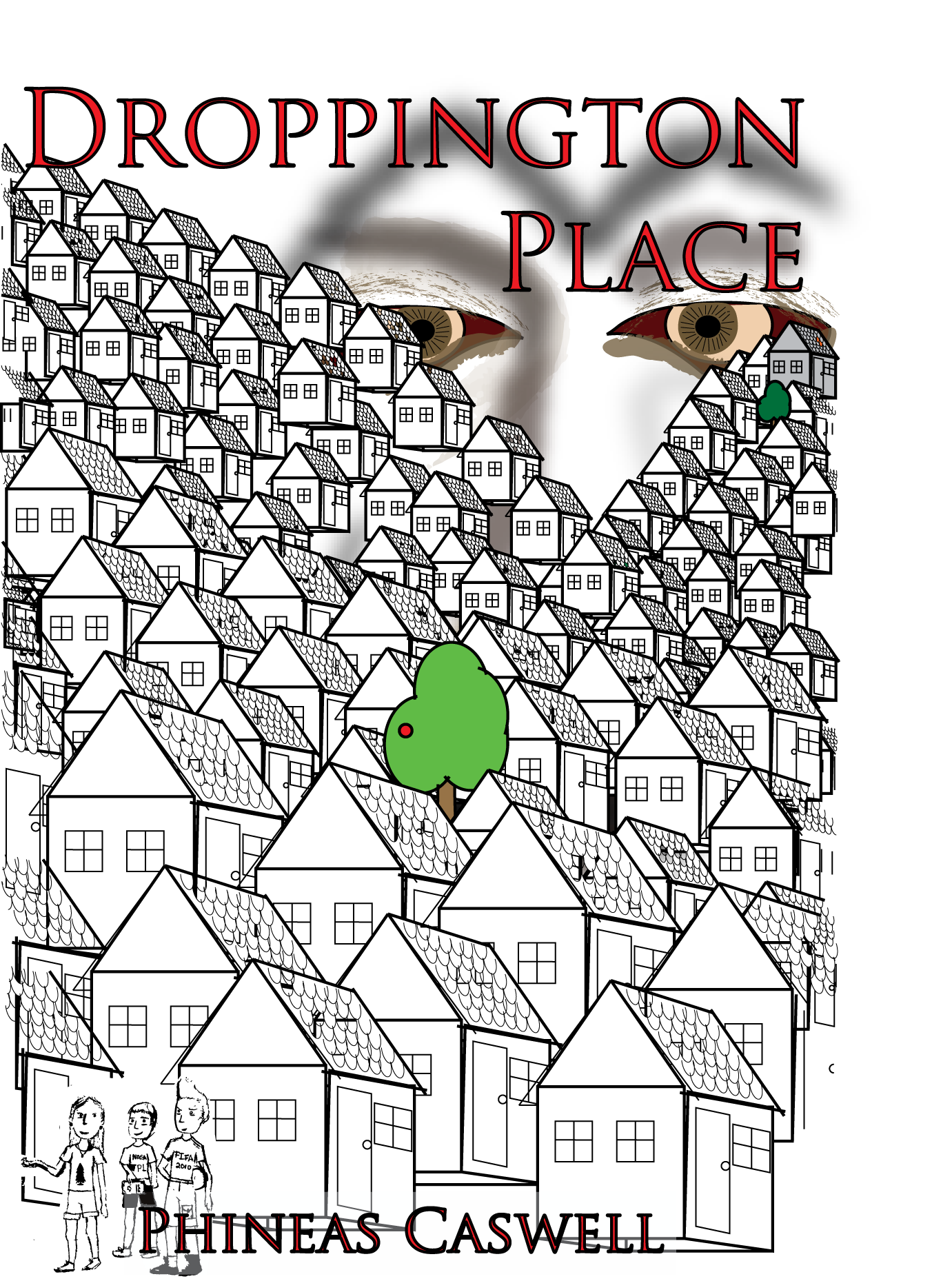
Sigh. Okay, here it is. I’ll use little words: I’ve started a third novel. My first, MARIGOLD’S END, is under revision, my second, DROPPINGTON PLACE, is self-published, and I can’t sit here on my hands and just die, can I? I mean, can you?

This third novel is carefully laid out, with four strong central characters. Well, it was four, but, just yesterday, I needed a transition piece, a moment that both gives us time and place and setting, but that also starts the storytelling ball rolling.

So I created this simple fellow – not much more than a name, really – to carry the news of the French ambassador’s arrival. Not so bad, huh? Except that he needed a little background, and a little definition, a little purpose…

And then the son of a biscuit stole my whole story! He’s none of the four dried up, dowdy guys I’d so carefully designed. He’s young, he’s brave, and he’s innocent.   Suddenly, the four guys are bit players to this kid’s story. What the heck? It’s like Ensign Checkov taking over the Enterprise! R2D2 piloting the Millennium Falcon. Wait, what?

All seriousness aside, I’ve been thinking about this story for a while now. My first novel was a labor of love – and very, very hard to write, rewrite, and… I think I’m on the seventh version. The second novel was just plain fun – I wanted to explore Elizabethan words, and magic, and make a young adult story that was positive and generous.

This new one, tentatively called The Terrible (I think I mentioned this already – please try to keep up), is my story. It’s my… my way of giving back. It’s set on the French/Spanish border in the year 1657. No, it’s not the Three Musketeers, but that book has always been my go-to for inspiration and grounding.

So, The Terrible is the story I was created to tell. It’s the novel that I became a writer to write. It’s the story – I think. I know you have a story like that – it’s why you write.

If it turns out bad, I’ll come up with some clever way to dismiss it. But, it won’t be bad, because this is the story. This is my story.

But, and here’s the part that is just crazy, this new guy’s story isn’t mine. I’m somewhere in this book, but I haven’t found out where. You know the guy has power, because he took over my whole dang life story just by getting named!

More to follow…


What Tiggers do Best

You’re a writer. You know how it is. You eat, sleep, and dream with other people’s minds. What would it be like to an inch tall, you muse, or in command of a shoe? For a writer, the world is full of little what-ifs and I-wonders.

But what happens when all your questions are answered for you?  When your quest to sort the world out is brought to an end.

My best friend, whom I subsequently married, and I used to puzzle over who was happier: man in his quest for answers, or the cow in the field who has no questions?

She thought that perhaps the questionless state might be a form of heaven. I argued that it seemed more likely a form of hell.

Heaven or hell, it recently presented itself to me in the form of the ultimate job. For a moment I hung up my writer’s spurs and thought I might settle in for the long haul, might hitch my horse to this wagon instead of my own.

It is hell. Might just as well shovel dirt onto my face, because there’s nothing deader than a creative that doesn’t create. Take these pencils from my hands – I don’t need them anymore.

As you’ll recall, Tigger searched the Hundred Acre Wood trying to find “what Tiggers lke best.”

What I found is that a writer is a writer is a writer, and perhaps that’s what this Tigger does best. Tiddily pom.

Do that Thing that You Do


You. Put down those fish crackers, I’m talking to you. Serious – this is a serious talk. No goofing around about anything. Just drop the crackers.

So, what do you do? Me? I’m a writer. It’s what I do. Technical writing, a little marketing, a little blogging, a couple of novels, a couple of short stories. It’s what I do. Working on a screenplay right now.

In fact, thank you for asking, it’s a screenplay based on my own novel, Droppington Place. It’s a funny story… well, okay. You’re right. We’re being serious here.

Have you seen Kubo and the Two Strings? Lovely picture, although a tad sad. It was made by LAIKA, a film studio in Oregon that makes handcrafted, stunningly animated movies. What could be a better fit? What better film company to make a major motion picture out of Droppington Place?

As you know, I’m a proponent of Gorilla Marketing – do little, expect lots. In this mode, we ask ourselves why we must go through all the hassle of selling millions of books. Why could we not simply approach LAIKA directly, make the motion picture, and then sell the millions of books? You know, it’s not really putting the cart before the horse: it’s more like they’re side-by-side. Boom. Anything could happen.

So I set myself out to write a screenplay from the novel. Piece of cake. I know the book forwards and backwards. What if I simply move these scenes around to make it more, you know, cinematographically friendly?

Well, three things happened. Three. You were expecting two, but, hey, it was three. Sorry to disappoint.

First, in reordering the book for cinematographic friendliness, I found a much better flow to the story. Rats. Now the book needs a rewrite.

Second, in retelling the story for the large screen, I found some motivations for characters I hadn’t seen before. Rats. See above.

Third, I had a revelation. A very sad, very tawdry little revelatory affair that hurts to write about, but you’re a writer. You know how it is.

Shakespeare is quoted as having written, “to thine own self be true.”

I was on an airplane, struggling with the screenplay, when the words came to me. Poop, I thought. I don’t want to hear these words.

The words came as clearly to me as if I had written them myself, but I’m not this good. It was simple poetry, and it hurt to read. It said, “write what you want and it’ll be great.”

Write what you want and it’ll be great.

Stop plotting and planning and pushing and prodding. Stop massaging and manipulating and maneuvering and marketing. What’s in here (taps on chest) is what’s important.

“Your lungs?” I asked.

I have written what I hope will sell, and hope you will buy. I haven’t written the Great American Novel. I’ve written something clever and fun and creative, and that I think you’ll like. I like it.

But the calling is to write what’s inside, and I don’t think it’s about my lungs.

What is the story I was created to tell? What can I give to you that will be great enough to make you think, wow, my life is now better? What epic saga lies inside here (taps on chest)?

Poop.

So, compadre, we have to saddle up another horse. It’s a long ride ahead, and now there’s another wagon to pull. Please don’t put the saddle on the horse that’s supposed to pull the wagon – you’ll just confuse things.

Okay. You can go back to your fish crackers now.

Ah, Camp Stupid

You’re a writer, you know how it goes.  Every moment you draw a breath is a moment to promote your book.

Well, say, I have a moment with nothing to do, and my super-smart cell phone right here.  What if I take this moment to submit a query about my book, DROPPINGTON PLACE,  to a literary agent.

Wait, I don’t have the manuscript… it’s parked on my Google drive, but an agent only wants the first ten pages. Hmm, how to edit it…

Wait! I sent a query to a different agent… that was a perfect letter! Alls I gotta do is find that letter and change the names and stuff…

It didn’t take long to take out the refeeencea to my dog and stuff, and change the names. That agent, the first recipient, had sent me a nice autoreply of no, thanks. I edited out references to that, too. 

Just one eye in the flointment…you can’t send a letter you’ve already sent.  Hmmm… no biggy. I’ll just forward it…

Okay, everything looks good…push the send and hope for the best.

Say, here’s an autoresponse from the new agent.  Thank you for your submission, here’s what you sent…

And there, in the inbox of this agent, is my submission letter, followed by my submission letter to the previous agent, and then the rejection letter from the other agent!

OMG!  How stupid can you be?  If I don’t make it as a novelist, I can always be the mascot for Camp Stupid!

Going Responsive

Responsive websites? I always thought your website was responsive if you just answered your emails.

You’re a writer – you know how it is. You toil and slave over your book, you publish it yourself, you get your website, your Facebook page, your logo… and then, who knew, it’s useless if your website isn’t responsive. Useless. Who knew?

While, the standard, desktop, not-so-responsive website still has value if you’re a corporation that sells oodles of things that deserve their own big pictures and stuff, the little screen, however, is clearly the road ahead.

So, what does it mean to “go responsive?” It simply means that you scale your website to look good on mobile devices. That’s it.

Sort of. Once you scale your whole website down to that itty-bitty size, you realize that your whole outlook about your website changes. Gone are the stacked images, the carefully layered pages that had a certain snap to them. Gone are the cool, zoomy galleries of your favorite pictures.

Those big, splashy pages have been replaced with simple, easy-to-read, direct-to-the-point, cell-phone sized articles and galleries and images.

It’s great news if you’re a writer, which you are. All you have to do is write! You don’t have to be a web designer? You just write – that’s really what you and I do best anyway!

PhineasCaswell.com has been a desktop site for quite a while. I built it with Open Element software – free!!!   But, Open Element doesn’t support responsive websites yet. Rats.

For around $30 USD, I found Serif’s WebPlus – I’m running x7, whatever that means. It has a set of really simple templates for making a responsive website. It was seriously easy to make the conversion.

I’m trying to sell my novel, Droppington Place. It’s aimed at the young adult market, which is comprised mainly of mobile device users. Market? Meet website. Website. Market.

As you know, I’m a big proponent of Gorilla Marketing – do nothing and hope for the best. I did a little something by going responsive, and now I don’t have to do anything else. My site is ready for the world to beat a path to my door.

Ah, success.

Oh yeah, I forgot to mention my other Gorilla Marketing project – you’ll like this. It’s called Soon to be a Major Motion Picture. All you have to do is download Droppington Place – do it for free, if you’d like. Encourage your friends to do the same. If your friends tell their friends, who tell their friends, who tell…you get the idea… why, we’ll be way over a gazillion reads, which is more than enough for any savvy movie studio or book publisher to jump on the bandwagon and make Droppington Place into a major motion picture. Brilliant!

So, download Droppington Place, and go tell all your friends.

This is gonna be great!

Let the Marketers Market

image

You’re washing your face in the bathroom sink. The warm water makes a pleasant gurgle as it swirls down the drain. It’s California, so you don’t run the water too long.

Suddenly, the water reverses course, and comes up out of the drain.  Thinking quickly, you shut off the tap. No good. The water is gray and malicious, and soon the sink is full. It stops filling before the water spills over the edge, but just barely.

So? What do you do? The sink is full, which means the pipes under the sink are full. Are you a plumber?

In my household, I would attempt to fix it, would flood the bathroom, and never hear the end of it from my wife and teenaged daughter.

“Why don’t you just call a plumber?”

“I can fix it, honey! See, it’s just a… oh.”

Slosh, gush. Gaglub, gaglub, gaglub.

“Nice going, Dad.”

You’re a writer. You know how it is. We write, you and I. Unless you’re a marketing writer, the whole business of promotion and publicity is outside our bailiwick.

So, here we are in the world of self-publishing. I did all the work – I wrote Droppington Place, I edited it, had it read and ignored by family and friends, I published it, I created a Facebook page for Phineas Caswell, I opened a website,  PhineasCaswell, and I even bought a book about Dummies marketing on Facebook.

So far, I’ve sold 4 copies of the book – three to people I know and one that might actually be legit.

By day, I’m a technical writer/illustrator. I do what I do because I enjoy it, and am good at it. I’m not a plumber, although I do get my hands wet upon occasion. But, I am a miserable excuse for a plumber.

So, my writer friend, must it be true with marketing. Here we are in the most freewheeling, enabled, and unshackled time in history for writers – dude, anyone could read your book right now! – but are fettered at the gate of success by a lack of time and marketing knowhow.

The answer is to let the plumbers plumb and the marketers market. The answer is the same as it always was: do what you do best. If you need the help of a specialist, for goodness sake, hire the specialist!  Unless you can do your own dentistry.

As for me, I’ve got to fix this sink before my wife gets home… it’ll all be done and she won’t even know I did it myself until I tell her!

Crack. Gaglu, gaglug, gaglug…

Make Yourself a Magic Virus

Build the San Salvador 4

If you’re sick, don’t read this post. There’s a stupid wordplay about viruses that is, well, so bad that we’re just going to skip it.

When you have just under two minutes free, watch this video: Build the San Salvador 4. How about now?

You know how people eat up those “dude, you had one job” videos? That was the thinking behind this little gem. Have to tell you, it still cracks me up, and I had a hand in making it.

So, why make a movie – especially one as dumb as this?

Three little words, my friend. No, not I love you. Or hands up, suckah. No, no, no… and no, not no, no, no either. Magic, she gasped. Ah, yes, our mantra/manta/bantha.

It’s a tight circle, my friend, this marketing thing. At the end of the video, which is calculated to be just funny enough to appeal to a certain age – the very age I’m hoping will read Droppington Place – is my new little logo, and the whispered word “magic.”

So you, you’re so fascinated by the video, you type in PhineasCaswell.Com, just like you see it in the image at the end of the hilarious video, and there is a link to Droppington Place. You click on the link – blink – why, here’s a nifty book for you to read!

Like a spider’s web, one slimy tendril at a time, you have no choice but to be roped into reading at least the free sample. Bwahahahahahaha.

It didn’t take a great deal of effort to make the motion picture. Sort of like, really? And all this linking is sort of sleep-inducing. And, at the end of the day, YOU have to do all the clicking and reading and stuff.

NOW you can see how Gorilla Marketing works… or doesn’t work, because I’m not doing much work… oy, this get’s confusing.

So, click on the link (HERE it is again in case you can’t find it up there), and repeat after me:

“Magic,” she gasped.

If you’d like to read all of Droppington Place for free, go HERE, and tell ’em you’re not paying a dime today, thank you. Boom. Freebie!

“Magic,” She Gasped.

Magic She Gasped Little Black2

“Magic,” she gasped.

Say it again: “Magic,” she gasped.

Tell your friends to say it: “Magic,” she gasped.

It’s a mantra, unless that’s the bat-shaped fish. Whisper it in your sleep.

“Magic,” she gasped.

What is it? What does it mean? Why should you care?

What makes a Subaru a Subaru? Actually, Subaru puts a comma in their statement – a comma with which I have never agreed. Love, it’s what makes a Subaru, a Subaru. What does that second comma do? It makes a clause out of “it’s what makes a Subaru,” which isn’t a clause at all. It equally makes a clause out of “Love a Subaru,” which is a clause, but  is so widely separated by the non-clause that you have to remove the non-clause to see it, by which time you’ve simply beaten the whole darned thing to death…and doesn’t make me what to buy the car because they have trouble with punctuation.

“Magic,” she gasped. It’s a mantra, or manta. Or Banta if you’re into Star Wars.

I was trying to come up with a way to sell my book, and the only catchphrase I could think of was “buy my book.”

Hmmm, lacks a little something.

Hailey, one of the characters in my novel, Droppington Place, has a fascination with magic – just to point out that there, right in that sentence, is the proper use of commas to separate a clause – which causes her to utter the mantra/manta/banta phrase. Several times throughout the story she gasps the word “magic,” in what I sincerely hope is a running joke.

So, you see, sometimes your characters can give you a hint on what’s special in your work.

But, here’s the dealio, the thing, the bomb, the cat’s pajamas: What happens if you Google search “murder, she gasped”? Well, probably nothing yet, because I just loaded the tags.

But eventually, my impatient friend, you’ll go to either Phineas Caswell’s home page at PhineasCaswell.com, or to his Smashwords Droppington Place page.

If you simply Google Phineas Caswell, whose name appears beneath the logo, brings you all manner of Droppington Placey options.

Is this marketing genius? Does Procter and Gamble sell soap?

Or is it simply some degree of self-delusion that I’m making progress in marketing my book? Self-delusional like a fox!!!

Already, the pieces are falling into place…bwahahahahah.

You, because you’re a friend, can actually skip all the marketing hype and get Droppington Place by simply clicking HERE. When you get there, type in this Coupon Code: NJ38D, and you can get the book for free!!!

Why, that seems almost like…

“Magic,” she gasped.


Goodbye, Baby

DP FinishedStand by to eject bathwater on my mark.

Standing by, sir.

And…mark.

The bathwater is terminated.

Nice shooting, Lieutenant.

Roger that. The baby is outta here. Repeat: the baby is out of here.

Big ten four. Stand by for towelage.

Uh, negatory. Sorry. No can do.

Disregard that. Stand by to commence towelage on my mark.

Uh, sorry, skipper. No can do.

All hands, stand by. What’s with this gloomy Gus guff, Lieutenant. I believe I gave you an order.

Ten four on that, skipper. But, we don’t have, a, well…

Don’t tell me you ran out of towels.

Negative, sir. It’s just that, well, we ejected the baby with the bathwater.

Mongo Santamaria! You’re telling me we tossed the kid out the window?

Like a bullet, sir.

Well, there goes the towelage. All hands, prepare for battle stations. Angry mom at eight o’clock!

It turns out, writing a book is great fun. And it is great fun. Even though your imaginary friends, all those little voices in your head, drag you through the very depths of despair and pain and agony, the fact that you share that with them, that you are a witness to their travails – is an honor and a delight.

Oh, sure. That’s the cat’s pajamas, that part. Like ice cream for dinner every night of the week. Best of all, you tell all your friends that writing is the pits, it’s the worst – you feel like a zombie…hour after hour, typing, thinking, scribbling, coffee, beer, whatever. While, actually, your inner you goes “teehee, this is the best!”

Welp. The party’s over. They ate the pretty balloons. It’s crying time again, and you’re gonna leave me – I can see that faraway look in your eyes. Why must we get offa this cloud?

BECAUSE I PUBLISHED MY BOOK!!!

Yes, there is one more moment of glee, and that is when you join the Club of Shakespeare. All the world is a willing audience, hungry for your written words, longing for your thoughts, your ideas… and, once the book is published… Yo, lookit me, feedin’ the masses!

It’s a cerebral joy, and stunningly short-lived. I found no Disney at my door. Discovered Dreamworks dreaming of someone else. Ran across Random House randomly choosing someone else’s house.

No, the party’s over. Now comes the drudgery, the mind-numbing torture, of figuring out how to market this darned thing for real. It’s no longer a game, or a funny idea. Now it’s work, work, work, to get this product sold and out, into the sunshine where it belongs.

What? What’s that? How can you find it? Well, bless your generous soul, you have come to the right place. Let me pull your chair closer to the fire. Move it, dog. Make way for this most spectacular person.

Because you are you, and you’re a friend, I’ll let you have the book…for free!

No strings attached. Freebie. You go. Although, if you found it in your heart to write a dazzling review, I’m sure no one would be opposed to that…

Find DROPPINGTON PLACE here: https://www.smashwords.com/books/view/618049

Now, this is important: type in the coupon code NJ38D. When you do, the most wonderful book you’ll download with your free coupon will be yours – for free!!!

Of course, you could also visit the author’s site, PhineasCaswell.com.

Now, to find that baby…

Marketing with Castanets


flamenco-dancing-2

Let’s be clear: I don’t like castanets. Those clickity-clackety chips of annoyance can only be played by Spanish ladies with fingers like hummingbirds. I can play a bunch of things: flute, guitar, piano, Pandora – but, those nasty little wooden clackers of doom must be powered by voodoo or something. Hate ‘em. Even that clattery little noise they make sets my nerves on edge… sounds like somebody playing a skeleton. However, they do pave the way for a lame pun. If you know me, you know I love those.

Anybody’ll tell you that it never all comes in one package. Instead of wishing for a ship to come in, wish for a procession of small boats… a flotilla of good-news-bearing yachts.

If a ship comes in, that’s only because you won the lotto, or Raspy Crackers won  the third race at Del Mar. It doesn’t happen. If you think that your ship’s gonna come in… well, my friend, I hope it does.

In marketing, you don’t want your ship to come in. Stay out there, my seafaring friend, cruise around, spread the word.

Think of all the one-hit-wonders you’ve ever heard of – folks who made a killer splash all at once, but then were gone. Pet rocks. A dozen rock ’n’ roll bands that you can’t even name, but their song was pretty cool.

One ship. One big hit. A ton of cash today, but, tomorrow?

The fisherman that drops the hook is planning on bringing in a big fish. I’m gonna make a killer pile of dough on this baby. If the fish goes vegan, or saw what happened to cousin Wally in these very waters just yesterday, the line comes up empty.

The fisherman with the nets routinely feeds his family because he brings in many small fish over time. His plan is to score many, many small hits. The aggregate effect is the same, if not better, than his single-hit brother. Sure, the brother makes the occasional big buck, and laughs at the net-gathering sibling. But the folks at the bank smile at net boy, because he is constantly in there, making his deposits.

It’s not unknown for a tuna to wander into a small fishing net. At first the fisherman thinks it’s the score of a lifetime…we’ll eat for a year! But then the reality sets in: the net is torn, and the ability to gather tiny fish is lost.

You’ve read about those companies that make a nifty niche product, and one day find themselves approached by the likes of Costco or Walmart. Their production model changes, their business model changes, their focus changes, as they ramp up to meet the incredible demand of the super retailers. The dollars are nearly huge – our ship came in!

But next year, the big retailers turn away to another supplier, and the customer base, the loyalty, the little fish, are gone. Filing for Chapter 11 is seldom pleasant.

Your marketing, then, might do well if you consider casting nets… oh, there it is: castanets! My humble apologies.

You are the One – Bring Your Wallet

Cow

In the writing business… that is, the business end of the writer’s business, although the writer’s business isn’t business at all, but art – this gets so confusing – not the business of writing art, the business of selling the art, which is a business unto itself, but we’re not talking about that. Actually we are, sort of… you’re a writer, you know how it is…

Restart.

If you are a writer, and you don’t have an agent, you need one. Yes, you can self-publish your novel, but who is going to sell your book for you? You? You’re a writer. You need an agent.

Finding an agent, well that’s the business end of writing. But agents don’t seem to drop out of trees, even if you’re absolutely, fantastically talented. I know this from personal experience. That dog don’t hunt. That ship has sailed. You can’t handle the truth.

So, you advertise, in a million different ways. You blog. You join writer’s circles and clubs and chats, and comment your brains out on other people’s stuff. You work like a monkey to get your name at the top of an agent’s mystical list, the agent’s short list, the who’s who of writers in the agent’s Rolodex. Rolodex – boy, that’s a piece of history, huh? Raise your hand if you know what a Rolodex is… uh huh, as I thought. Paltry, paltry.

At the end of the day, you have to face it: you’re marketing – advertising – in the hopes of getting an agent to look at you and say “wow, now THERE’s a talent!”

In the world of Gorilla Marketing, all this effort, all this subtle, almost not work at all, is aimed at just one person. Millions of readers, or in my case, half-dozens of readers, see your blog and comments, read your name… and move on to something else.

It’s like being a daisy in the middle of the tall grass – oh please, Ms. Cow, pick me, pick me! You stand up tall, doing your flowery best to grab a little bit of bovine attention… oh, puleeze…. Of course, nobody wins in the cow analogy. Literary agents are insulted, and you get eaten if you win. But, you get the point.

The point is that if Toyota gets you to run down to your local dealership and buy a car because you saw a good ad on TV, it doesn’t matter if they wasted the time of 30 million other viewers, so long as you buy the car. No, you don’t suffer from incontinence, but some poor sap does, and those commercials might just be the ticket… say, I didn’t know they made underpants like that!

The point is this: you market your keester off, in the hope that one, just one, single set of eyeballs, sees your stuff and says a quiet “bingo.” And when that one sees your stuff and mutters and magic phrase, all your Gorilla Marketing effort pays off, and the future is yours to pave.

Well, here’s to you, my marketing friend. May you hear a whispered “bingo” soon!

Now, if you’re an agent, you can find the first two chapters of my book here: PhineasCaswell.com.

Thank you.

Gorilla Marketing – Again

adult_gorilla_costume_mascot

If you’ve read earlier posts here, you’ll know I’m developing a theory called “gorilla marketing.”

It’s really quite simple: you don’t do anything, and people beat a path to your door.  Usually they bring loads of cash, and things turn out great.

Well, you don’t do nothing, actually. You do some stuff – you know, little marketing things that get people reading you and believing in you and eventually giving you the oodles of cash.

So, here, without any ballyhoo or marketing phrasing, is my pitch: the second chapter of my novel, Droppington Place, is posted on the web, here. It’s totally free.

Read it now, as the price is sure to go up.

Take out your marketing pencils, kids, and let’s just do a little analysis.

Interesting proposal – check.

Product offering – check.

Call to action – check.

Free offer – check.

Dude, it’s all there, and we haven’t really done any work. See how easy this was?

Now, for you to do your part. This involves oodles of cash, so you might want to take some notes…

Just to recap: Chapter 2 of Droppington Place is now ready to read, and you got a nice, healthy sampling of Gorilla Marketing in action.

Wow. What a great day!

Pass me a banana, would you?


Old Friends and New Ideas: A Marketing Ploy

DPCover 11-23A

It’s not good to close doors. I mean, obviously, if there’s a bear out there in the backyard, you probably don’t want to leave the kitchen door hanging open. But, in general, a closed door means something’s wrong.

The gusty winds of life sometimes close doors you meant to leave open. You think things are swimming along fine, and everybody in your life is exactly where they’re supposed to be, but, whammo, out of nowhere, you find a door has been closed.

It could be the gusty winds of life, or the dusty gathering of old age. But, most likely, the doors swing shut through inattention. Yours. Yep. There it is. You have to look in the mirror for that one, and admit, uh oh, you fell asleep.

Uh oh, Mr. Van Winkle, the kids have grown up and moved to Barstow. How did this happen? Wasn’t it just yesterday we were all so chummy? Now you’re over there, and they’re way over here, and how did you grow so far apart?

It can take a lot of work to open an old door, but it will almost always be worth it. Unless that door leads to a cranky ex to whom you owe money, you’ll usually find a warm and welcome heart, one that is just as surprised as you that the door swung shut.

A door opening to a long-time-ago besty was the inspiration for this bit of news: DROPPINGTON PLACE, Chapter 1, has been rewritten, and is better than ever! Sadly, you won’t find it on this site. But you WILL find it over here, and you can have some fun while there.

The re-opening of a door that was never shut in anger, only through inattention, is a great cause for celebration, and you’re invited to celebrate, too. Enjoy Chapter 1 of Droppington Place.

Did you notice that clever piece of marketing work right there? Dang, that is some fancy voodoo. Your heartstrings are all tied up in little knots about that door thing, and, boom, your right into the novel. You have to admit, that’s the good stuff. Now, if there was just a way to make a nickel from that!

So, here’s your job for today: first, go read Chapter 1 of Droppington Place. It doesn’t have anything to do with opening doors, but will make me feel better. Next, think, think, think about a door you have let swing shut, and go open ‘er up. You’ll be glad you did!


Work It Like You Stole It

DPCover 11-23A


Some stuff is not really free – like when you buy a used car and they say it’s new to you, or when you swipe the newspaper from some guy’s porch, that paper is free to you. You know, if you discount the black mark on your otherwise spotless soul, and can overlook seeing the guy sobbing over his lost paper – “wh…where is it? I needed those coupons!”, then it’s free.

The same could be said of online piracy. That app that lets you that lets you rip an MP3 from a YouTube video can’t be very legal, although the market for the harmonica version of the Star Wars theme has to be painfully small.

When you donate your junk to the thrift store, though, you offer that stuff up for free. You’re never going to wear those bell-bottom jeans again, are you? That BeeGees Greatest Hits 8-track? So, while those are junk to you, there’s somebody out there shopping in the thrift store that just needs a pair of jeans, and will overlook the funky legs. You gave them away for free, but they had value to somebody.

That’s like this software. It’s so old that it positively creaks when you run it. But it runs. And it’s powerful. And it’s free. That last part’s the most exciting.

If you know Adobe InDesign, you know it’s a fantastic layout program, for anything from greeting cards to websites. This is version CS2, which was popular with the Flintstones, but it has all the functionality that was available away back then.

Adobe Illustrator is great, no matter what version you run. That has to be said first, because this is version CS2. No, it doesn’t feature paste-in-place, which, if you are the graphic artist type, is God’s gift to software. But it does have Duplicate, which is almost the same thing.

And Adobe PhotoShop. For Free? Hello? McFly? PhotoShop is so ubiquitous (which, it turns out, is not another word for a biscuit mix) as to be a verb on its own, as in that picture was clearly photoshopped.

In fact, the marvelously free Illustrator software was used to create the illustration for this post – yes, that’s right. The children in the lower left were hand drawn, but were image-traced into the drawing.

Oh, the things you can do!

So, free? Yes, f-r-e-e that spells free. There’s an adage that says if the product is free, you are the product, but in this case it doesn’t apply. In this case, someone found a link to software that is no value to its maker, like that groovy BeeGees tape, but still has value in the world.

Here’s the caveat – if there wasn’t a caveat, you’d need to suspicious – the software will ask you to register it. Don’t do that. It’s old, old software, and there is no registration available for it: the commands are embedded in the code, that’s all. Don’t register it, but use the heck out of it. Get this: it’s FREE!

Here’s the link: http://techspot.com/ . This will get you started with PhotoShop. Search for “Illustrator CS2” and “InDesign CS2”, and you’ll find them.

Happy softwaring!


Tomorrow Never Comes

Carousel_of_Progress_1940

Well, I don’t suppose it’s true that tomorrow never comes. If that happened we’d all be sorta stuck in a perpetual Groundhog’s Day scenario – say, haven’t we met, you know, today?

Disneyland of the late ‘60’s had The Carousel of Progress, a huge, revolving theater that brought you scenes of an exciting future life. The song that thrummed between the scenes told us “there’s a great big, beautiful tomorrow, waiting at the end of every day.”

At the end of this day, I’ve got to clean out the cat box – I hate cats – and do the dishes, and fix the pool pump. At the end of the day that follows this one – I won’t say tomorrow – I’ll have to fix the pool pump again, clean out the cat litter box – I hate cats – and catch up on the roughly 714,000 other little things that need doing every single day.

If, like me, you work a nine-to-five, those magic windows of sit down and think time, of play with the words time, of what-if time, well, they’re sort of like the windows of the apartment building across the street – you can look into them from here, but they are oh so hard to open.

Tomorrow is just like today, and will just the same as yesterday and the one that follows. Trudge, trudge, trudge right into the grave. Sigh.

Waaa-waaa-waaa-waaa

That’s the dinkey-toons answer. That’s the gee-I’d-like-to-be-a-writer-if-I-could-just-find-the-time answer. That, my dear writer friend, is the excuse.

The truth is that you’re a writer, and you know what that means. What time is it? Time to work, day in, day out.

Why are you changing the cat box – I hate cats – when you could be working? The dishes’ll get done, they always do, and the pool pump is a Sunday afternoon item. What’s the rush? Why put those mundane things ahead of your important, life-giving work?

Tomorrow comes when you make it come. It will be the best tomorrow you can imagine because you earned it – you worked hard and busted your knuckles to build it.

A tomorrow in which you are a passenger is just another day. The tomorrow that finds you creating, crafting, working – that’s the one to live for.

So, my literary friend, tomorrow doesn’t come. You have to bring it on.

The End of an Adventure Begets Another

PC ScreenCap

Well, my friend, we’ve sailed over the horizon, haven’t we? I mean you, and me, and my novel, MARIGOLD’S END, the final chapter of which is now posted on this site, right here.

Yes, the final chapter, the au reservoir to our friend Phineas, and the Kathryn B, and all those cool nautical cats. If you’ve been keeping up, and I know you have, you’ll know we left young Phineas leaping for his life from a stricken ship, the crack of a pistol ringing out behind him. This book literally ends with a bang.

If you been keeping up with this blog,  you’ll know that this book writing business is a twofold affair: there’s the art of writing the book, and the science of getting someone to buy it. That’s probably art, too, because, in science, you’re supposed to be able to repeat experiments and get the same results. Good luck with that in marketing!

So, you ask, what’s next?

Well, I can tell you that gorilla marketing, for all its flashy allure and exciting verbiage, is a rather slow-and-go proposition, with lots of slow and very little of anything else. The line of people lined up around the block to read my book is sort of a line of one, and my feet are complaining about standing here.

In Field of Dreams the guy says “if you build it, they will come,” which is very catchy and enigmatic. He left out the time component: they will come tomorrow, or next week, or when the moon shines bright on my old Kentucky home. Or, and this is the one we all dread, they will come one at a time, quietly, unannounced, and go away. I’m a major sucker for jingoism, but I might just have to let this one go.

If you build it, and your work your keester off to grab their attention and you give them something in return for their visit, then they will come. Writing your book and telling the world about your book isn’t enough.

You got to get up every morning with a smile on your face and BELLOW to the world about your book. If you’re a good bellower, you can convince the world to bellow on your behalf, but you have to be bellower number 1.

I’m bellowing over here, with yet another of my sneaky, hey, are you trying to confuse me?, get-rich-quick, zero effort marketing schemes. It’s a site called Phineas Caswell.com – and has an interesting premise: Phineas Caswell is the author. Well, interesting to me, perhaps. You’re a writer, you now how it goes.

What if there was this curious site to which the curious reader could travel?

I agree, the site is snoresville today, but it will change, my friend. Ohhhh, yessss, changes, they are a comin’.

So, to accommodate the change in authorship, Phineas Caswell, the nautical hero in MARIGOLD’S END, has generously agreed to change his name to Benjamin Dilbeck. Not Ben, not Benny, Benjamin. Whaaaat? You cry, aghast. Trust me, Obi Wan, you’re the only one who can… it will work.

Say, this is quite the post, eh what? A chapter released over here, a new website over there… goodness, will it ever end?

Tales of Steel

JRSuper

It just can’t be that hard to be Superman. Yes, your home planet blew up. Yes, you have to hide behind those dorky Clark Kent glasses in a world that thinks you really can’t be recognized behind your Ray Bans. But you can knock the crackers out of anyone who disagrees with you.

More importantly, as a Super Person, you can approach every new situation with the knowledge that there is no one stronger, faster, smarter, yada-yada-yada. That must be a pretty cool something to have in your pocket. Say what you want, evil-doer, for I have all these nifty super powers.

But you and I, we’re writers. For us, publishing our work is like Superman going up against a bad guy. I don’t know about you, but when I look in my back pocket, I only see last week’s tissue and an empty wallet. Maybe a little lint.

Every piece we publish, even dopey pieces like this, put us out on that line of pass/fail, succeed/fail, survive/fail. Out here it’s just you and me, kid, and I’m not so sure about me.

With that cheerful thought, I formally announce to you, my writer friend, that Chapter 15 of MARIGOLD’S END is now on this site.

If you’ve been reading along, and I know you have, you’d know that Phineas, Louise, and Taylor have stowed away on the Marigold, only to find the ship in pursuit of their own Kathryn B. The weather has turned foul, and Captain Jaffrey’s a demon possessed, and things can’t possibly end well for the smaller ship. Phineas has to quickly piece together a very big, very serious puzzle, and despite a horrific loss, figure out what he’s made of.

I can’t give away the ending, but I can tell you that I recently read an account of an American frigate during the revolution that experienced almost exactly what happens in this story. It’s always nice to know I got the history right.

So, Super Person, dust off your cape, get out your Krypton Reading Glasses, and peruse Chapter 15 of MARIGOLD’S END. If you haven’t read the previous, that’s okay – you’ll enjoy this one. If you have, bless you child. Thank you for your generosity.

Is it paradoxical that the guys who started all those superheroes, back in the early days of the comics, took the same chances you and I, as writers, did? Edgar Rice Burroughs had paved the character road for them a little bit, and the newspapers carried comics, but you have to applaud the courage to publish an entire graphic magazine.

I wonder if those guys wore glasses…

Always Be Marketing

ShipsFighting

You noticed in my last post how I cleverly mentioned the name of my second novel, DROPPINGTON PLACE? Well, did you notice that I just mentioned it again? Boom. Right past you, there, huh? That, my friend, is marketing.

Well, actually, it’s not, because you are the only one reading this post. But, if I had, like, a million readers, boom… see?

Here’s another one: I put Chapter 14 on MARIGOLD’S END, my first novel, on the Pages part of this website. Huh? Did you see that? Huh? Right there.  Boom.

The theory we’re testing here is exposure. Repetition. Repeating the name over and over. If you look over my posts, you’ll see a preponderance of pirate pictures. Ah, another part of the theory.

If the theory of repetition holds true, when I finally get MARIGOLD’S END pried out of the hands of my stalled editor and published, there will be a line of people waiting to buy it. It will virtually be a line… or maybe a virtual line. Maybe a hypothetical line. Maybe a line of one. Me.

But that’s the gamble of marketing, upsides and downturns. Read the chapter. Leave a comment. Boom. You are marketed.

Bad Guys Need Not Apply

Badguy

Enjoyed quite a bit of Tomorrowland, the new Disney marketing vehic…film. The message is a little preachy, but, at the 80% mark I realized that there were no bad guys. How cool is that? An interesting, provocative film without an antagonist.   Oops, put down that optimism, sonny, here he comes now. Bwah-ha-ha!

Bad guys in art must be a gimmick. While there are certainly bad guys in the world – if you are one, please raise your hand. Look around, kids. See? None of your friends are bad guys – overall, we’re a pretty good lot.

You know this is true, not because it rhymes, but because, if there were as many bad guys on the street as there are in the movies –on a bad-guys-per-picture ratio – you’d be lucky to get home at night. We’d be up to our armpits in evil.

My story is about a good guy who has to face out some bad guys in the meanest part of town… please. The bad guys are a contrivance, a means of creating conflict because all stories must have a central conflict.

Superheroes. How can you have a superhero if there is no evil to overcome? As an author, you must create super-villains to challenge your superhero. Boy. That sounds like comic book stuff… oh yeah, superheroes come from comic books.

In the real world, take a walk in a certain part of town and you will find disadvantaged people willing to prey on you. And, you’ll find unkind, even bad people preying on them. A real superhero would be down in that part of town, not battling super-evil geniuses, but correcting the societal imbalances that create a bad part of town in the first place.

Because life isn’t about bad guys. The conflicts in life don’t usually come from a ne’er-do-well trying to do you in. Go ahead. Shoot me. I was getting kind of bored anyway.

No, the conflict in life is much more sophisticated. It’s that ticking noise in the car. The hesitation when she says “I love you, too.” It’s the never-ending debt that hides behind you, altering your judgments.

It’s the frustration you feel when things don’t go your way. When you could do more, but don’t. When you could say the right thing, but stay silent. When the parade marches down the street, and you’re standing on the sidelines.

There are no bad guys there.

This diatribe is brought to you by my newest novel, DROPPINGTON PLACE. It’s a charming little story about an earnest boy from a broken family struggling through his parents’ recent breakup while trapped in a magical world fashioned from paper by an Elizabethan playwright. No contrivances here! I tried to make bad guys, but couldn’t . Even the scariest guy, the master sorcerer, turns out to be pretty fun.

So, when you sit down to write the great American story, maybe the story isn’t really about good guys triumphing over bad guys. Maybe it’s more basic than that. Maybe it’s about regular folks doing their best against challenging circumstances.

If you must have a bad guy, maybe you could, like, make him move away in the first chapter. Or, better, make him be a chronic cough that pops up at the worst possible moment. Yeah, triumph over that little beauty!

The Unlucky Chapter

Chapter 13

Thirteen. There’s no 13th floor in the building. You’re counting the nickels in your piggy bank…10, 11, 12 oh please don’t let there be just one more…ah, 14. Chapter 13 of my book MARIGOLD’S END is released on my site..

Hey, wait, that’s good news. I know you haven’t been keeping up, but I can tell you, if you had, you would not see the change of events coming in Chapter 13. No sirree, this guy would have hit you right between the eyeballs.

A little background…this is against my principles, but I like the story. 12 year-old Phineas Caswell, the son of a missing colonial American sea captain, is dragged to sea against his will by his seafaring uncle. Phineas learns about sailing ships, and a little bit about the lore of the sea.

He actually learns a lot about seasickness, meets a manta ray face-to-face, gets goaded into climbing to the top of a mast, and finds himself in perpetual trouble with the ship’s one-handed sailing master.

But that trouble is nothing compared to the adventure that slowly unfolds around him. When the sailing master takes over the ship and uses her to chase pirates, Phineas finds he must fight for his very life. Nearly drowned, kidnapped by awful cutthroats and given as a prize to the most depraved pirate in Port Royal, he has only his wits and his stalwart friends, Taylor and Louise, to bring him to safety. We hope.

The new chapter, Chapter, gulp, 13, finds him running through 18th century Port Royal, Jamaica, from the vicious Red Suarez and his henchmen, Maldonado and the purple man. He’s bumped into a great tattooed fellow as wide as he is tall, and who can mean nothing but trouble for the young lad…

There, now. You’re up to speed. There’s good seafaring stuff in there, if you’ve an interest in learning about the great age of the fighting sail. Or if you’re interested in viewing the summer of 1706 through a pair of twelve-year-old eyes. Or if you’re interesting in some great writing.  Whoops…now I’ve really said too much.

Anyway, don’t forget, Chapter 13. Other there, under Pages. You won’t regret it.

Avast, yon Reader!

Scary Pyrate

Nothing says nautical mayhem like the word “avast.” Right out of the box you know the words that follow are coming from seafaring devil, a maritime monster, a nautical ne’er do well. This is because good guy pirates and Navy types don’t use the word.

You’re probably one of those Navy types, or perhaps a good guy posing as a pirate in order to accomplish some secret mission – don’t worry, we won’t tell – so we must digress:  According to Merriam-Webster, avast means to stop – avast pulling on that line, mate. Avast talking like silly pirates, ye scurvy wingnut. Arrgh.

Why ever have we found the word Avast in our headline? Why, yes, you guessed it, Chapter 12 of MARIGOLD’S END, A Phineas Caswell Adventure, now has its own page. It’s over there, to port ye might say, below MARIGOLD’S END, The Novel.

In Chapter 12, Phineas is taken to The Tavern, the headquarters of Red Suarez, who is the self-proclaimed pirate king of Port Royal. While that sounds a trifle trite, the chapter itself is quite alive with daring-do and an escape that simply goes awry.

What’s going here, you ask? Well, my friend, this is Gorilla Marketing at its best, but this might be better. For a minimum of moola, youm , my writer friend,  have been marketed. Bang, just like that. Boom. You didn’t even feel it, and yet, ka-slap, you have my message in your head. What is the message?

Dude, it’s in your head, okay? Do I have to spell out e-v-e-r-y-t-h-i-n-g?

So, go tell everyone you know…we’ll wait… to hurry over to this site and read that chapter. Leave comments, praise, and oodles of cash… somehow… and have them tell their friend, who is probably you, to read it again.

Avast! Ye have been marketed, ye scurvy swab!

Here’s what’s odd: I began the tale of Phineas Caswell several years ago, in the hopes of exploring the world of merchant sailing in the year 1726. He started as a nine-year-old way back when, with the first name of Jim. Since that first version he’s changed names, aged three years while losing twenty, and finds himself with a dark and difficult past, an uncertain future, and a penchant for falling into the sea. My, how we’ve changed!

You’re a writer, you know how it goes. Your characters tell you about themselves as they progress. If you’re lucky, you have the wisdom to let them… elucidate… and not go crazy over the lack of control. The story gets out eventually, either theirs or yours. If you’re lucky, it’s theirs.

Enjoy the chapter.

Avast reading, ye swab.

Read On, Read On!

wpirate_parade

Just when you thought it was safe to go back to your computer…noooooooooo!

You have guessed correctly – yet another chapter of MARIGOLD’S END, a Phineas Caswell Adventure, is now available on this site. In fact, it’s right here: Chapter 11.

The tension ramps up for poor Phineas when he drops into the sea right in front of a rowboat loaded with trouble. And then, he finds himself…hey, I’m not going to tell you – you get to read it! Or, you know, call me up and I’ll read it to you!

The chapter is published as part of my publicity effort… all right, all right, call it marketing.

Slowly but surely, interest builds and builds, curiosity mounts higher and higher, until people just can’t WAIT to rush to the Internet and buy a copy!

Alternatively, you read the chapter and think hey, this guy’s not so much of a nurgle-head. Maybe I’ll read his other published works.

Hey, I’m working on that, okay?

Have fun with the new chapter – I had fun putting it together.

Shameless Marketing

BS Closeup

Go ahead, say what you will. Get it out of your system. Shameless, tasteless, bad form, bad ‘cess to it. Fie on thee. There you go. Are you through?

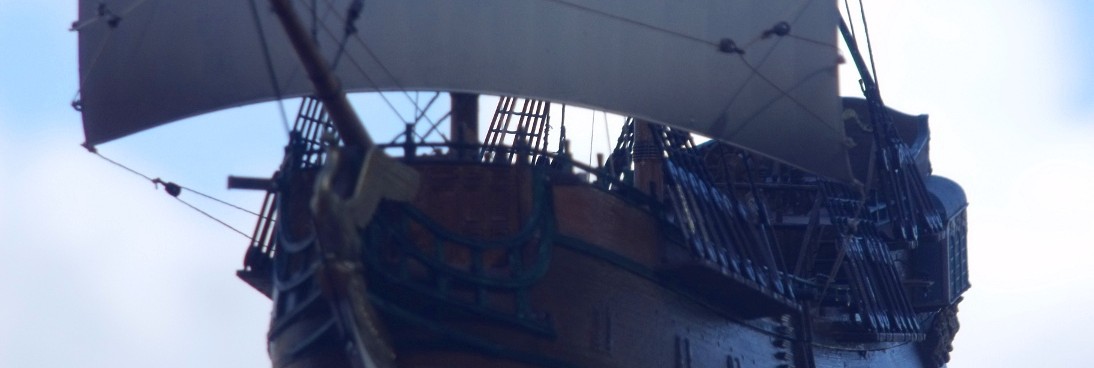
The cause of this invective, as you well know, is that I put together a cute little video about a model sailing ship, announcing its YouTube launch on a sister page, Droppington Place.

Nobody watches it, but, well, as you’re the only person reading this post, low ratings are no shock to me. Rather a low par for a very lonely course. You’re a writer. You know how it goes.

So, there were some little cranky-making nits and gnats in the movie – not enough to stop a would-be Steven Spielberg like myself, but perhaps enough to make a would-be watcher say dude, what was that?

Although no one has watched the move, there is still the profession to be honored. Plus, one never knows.

Hours under the cinematic hood resulted in this: TA DA!!!

Hey, you say, I didn’t watch the other video, but this video sure looks the same.

You, my hyper-critical friend, are only halfway right. Yes, the majority of images are the same. But, there are some pretty big deal changes.

Some of the images are taken from other photography sessions – one shows even an incomplete ship. Ho HO, did not see that coming, did ya?

But, here’s the shameless marketing part – one of the images, a 7 second segment, shows the cover of my novel, MARIGOLD’S END. The cover features the same ship model, dramatically blowing up in the background.

Genius, I know.

AND, if you look carefully at that one shot of the crew on the deck, some joker cleverly inserted the face of yours truly in the background. Oh, so clever.

Say what you will, this is a great example of cross-platform marketing.

If somebody ever watched my video, they might wonder about what that dramatic book cover is.. about… and Google MARIGOLD’S END, and, bang, zoom, the circle remains unbroken.

Not only that, but the casual reader of Droppington Place, and there is only one of those, now has a link to the video, which leads back to the book. Ah, the web, the web…

Obviously, with only one reader and no video watcher, the full effect of my marketing tour-de-force has yet to be felt. But give it time…-150-200 years or so, and then we’ll have something about which to converse.

So, the video is here: Black Swan by Zvezda, and the launch article is here: Hello, Hollywood!

Zoom! You, my writer friend, have been mar-ke-ted… see how easy it is?

Next I think I’ll write a song…Marigold’s End, the Theme from Marigold’s End, the Phineas Caswell Adventure.

Now that’s a catchy title!

I’m likin’ it!

Don’t Look Back

CapnJohn

You’re a writer. You know how it goes.

We work our brains out on a piece, twisting it, turning it, ripping it up, tossing it out, starting over again. And that’s just the first paragraph. It’s like trying to knit with a garden hose. Or a snake. Or your cat’s tail.

Eventually we win the day – the paragraph, she’s perfect. Not one word out of place – the Pulitzer committee is about to call any old second – gosh, I hope they have my cell phone number. I’ll just said the ring to uber loud so I won’t miss the call… you know, if I’m in the tinkletorium or something.  Maybe I’ll take it in there with me…just in case.

The words, they flow like spilled milk on a linoleum floor.

Hello? Pulitzer folks? Oh, it’s you, Mom. Can’t talk – I’m doing brilliant work right now. Have to keep the line open for the ol’ PC – of course you don’t tell Mom that, but it’s in your head.

And then pass the days, the weeks, the months. We sort of give up on the Pulitzer folks – clearly they don’t have our cell phone number.

And then, quite by accident, we glance at a sentence in our epic piece, the piece of OMG-This-Is-BRILLIANT literature, and we spot a typo. The guy’s name is Phil, not Phirl.

First comes disbelief: how did we miss that? How come spell checker didn’t get it?

Then comes justification: well, that’s why we hire editors, right? Don’t they catch stuff like that?  What’s one typo? Nobody’s perfect.

But, a piratey ghost enters the room. What do we know about pirates? Thieves and brigands, right? Out only for themselves, right? Ne’er do well cads. What do we know about ghosts? Scary, totally dead folks, right? This is a bad combo.

The piratey ghost tells us we’re a lousy writer. We glance at a single page of a 75,000 word tome, just one page, and we spot Phirl. Holy crackers, how many Phirls’ are in there? What else did we miss, if we missed Phirl? Real writers at least spell their character names right. Real writers don’t make stupid mistakes like this. Rookies and dimwits do stupid stuff like this. No wonder we have our day jobs.

And, the thing about piratey ghosts is that they speak with such conviction…with the occasional whoo-OOOOO-ooo thrown in to remind you that they have otherworldly connections. They must be speaking the truth. I mean, why would a piratey ghost lie?

Well, you’ll find not one but TWO chapters of my Phineas Caswell novel, MARIGOLD’S END, over there on the left. Chapters 9 and 10. And, in copying ’em onto this site, I spotted a, well, a slight… well, it’s fixed now.

They are both bang-up chapters. Full of that stuff that makes you go -say, that’s good stuff. Bang up. Read ’em, let me know what you think of ’em. I’ll sit right here by the Comments box. And, if you’re on the Pulitzer committee…

Aaargh, and whoo-OOOOO-ooo, matey. Ye cannot write yer way out of a Martha Stewart luminary. Har HARRR!

But you’re a writer. You know how it is. You know that 99% of the goomers who want to be writers are sitting at home wondering why they’re not writers. You did it. You wrote a book. Or several books. You did it.

Begone, piratey ghost entity! Take your snide comments with you! Blast your infernally eternal ectoplasmic hide! Pick on someone who hasn’t written a book – someone who hasn’t ground their keyboard to dust looking for just the right word, precisely the right image, the heart, to make a scene come to life. Begone, useless spirit. You ain’t nothin’ but a bit of bad cheese!

Take heart, my writer friend. You are writing – bingo, you’re ahead of the piratey ghost. You work and work and work to make your stuff better and better. You might inadvertently type Phirl instead of Phil, and sort click on ignore by mistake when the spell checker finds it. It happens. Around here, a lot.

Take heart. Omelettes are not made with complete eggs. You have to whisk the batter to make a pancake.

Don’t look back, except to see how much you have accomplished.


Stupid piratey ghost.


Adventures in Adventures

Pirates

There’s a great deal of adventure in writing an adventure. You’re a writer. You know how it is.

The characters, their needs, the plot, the danger of plot holes, the words, the need to make beautiful sentences, the structure, the never ending quest for pace… all those sit down for a moment when you write the adventure part of an adventure.

When the “adventure moment” strikes, you, the writer, suddenly find yourself swept away in the drama. The moment surrounds you, and takes you off into the depths of the battle, or the storm, or the chase, to the very heart of the excitement. There is nothing finer than that.

Chapter 8 of my novel, MARIGOLD’S END, is now on this site, and here we find adventure unbound. The little Katheryn B is beset by pirates – but them ain’t your Disney pirates…there be no amusement park rides here, mate. We never leave young Phineas’ side as he wends his way around the ship… adventure here, me hearties. Gosh, I hate pirate language.

Look to port, dear reader, and you’ll find it.

The hardest part of adventure writing comes after it’s been written, and you, dear writer, must go back into the moment and edit out the bad writing, close the plot holes, rework the pace, and fair the adventure into the storyline. It’s the hard work, made worse by the fact that you’ve already lived this adventure!

Still, that’s why we writers earn the big bucks. You’re a writer. You know how it goes.

Time and the Fragile Character

image

You’re a writer. You know how it is.
The time to write…when is the right time to write? Now? Nope, busy reading this post. When you finish this post? Maybe. But, if you’re like me, there are a million other things to do. More important things. Scrub the toilets. Sort the recycling. You know, I’ve been meaning to seriously detail my Barcalounger.

And so, there the project sits. The characters have all gone speechless…nothing to say because you’re busily sorting the soup cans in the kitchen. Arranging the forks just so in the silverware drawer.

Life can be so crazily hectic that it becomes nearly impossible to cleave out the time to work on a project. And yet…and yet…maybe not so, grasshopper.

There is another agent in the mix…something to which you and I should pay attention. You won’t like it.

Once upon a time, a motivational speaker said that everybody’s tired. Tired of this, of that. Too tired to make a change. But, she said, what if I gave you a hundred thousand dollars of mad money? Then you wouldn’t be so tired, would you? You’d feel fresh and vibrant, alive with joie de vivre.

So, it ain’t the tireds. It’s the motivations.

That book gathering dust on your word processor? It ain’t the lack o’ time, me bucko. It’s the lack of motivation.

Well, jeepers Mr. Monkeypants. How do I fix that?

Good question, Sullivan.

Abuse some characters. Chop ’em up, or blow ’em up. Or make them say things so horrific that their world is forever altered.

Does it mess up your story line? Oh, heck yeah. Does it mess up the whole book?

“No,” Mr. Monkeypants says firmly, “your book was already messed up. That’s why you were busily knitting underwear for the pet salamander you were thinking about renting. That’s why counting the holes in the colander is more appealing that working.

Your. Book. Stinks.

It stinks so badly that even you, yes you, don’t want to put energy into it.

Admit it. Face it. Fix it.

Kill somebody. Blow something up. Sink the ship, burn down the house, turn Uncle Ray into a zombie. Ch-ch-change it.

Challenge your characters and you challenge yourself.

And if your book is so boring that you’d rather sort socks than write it, you need a good stiff challenge.

The time is there…are you?

Okay. I’m, like totally out of breath after writing that stuff. How about you?

You’re not writing your book because you’re reading this post.

So, I’m not working on DROPPINGTON PLACE because I’m writing this post. My bad.

Promise me you’ll do something to spark interest in your work.

Thank you. Now I have to figure out which guy to kill in my book! Continue reading “Time and the Fragile Character”

It’s Their Market – Let The Readers do the Work

BS at Sea 3

The most basic tenet of Gorilla Marketing is “let somebody else do the work. Do nothing and expect big results.”

In that spirit, I humbly present MARIGOLD’S END, Chapter Seven.

Aye, Chapter Seven. Taylor finds himself assigned to the galley, and Phineas discovers that Mr. Lourdburton is a…. hey, wait a minute. I see your trick. You’re trying to pry the story from me again. Well, it won’t work, me bucko!

Gorilla Marketing, Tenet One: make somebody else do the work. Playing my own game on me, were ya? Well, it won’t work. Although, I will tell you, this chapter is pretty cool.

Those of us that are newbies to this publishing game have to look at our written work a little differently than old, established hands. Our work doesn’t hold a candle to the latest piece by Rowling.

While ours might be just as good, we don’t have the name, the publicity, the chutzpah behind us. Somewhat lacking in marketing horsepower, are we.

Instead, you and I must look at our noveling efforts as an Enterprise. No book is a one-off. No road can be a simple what-if.

As I don’t have a huge number of remaining years to develop my Enterprise, I must rather compress my activities into a number of simultaneous projects.

In my Plan 2021, I’ve laid out sequels to DROPPINGTON PLACE and MARIGOLD’S END, and am putting thoughts together on a third series.

Holy Backers, Cratman, that’s a buncha novels, doncha think? Especially while you’re still learning how to write a novel in the first place? Enterprise, my friend. It’s all about the Enterprise. How many of these pieces will be written? Who knows. Maybe MARIGOLD’S END will be a runaway hit and I can find my estate in Ireland or something. Maybe a comet will hit us tomorrow and smash us all to smithereens.

Life is too short for what-ifs.

So, visit my Pages page, right now, before the comet hits, and rumble down here.

I know you’ve been keeping up – this new chapter is one sweet ride.

Losing by Example

image

I committed a murder.

She was young, with lovely dark eyes that gazed at the world in complete complacency. At my request, they hustled her into a private booth and shot a bolt into her brain. Then they chopped her into pieces, and ground up some of those pieces into a bloody hash. Finally, they formed that hash into a 1/4 pound paddy, fried it up nice and brown, and served it on a bun with cheese. She was lovely, and she was delicious. I didn’t kill her, but I ordered her assassination, and that makes me guilty.

I suffered a murder.

Someone doing 74 miles an hour crashed into my wife’s car. Thank you God no one was hurt, but my Nissan Versa was murdered. Her frame twisted, her panels bent, she was carted away and discarded. Three thousand pounds of metal, plastic, glass, and memories lugged off to the junk heap.

There is no change.

I don’t kill as many cows as I did before. I kill more plants now. I drive a shiny new Prius, using less gas and making the air cleaner. A little bit. These are the ways I once used to protest what has become of us, but no more.

These protests are useless.

If I croaked tomorrow, my protest would be unseen. If I never ate another hamburger and lived to be a hundred, my protest would be unseen.

Because it’s not about me and my choices, or you and yours. It can’t be. It’s about the cycle of money, the heirarchy of life. It’s about the market, and ancient religion. It’s about having a soul, and believing in a bigger picture.

We must manage up.

Protests do no good. Solutions do good. Never tell your boss about a problem and leave it to him to fix. Always offer your boss a way to work out a problem. Wailing about pollution doesn’t make it better.  Finding a way to end it makes it better.

I will kill again.

Beautiful brown eyes that gaze at the stars from under the feedlot lights will forever be closed by my order for a double-double with cheese. She will perish because I was hungry and didn’t have time for a salad.

I will suck oil out of the planet’s very bedrock to drive my Prius to McDonald’s. My new car doesn’t replace my Nissan, but leaves an even bigger hole in the ozone.

Perhaps the first step of activism is desperation.

Take a Team Across the Stream

image

You’re a writer – you know how it goes.

You’re working feverishly on a project, everything fits like fingers in a bowling ball. And then, when you absotively least expect it…whammo, like a two-by-four to the forehead: the deadly stall. A character says something that reveals a plot hole so big you could fit a Buick in it.

In DROPPINGTON PLACE we simply ran out of story. It was great fun, and everybody was lively and having a good time. And then, around 42,000 words or so, Arvy, a perfectly nice kid who was sadly turned to paper, paused and looked at me.

“I’m bored.”

“You can’t be bored!  You’re, like, a key player in this thing.”

“Yada, yada, yada…key player this. If I’m such a hotshot, give me something to do.”

A quick review of the Something To Do cabinet revealed empty shelves. And there Arvy sat, with so pained an expression he was impossible to look at.

That’s okay, because we can just change horses right here in the middle of the stream and work on another project that’s been a’hangin’ around.

A couple of weeks on the new project, just starting to feel it, and, son of a biscuit, here’s a new idea: something for Arvy to do.

“Leeme see, lemme see, lemme see!”

“Sit down, Arv…or, I guess sort of fold yourself ‘cuz you’re, like, made of paper…we need to plot this out a little bit.”

“Well, I categorically demand that you cease work on your new project and give me a challenge!”

So, we drop the reins on the new horse and leap back on the first one.

Their must be some old story about fording a river and changing horses in which something bad happened. I’ll bet you it has to do with Conestoga wagons. Let’s pretend it does, okay?

So, like, what’s the point?

I know, right?

The point is this: when you hit a creative wall with a project, it’s perfectly cool to start a new one. If the old one calls during the new project, it is equally cool to go on back to it.

One suggestion: make lots of notes on each project. Although today the plot thread is perfectly clear, tomorrow… well, after all, tomorrow is another day!

Frankly, Scarlett, I’m changing horses!

Shifting Gears in the Sea Lane of Time

Rowboat

You’re a writer. You know how it goes. You run like a monkey on a story, and then, blammo, like a ton of jelly, the story stops. The characters all turn and look at you expectantly.

“Well?”

“Don’t ask me! You’re the character! You’re supposed to tell me what to write! I’m just the translator.”

So, there you sit – the words of your last sentence dangling in the air like the tail of a kite that is slowly, slowly sinking down to the ground. Crash.

What do you do? What do you do? I get in a really bad mood, and am foul and cranky until somebody says something. It’s like a Mexican standoff, and there’s no way I’m going to blink first. No, senor, it is you who must say the first word…

A better option, and one I read somewhere and therefore cannot take credit for, is to embrace a different project. I’ve started the detailed synopsis for SAN CRISTOBAL’s DEFENSE, another Phineas Caswell adventure.

In this new book, see, Phineas and Uncle Nev…. hey, wait a minute. I see what you’re doing. Nice try, bucko, but it won’t sell soap. I’m not telling you about this new book until you read the first one. Well, okay, you don’t really have to read it. But you do have to wait for all of the chapters to get published.

But I’m not giving away the ending, which I would be if I told you about the San Cristobal. Paradoxically, I am giving away MARIGOLD’S END, one measly chapter a week, but not the ending. However do serial writers do it? Serial killers, well, that’s pretty straight up. And cereal killers – I have one of those in my very household.

Which leads us to the point of this diatribe: Chapter 6 of MARIGOLD’S END is now on the Pages part of this site. If you’ve been keeping up, and I know you have, the author cleverly introduces the reader to the intriguing lore of the sea through the eyes of a twelve-year-old-dude-I-don’t-wanna-be-a-sailor kind of young man. In Chapter 6, we find that learning to be a sailor isn’t always about the wind and the waves. Sometimes, it’s about men.

Oh, so NOW you’re interested, eh? Shoulda seen that coming!

Enjoy the chapter – it was great fun to write.

Good luck with your writing, and, remember, if you get stuck, do what I do, and throw a tantrum start another project.

Book Publicity: We’re Getting Somewhere Nice

BS at Sea 1

If you’ve been reading the chapters of my book, MARIGOLD’S END, you’d know that I’m releasing it one chapter at a time onto this site. You could figure it out by reading my posts, of course, including this one, but I’m trying to make you thing “dude, I should be reading that book instead of playing Candy Crush Saga.”

Not that I have anything against Candy Crush Saga – in fact, I’ve given up all on-phone video games for Lent – or your reading habits. None of my business. Nope. Nosiree Bob.

So, there it is.   Where is this going, you wonder. And well you should, for I do, too.

Here’s where: Chapter 5 is now on the site. My boy Phineas, 12 years old in 1706, is taken to sea against his will by his seafaring Uncle Neville. He’s had a narrow escape with murder (committing it), nearly been drowned, suffered through near-terminal seasickness, and now has learned about the superstition surrounding a “Jonah.”   Ah, but the deep blue sea holds more adventure for our young man – he’s about to meet Taylor, a slightly older, terribly well educated sprout of a fellow, and Louise, the granddaughter of the King of France.

If you aren’t reading along, you’re missing out.

And don’t be expecting me to come on here and tell you the whole darned story – not going to happen, mate. Nope. There’s a big ending, but I can only hint about that.

Here’s the hint: it’s big. Another hint: it’s at the end.

You’re a writer. You know how it goes. The world doesn’t necessarily come looking for your book. You have to coax it, wheedle a little here and there, to generate interest and talk. Buzz. You gotta build the buzz. Sounds like a bumper sticker.

Your publicity should be gentle, but persistent. Nobody likes a showoff, and most people don’t appreciate self-aggrandizing fanfare. So you have to be nice, and, like me, terrifically humble. Okay, brilliant is in there, too. Did I mention brilliant?

You don’t have to read my chapter, but take a page from this forum (as you know, only the humbly brilliant refer to their soapboxes as forums) and think about being nicely, humbly persistent in publicizing your work.

Notice that the word ‘marketing’ hasn’t shown up anywhere in this…oops, there it is… because you and I, we no longer market our work. We publicize it.

Good luck in your publicizing efforts, enjoy the chapter, and be nice.


Gorilla Marketing Exposed in Book Chapter Release Scam

adult_gorilla_costume_mascot

First, let me thank you for reading this.

I know, that seems like a really cheesy ploy to get you to read on, because now you’re guilted into it. And it would be (I wish I’d thought of it first), except that I really mean it: thank you. Now, is this “thank you” sincere, or an even cheesier ploy to guilt you into reading this post, which is really insidious (I don’t suppose it’s true that farmers live in the country, city folk live insidious. Equally not so is it that mackerels are facetious).

Sadly, this is a sincere thank you for an interest in my post. Without you, well, all my work comes to naught. So, once more, thank you.

Okay, so, now for the gorilla marketing part – are you ready? Gorilla marketing: do very little, expect very much. Make somebody else do the work. And today, YOU are that somebody else!

Chapter 4 of my novel, MARIGOLD’S END, is now on this site. Yes! Can you believe it?

Now, don’t click over there and start reading it yet…hey, you! Click back over here!

See, here’s where you do the work and I reap the marketing rewards. You read the chapter, and its predecessors, and realize that you really like this story. “Heavens,” you say to yourself, “I wonder where it will go next?”

Got that? Write it down if you have to.

Then, and this is the tricky part, you tell all your friends about how great this book is. See? I haven’t done a thing, but now MARIGOLD’S END is practically a household name in your social circle.

Ook. Ook. Pass me a banana. I’ll be lounging in the hammock if anybody needs me.

All seriousness aside, thank you for reading.

Oook.

Gorilla Marketing, Phase Two

cropped-droppington2

You just gotta love a sequel, huh? What better way to follow up a mega blockbuster hit than with another blockbuster? Boom, looka that, folks, something even better!

Well, in the spirit of gorilla marketing, I’ll go you one better than a sequel.

Howzabout this; Chapter 2 of DROPPINGTON PLACE? Oh, yeah, uh-huh, fist-bumps all ‘round.

Wha-aa-aat? Sonny Jim, you’re just plain givin’ away the whole dignity-danged store!

No I aint, Pa. I swear it. It’s a new market thing program about monkeys. All the cool folks ‘r doing it.

In today’s hurly-burly, gotta-make-a-buck world, you have to stand out of the crowd. You have to be the one. The one. You. If you don’t, the world will run right over you.

Think about this Internet. Right this instant, you can look up, like, a gazillion books for free. Books on just about anything, and fiction, and graphic novels, and whatever you want.

When you put your hard-earned words into that maelstrom, unless you just happen to be a Hemingway, or a Rowling, or a King, or another author more current whose name I should know but don’t because I’m actually an uncultured boob, you get lost in that rush of online pieces, just another salmon in the dash upstream.

So, you have to stand out. You have to be different. You have to be the one sought out by your readers.

Enter the gorilla wearing a tie.

GO: “I say, old bean, why not publish your work in a blog first, eh?”

JR: “But, jeepers, Mr. Rilla…”

GO: “Go, please.”

JR: “Oh, okay. Goodbye.”

GO: “No, don’t leave, you ninny. Simply call me Go. No need to be formal.”

JR: “Oh. Anyway, Go,   nobody reads my blog.”

GO: “Surely someone does.”

JR: “Well, I guess there are quite a few…”

GO: “There you are. Publish your book, one chapter at a time, to your readers. They’ll read it, talk amongst themselves, and before long, why, they’ll be clamoring to… “

JR: “To buy my books?”

GO: “No, to have you hanged. I’ve read your stuff. You should be ashamed.”

So, in the spirit of Go Rilla, the marketing monkey…

GO: “Ape, if you please. Great ape, in fact.”

DROPPINGTON PLACE, Chapter 2, is now released on my Droppington Place blog, here. You can also follow the link at the bottom of this page to the Droppington Place site.

Enjoy!

Publicity, One Chapter at a Time

ConnectDots

Are you ready for the next installment of MARIGOLD’S END? I’ll bet you are – you there, my writer friend, sitting on the edge of your seat wondering, wondering, wondering whatever happens to Phineas next.

At least, I hope it’s you. Nobody else in the room, that I can see. Yep. It’s you. Try to form a line there, would you please? A line of one rather resembles a dot, doesn’t it? Well, please form an orderly dot.

Writing is a lonely business. Your garret, or office, or room, or swimming pool deck, wherever you do your writing, fills up with characters, talking, laughing, fighting, sleeping, doing whatever it is that they do. Then you turn off the word processor, and, voila, it is only you.

No one is very much interested in you while you write, because, frankly, you are uninteresting when you write. Not as a person, mind you, but as company, because you’re in the room filled with all those interesting characters. The real people around you just sort of hang in limbo until you snap off the word processor. Oh, THERE you are!

So you, my dotted friend – dotted by virtue of being a line of one – are the witness to the publicity and hoorah surrounding the release of Chapter 4. Hoorah!

Chapter 4 introduces us to the life of a sailor. Chapter 1 introduced us to Phineas, Chapter 2 to the perils of traveling by boat in the early 1700’s, and Chapter 3 to the indescribable job of seasickness. Now we’re past all that and exploring the Kathryn B, and what it means to be a sailor.

In MARIGOLD’S END, you learn about the new world into which Phineas is thrust only through his eyes – a challenge to write, but hopefully not to read. Like you, Phineas’ learning comes through total immersion. It be sink or swim in the briny deep. You’ll find it over there, on the left, under MARIGOLD’S END, the Novel. See, it sort of drops down, ready for reading’!

So you, dear dot of a writer-friend, are in for a treat.

Let me know what you think. Drop me a line, leave me a comment, send me a mental note.

If you are a new dot, please be so kind as to stand next to the other dot, thereby forming a line.

A line! They’re lining up to read my work!

I KNEW this day would come!

Now, if I can just get ‘em to pay!

Marigold’s End, Chapter 04

PortQuarterdeck

Phineas has survived Alfred Townsend and the dangerous boat trip to the Kathryn B. Seasickness almost did him in. Whatever could await in Chapter 4? Read on, good friend, read on!

MARIGOLD’S END, Chapter 4

The sunlight danced and twirled on the ceiling above where Phineas lay in his hanging cot. He looked at the squiggling patterns for a long time, trying to figure out how they got up on there on the underside of the floor above him.

What day was it? He couldn’t remember. His days had become a blur as he lay in the cot, sweating and retching and hoping that, if he couldn’t just feel better, he would simply die and end the misery of seasickness.

Uncle Neville came in to check on him regularly during the day, and of course slept in the other cot in the cabin at night. He had stood by the side of Phineas’ cot and clucked nervously.

“You’ll be right as rain before you can say Bob’s your Uncle,” he said once. He meant it to be helpful.

“I don’t have an Uncle Bob,” Phineas groaned. “Just an Uncle Kidnapper.”

“It don’t seem like it right now,” Uncle Neville replied defensively, “but this voyage will make a man out of ye. And a right fine man you’ll become. Just like your father.”

Phineas turned his head away and looked out the window. Just like his father. He shook his sick head.

“I just want to die,” he moaned in answer.

“I, uh, I’ll fetch ye a new bucket,” Uncle Neville said and left the cabin.

Later – it seemed much later to Phineas – it seemed the wind had picked up and howled around the ship.

Except that the ship wasn’t a ship anymore, but the fortress he and Nigel had built on the shore of Wharf Creek. Except that it wasn’t exactly the same. Torches guttered in the howling wind, and rain slashed and splattered all around him, although both he and Nigel were perfectly dry.

“I say, old tub,” Nigel grinned, “it seems as if we are in for a bit of weather.

“Quite so,” Phineas replied, and had begun to say something about the strangeness of no rain falling where they stood. But a sudden and terrible roaring noise interrupted him.

Where there had been rain slashing down outside the dark windows, now there rose the sea, deep green and surging, with white caps the size of horses.

“It will be all right,” Nigel called. “I’ve rather discovered a boat!”

He pointed cheerfully at a skiff – it was the one that belonged to Phineas’ father – sitting on the floor of the fort. “A natty craft, that one!”

Phineas stared at the thing in horror. The boom, the one that had so nearly killed him, swung menacingly.

“I don’t think…” he began.

“It’ll be all right, old wallop,” Nigel said. But he suddenly pointed out the window.

The sea burst through it and into the fortress like a green, white-capped tongue. It whipped its foamy tips at the boat and utterly destroyed it. The foamy tips lunged at Phineas, who leapt aside and ducked behind the boat’s wreckage. The tips spattered against the wall where he had stood.

Nigel stood in the center of the room, staring open-mouthed at the water that writhed around the room like a foamy green serpent.

In an instant the water collapsed in on itself, trapping poor Nigel in the center.

He thrust his hand out of the water, just inches away from Phineas as the water lifted him off the floor.

Phineas stared at Nigel’s hand, unable to move, frozen in place by his fear of the water.

“Help me,” Nigel called in a perfectly clear, perfectly calm voice. “You can do it, old shoe.”

Phineas shook his head. He could not do it.

The sea suddenly reversed itself, sucking out through the window, leaving the room in shattered silence. The sea was gone, Nigel with it, and the rain returned. Poor Nigel, he thought.

He sat upright suddenly in his cot – so suddenly that he bashed his forehead on the deck beam above. The impact knocked him backwards against his pillow.

Some time later he awoke again. Sunlight poured in through the cabin windows – his eyes ached under the glare. The inside of his mouth tasted like it had a dead rat in it. He was monstrously hungry. Uncle Neville had brought him some sort of dry bread, but he threw it up almost as soon as he swallowed it.

Nigel was still in his thoughts, and so was that surging, rapacious sea. He sat up in the cot and looked out the windows at the cerulean ocean. It stretched endlessly away, calmly surging under a gentle breeze.

“I still hate you,” he whispered to it.

A wave of nausea lifted in his gut, but just as quickly receded.

He thought about Duxbury, and Mother, and all that had happened. There was nothing he could do. He couldn’t go home – just look at the horizon: no land in sight.

“So,” he said softly, “I’m to be a sailor now, is that it?”

He was a to be a sailor who had very nearly shot Alfred Townsend. That was a pretty brave thing to do. He was a pretty good binding stitcher, too. That was a grownup thing. He was through with Nigel, which was a good thing. And he didn’t have to get up before dawn to go down to Mr. Santorini’s. That was a good thing, too. Maybe, if he avoided that Lourdburton, this sea voyage thing might not be so bad – as long as he stayed out of the water – maybe it would work.

He stood up carefully, somewhat cheerful, ready to try out the idea of being a sailor. His anger at having been abducted, at having his whole world jerked out from under him, at his being forced to ride in a boat, that would all have to wait.

“Phineas, lad,” Uncle Neville crowed as he strolled into the cabin, “glad it is that I am to see ye standing up. Get yourself up to the galley. Solid food is what you’re needing now.” The older man sat down with a humph on the cushions and pulled a chart towards himself.

Phineas looked at him for a moment, wondering if there was to be any further conversation. But his uncle had busied himself with the brass dividers.

“Uncle, if you please, what does kissing…”

“Captain, if you don’t mind,” Uncle Neville interrupted absently.

“Oh, of course. What does kissing the captain’s daughter mean?”

“It don’t signify…” the captain muttered under his breath, but then looked sharply up at his nephew.

“What did ye say? Kissing whom?”

“Kissing the captain’s daughter,” Phineas repeated.

“Kissing the captain’s…” Uncle Neville repeated in thought. He stared up at the deck beams above him, and then down at the desk. He pursed his lips and shook his head slightly, the little curls on his wig dancing to some unheard tune.

“Well, it’s clear I don’t have no daughters,” he said with a sigh. “I’m thinking maybe ye’ve confused it with kissing the gunner’s daughter, which is an old navy term for punishment on the gundeck.”

He looked back at his charts, moving the brass dividers across them once more. The black feather of his quill pen bobbed as he made small marks on the chart.

“There,” he said proudly to himself. “That’s as good a sounding as ever you’ll get.”

Phineas watched him, unsure whether he should ask more questions or go to the galley. In fact, he wondered if he should ask his uncle where the galley was, as he had no clue as to even what it was. Out came another chart, this one rolled up in a scroll, to lie on top of the first one. It didn’t want to lie out flat, however, and rolled itself back up.

Another thought, even more urgent than hunger, leapt into Phineas’ mind. It had nothing to do with the captain’s daughter, or the galley, or hunger at all. It was much more urgent. He watched his uncle, waiting for a chance to speak to him.

“Oh, for mercy’s sake,” Uncle Neville muttered and laid his inkpot on one corner of the chart. He snatched up a spyglass from the window seat and slapped it down onto the opposite corner. The two remaining corners curled rebelliously.

“Cursed Stromwell charts.”

“Uncle, I mean, Captain,” Phineas blurted, unable to wait any longer.

Uncle Neville jumped with surprise, jerking the chart, which flipped the inkwell over. He leapt to his feet.

“My charts!” he bellowed.

He snatched up the inkwell and set it on its feet, scrambled to find something to blot up the streaming ink that meandered across the top of his Stromwell chart.

“Is there an outhouse…”

“Out!” Uncle Neville roared. “Get out! Use the gallery, ye simple-headed lumpkin!”

Phineas ran to one of the small rooms at the side of the cabin and made use of the hole in the chair. What a chucklehead, he thought to himself, making his uncle spill his ink like that. He should have remembered what the galleries were for. He shook his head.

When he left the gallery he found that Uncle Neville had left the cabin. The charts were gone, and it was hard to tell from the vague blue stain beneath the half-empty inkpot whether irreparable damage had been done.

He sighed. This was a great way to start being a sailor.

The bright and open waist, visible from the still-open cabin door, beckoned to him. He walked carefully past the heavy guns, nestled like big hogs up against the side of the ship, and out into the brilliant morning sunshine.

Sparkling green waves slithered past as the ship surged through them. Wind hummed through the rigging, filing the big white sails that made an exquisite contrast to the blue cloudless sky.

“Mornin’, young fella,” said Swede as he passed on the deck. “Gut to see you about.”

“Mornin’,” Phineas replied. “Are you feeling better, too?”

“Oh, ya,” Swede replied. “I vas better two days oot. Alvays is same at de start of a yourney, ya?”

“Ya,” Phineas said. He liked speaking the international languages. Swede chuckled briefly, but suddenly stood up stiffly suddenly and glanced over Phineas’ shoulder.

Phineas turned around, trying to figure out what made Swede act so strangely. It was Lourdburton, nearing them as he walked purposefully towards the front of the ship. He glanced at Phineas.

“Well,” he said gruffly, “back amongst the living, eh?”

Phineas looked around awkwardly, not quite sure what to say.

“The typical answer is ‘aye, sir,” Lourdburton said tersely. “It’s a phrase ye’d best become accustomed to. When ye’re ready, you’re to report to Mr. Duffy in the galley to assume your duties. Is that clear?”

“Duties?” Phineas gaped at him. Lourdburton shook his head.

“No one sails for free, Phineas. Don’t forget, you are the cabin boy.”

He nodded and pushed past them as he continued his walk forward. Phineas stared after him. Cabin boy, indeed.

“The typical answer is ‘aye, sir’,” Lourdburton called over his shoulder.

“Aye, sir,” Phineas replied meekly. Swede shook his head sadly.

“You had best get forvard and check in mit Herr Duffy,” he said. “I vill be hongry when de dinnertime comes, ya?”

“What do you mean?”

“Der cabin boy is de one who is service the meals,” Swede answered cheerfully. “Dat is vat you is to be doing mit Herr Duffy. You best be getting’ up dere now, ya?”

“Aye, sir,” Phineas said.

“Yew don’t say dat to me, ye idiot!” Swede laughed. He trotted across the waist and up the ladder onto the foredeck. In a moment he was gone, climbing like a monkey up the ropes of the front mast.

Phineas glanced over the side of the ship. The deep green sea seemed so clear that he imagined he could see a thousand feet down. The ship’s shadow at once rose and fell on the waves and drifted like a dark ghost below and next to it.

He suppressed a shudder, and fought Nigel out of his mind.

Another shadow, smaller than the ship’s darted beneath them. His heart stopped. Something down there, in the deep green sea, moved. It wasn’t a shadow – it remained steady and constant beneath the dancing sun sparkles.

A pale gray thing, looking like a positively enormous linen tablecloth, drifted up from far down below them in the blue-green depths. It slowly rose up from the very deep water, starting first as a blur, but getting more and more distinct as it got closer. The thing was easily as long as the ship. Soon Phineas could clearly make a long whipping tail. It rose and rose towards him. He began to tremble, horrified by what he saw but unable to takes his eyes off of it.

It rolled over near the surface and stared at him with an enormous, black eye.

Phineas gasped and backed away from the ship’s rail in panic. He bumped right into a pudgy sailor who had been passing.

“What do you see, lad?”

The sailor smiled at him as if he was speaking to some village idiot, but Phineas didn’t care. He pointed over the side in horror.

“L-L-Look!” he stammered.

The sailor looked over the side. The horrid thing was still there. It glided smoothly, evilly, through the water below them, hiding in the shadow of the ship. Waiting for them. The sailor chuckled softly.

“Jablonski,” another sailor said as he walked past, “old man Sturgis is looking for ye, forward.”

“Thanks, mate,” Jablonski replied.

Phineas tried to look casual, as if he weren’t terrified of that awful beast lurking beneath the ship. He looked into the ropes overhead. The second the other sailor had gone he threw himself back to the rail to stare at the monster again.

In the blink of an eye the awful thing darted right to the surface and leapt fifteen feet out of the water. Its huge, gray, diamond-shaped body completely left the sea and whipped a tail that must have been ten feet long.

The beast lunged directly at him.

“He…help!” Phineas gasped.

A thousand gallons of seawater surged at him. The light gray belly of the beast slammed against the gunwale, throwing him backwards off his feet.

The slimy, fish-foul breath of the thing blew in his face as it perched there on the side of the ship for a brief moment. Men yelled and thundered towards it.

An inrush of breath, and the beast fell backwards off of the side, crashing into the sea with a titanic roar of water. Seawater fell about them like rain as the giant monster made a circle beneath them and disappeared, gliding smoothly back into the depths from which it came.

“I never seen the like,” one sailor said.

“When I was in Larkspur one landed clean on the deck once,” another said.

“Wha… what was that thing?” Phineas gasped from the deck. He was afraid to stand up in case it came back.

“Manta ray,” Jablonski replied with a grin. “Right frisky, that one.”

The grin, which made Phineas feel like a foolish little kid, also made him just the littlest bit angry.

“I thought it was going to eat us!” he replied. He instantly regretted saying that – of course the thing couldn’t eat them all.

Jablonski laughed.

“Goodness no, boy! That’s a manta ray. They don’t eat the likes of you and me.” He laughed and shook his head. “’Eat us’,” he repeated.

Phineas searched his memory for a reference of somebody being eaten by a fish, hoping to show this pudgy fellow that he knew more about the sea in his pinky finger than Jablonski did in his whole… anyway.

“Just like the story of Jonah…” he said.

A look of panic suddenly came over Jablonski’s face. He reached down and shushed Phineas with his hand. Phineas wriggled beneath the grubby fingers pressed over his mouth, unwilling to put up with any more insults. He climbed angrily to his feet.

“Now, see here…” he began.

But Jablonski looked over his shoulders in fear.

“You don’t ever say that name on board ship, lad,” he whispered urgently. “You just don’t say it.”

“Why not?” Phineas spat angrily. “Wasn’t he swallowed by a whale?”

“Aye,” Jablonski replied quietly, as if telling a great secret, “that he was, but that don’t be the whole of it.” His bright blue eyes shone out of his tan, stubbly face. His breath smelt of rum and tobacco. “God told him to go to Nineveh, see, but he refused, and took passage on a ship sailing in the opposite direction. So God took out His wrath on Jonah’s ship. He were just a passenger, but that didn’t matter to God. The sea rose up and tried to smash ‘em, and there was thunder and lightning, and the ship was bein’ tore apart. Don’t you see?”

The sea raced into the fortress in Phineas’ memory.

“Help me,” Nigel had said so calmly.

Phineas shuddered.

“I don’t see,” he answered quietly.

“When things go bad on board a ship,” Jablonski whispered, glancing around him, “it’s usually because you have a fellow who’s been cursed by God with bad luck – a Jonah.

“A man like that on board can kill a ship. You don’t NEVER want to go around sayin’ that name!” He looked around briefly to see if anyone had overheard their conversation, and then stood back a half step. “Do you understand?”

Phineas nodded nervously. This talk of the sea rising up, of God’s wrath for doing something bad… maybe that fish was a sign. Maybe God was coming after Phineas because he didn’t…

“But that’s not fair,” he blurted. He couldn’t have rescued Nigel – the water was too rough. Everyone said so. Maybe everyone but God. He looked down at the deck.

“T’aint nothing fair about it, lad,” Jablonski said simply. “God struck out at Jonah, and that is fact.”

Phineas glanced around the ship quickly. Maybe the fish was a sign. Maybe he had already brought bad luck on the ship. He looked pleadingly at Jablonski.

“Is – is it too late?” he whispered.

The older sailor put his hand to his jaw and thought for a brief moment.

“I don’t know,” he said quietly. ”Once one of them rays leapt clean through the backstay… Lady Ella, that was… during a right blow. The foretopmast come down an’ three poor sailormen lost their lives. I seen that, once. This weren’t as bad as that, but you just can’t know for sure. You surely do not want to go around proclaimin’ yourself a Jonah. If you do, and we run into a stream of bad luck, the crew will throw you over the side.”

Over the side. Phineas nodded slowly, sadly. Perhaps they would throw him over the side. “What should I do?” he asked.

“Well, we’ll just keep this atween you and me,” Jablonski said, looking around once more. “You din’t mean northin’ by it, you just din’t know. But don’t go sayin’ that name ever again, do you see?”

“Thank you so very much,” Phineas whispered quietly.

“Don’t ye worry on it,” Jablonski replied with a wink. He turned and walked cheerfully away.

Phineas watched the sailor walk away and wondered if this was some sort of circle: perhaps the sea was going to get him after all. Perhaps he should have drowned that time with his father. Maybe God sent that log for him, and Nigel got in the way. That bright, sunny day swam back into his memory, and water rushing and roaring and poor Nigel, his arm waving frantically above the surging waves, flailing…

“Phin, me boy,” Uncle Neville intruded cheerfully on his thoughts. “The galley is forward, not aft.”

Phineas looked up at him in surprise.

“I’m sorry about the ink pot,” he stammered.

“Don’t ye worry about that, now,” his uncle replied with a smile. “‘T’was me own fault.

His uncle glanced covertly about. He scratched his head, looked down at himself, and then motioned Phineas to come closer.

“Now, listen, lad,” he said softly. “It’s just that, well, it’s…it’s about them breeches ye be wearing. They, uh, well, they’re likely to be causing a bit of a stir amongst the men.”

Phineas looked down at his breeches. He had on his buff ones with the white stockings. Although soaked with seawater, they looked all right to him.

“I got splashed by a manta ray,” he said defensively. “I’m sure they’ll dry out.”

“No, no, it aren’t that. Goodness knows we all get wet most often,” Uncle Neville said with a little choking noise. His face turned an uncomfortable shade of red. “Look around you, lad. How many men do you see wearing breeches and stockings on board this ship?”

Phineas looked around. Not a one, not even Uncle Neville. They all wore trousers.

“It isn’t that you don’t look sharp and all,” Uncle Neville said, “but it causes a problem with the men. See how they all got them blue and white stripe shirts and white ducks? They’re all dressed the same because they’re members of the crew. You’re a member of the crew, aren’t you?”

“Well, uh, I, uh, don’t know…” Phineas stammered. The recent brush with death clouded his thoughts.

“Now, Phineas,” Uncle Neville said seriously, “your mother and I agreed that taking you to sea would be the best thing for you. We both know that having your father not be around, so to speak, well, it hasn’t been easy on you. Living there, in that cottage with my sister and no man around, well, it just don’t be right for a fine youngster.”

Phineas cleared his throat uncomfortably. He bit back the urge to point out that Uncle Neville must have felt that kidnapping a youngster and dragging him off to sea against his will was more right than leaving him at home.

“But, well,” his uncle continued, “here we are at sea, and I’m thinking things will work themselves out aright. You’ll find that this is the best thing what ever happened to ye.

“Now, son,” he said even more quietly, and leaned in closer to him. “There is one thing I’ll be asking of you. You’re me nephew and all that. But on board ship I need you to do your best, to be the best sailor you can be…”

“I’ve already decided that I would be a good sailor…”

“…The fact of the matter is that I always figured this ship and all her trappings would someday come to you, by way of inheritance. Just think of it, lad – your own ship!”

“…because that is what you and Mother want. It won’t be that hard, and I’ve already learned some terms… “

“… but, I need ye to do me proud in front of the men. You know, family tradition and all. Learn what’s taught to ye and show ye know it well. Put your best foot forward. Can ye do that for me? For your dear old Uncle?”

“As I say, Uncle, I’ve already started learning some…”

“Grand!” Uncle Neville grinned. “Now, it’d make things easier for me if you went to the slop chest and found yourself a pair of ducks. Mr. Sturgis can make ‘em fit for you. Best find yourself three or four pair, as trousers tend to get tarred up around here.”

Until he said the word trousers Phineas had no idea what ducks were. “What’s the slop chest?”

“You’ll find it in the fo’csle in the carpenter’s shop, right across from the galley,” Uncle Neville replied cheerfully. “That works out nicely, don’t it? You be going up there anyway, aren’t ye?”

“Well,” Phineas replied shakily, “I had rather planned on going back to the aft cabin…”

“Nonsense, lad,” Uncle Neville said cheerfully and clapped him on the shoulder. “Unless, of course, ye has business to do out in the gallery, but ye’ve already done that, eh?

“There’s the lad,” Uncle Neville continued with a smile. “You can pass my respects to Mr. Duffy and tell him I want him to make an easy day of it.”

“All righ…I mean, aye, sir,” Phineas replied. “Uncle?”

“Aboard ship I prefer to be called captain,” Uncle Neville said kindly.

“All right…captain,” Phineas said. “Have you ever heard of a Jonah?”

Uncle Neville looked at him suddenly with a keen interest. He glanced over his shoulders and stepped closer to his nephew.

“What makes ye ask that, son?” he asked seriously. “Do we have a Jonah amongst us?”

“Well, no, I was just…” Phineas began.

“Who is it, son?” Uncle Neville asked urgently. “Point ‘im out to me if ye don’t know his name.”

“Well, I was just…” Phineas had been going to describe his conversation with Jablonski, but Uncle Neville’s reaction suddenly made him nervous. “Uh, I just heard someone saying that they didn’t think we had any Jonahs aboard this ship.”

“Well, you just tell whoever it was that you overheard that I’ll not brook even the mention of that name aboard my ship,” Uncle Neville said severely. “Now, get yourself up to the galley and we’ll put this nonsense behind us.”

Uncle Neville turned to leave, but then turned back again. He dropped his voice.

“Now, Queen’s truth, you didn’t hear no tell of there being a Jonah aboard the Kathryn B?” he asked in a low, urgent whisper.

“Queen’s truth,” Phineas replied

Uncle Neville looked at him for a long moment. It was an odd look, as if he didn’t believe him, or didn’t trust him, or was, perhaps, just afraid. It made Phineas squirm.

“I imagine I should head to the galley,” Phineas said.

Uncle Neville nodded.

“And no more of that kind of talk,” he said as Phineas passed.
Writing Forever

shake

I know you know this, so I guess there’s not much point to telling you about it. But, well, there it is, isn’t it?

I’ve been hating on my book, DROPPINGTON PLACE. Okay, well, not on the book itself, but on the writing of it. Some days it’s a blast, and the words flow like sweet cherry wine. The next day comes the roadblock, the stumbling block, the block of ice that freezes our soul and stalls us just plain dead in our tracks. I hate that block, too.

In my story, the characters explore a surrealistic world made entirely of paper. Their path takes them down, well, a path. So, how do we walk down this path?

Walking, and walking, and walking becomes so dull that even I can’t stand to write it.

Instead of walking and walking, the camera drifts up into the sky and looks down on them, telling us where they’ve been and what they’ve seen.

And THAT, my writer friend, is exactly where the roadblock landed. Flooomph, like a big rock in the highway to Interesting Storyland, we stepped out of the lives of the characters, the story became wooden and dull, and no fun to write. And, if you don’t have fun writing a piece, however is your reader going to enjoy it?

Ding-dong. Hello, Mr. Dimwit? Your brain is calling.

It’s a scene, of course. The answer is to place scenes along the path. Scenes that move the story forward even as they move the characters down the road. Cool, huh?

Biggity-big-big-bigger question.

Why do this? Why do you care about great paragraphs, and storylines, and why is it so important for you to put your thoughts on paper?

Why? Why must you publish your book? If writing is so important to you, why don’t you just write and write and let it go at that.

Okay, so maybe it’s not the writing, is it? It’s the reading.

You write your ideas and stories so that others will enjoy, will learn, will see the world in a new way. Isn’t that so?

So, here’s the rub: if you are so concerned about your reader seeing the world in a new way as a result of your work, why put your name on it? Okay, so it’s not just the reading. It’s the fame.

Before we go too far into our writer’s tools and processes, let us get this straight:

You and I are reaching for the brass ring of immortality.

Think about Shakespeare, a household word. Shakespearian theater. It defines a whole category of acting, of playwriting, of presentation. Why isn’t that you?

It could be. If your book is successful, if you find the right combination of story and character, you, my dear reader friend, could be the next Shakespeare, your name whispered and hailed and venerated for generations to come.

That’s immortality for us.

But it’s more than that, isn’t it?

Writing is a business. Success is not measured by finished works. It’s measured by works sold. Sold. Sounds bad, but it is the business.

Sell a million books and you’re doing good. Sell a million books a year and you’re on your way. Sell a million books a year and get a movie deal, and household wordism isn’t far away.

Isn’t that what you want? That’s what I want. I don’t think it will happen, but that doesn’t make me want it any less, or make me work any less hard in trying to get there.

So, go finish your book. Write well. I’m finishing mine. Maybe you’ll read it – maybe I’ll read yours. Maybe yours is so good that Disney is dialing the phone this very instant to make you the next Stephen King.

Hey, it could happen! Immortality could be that close. I’m sitting by the phone.

Marketing Ploy: Chapter Added

cropped-cropped-009.jpg

Okay, no lies here. Only the straight up truth. Something inside says to publish the chapters of this book, one miserable week at at time, until the book is laid completely before you. So, submitted for your approval, MARIGOLD’S END, Chapter 3. You’ll find it over there, on the left, under the title MARIGOLD’S END, the Novel. See how it works?

So, why publish chapters of the book. Once you’ve read it, you’re not likely to buy, like, a dozen copies. Maybe you could – they make great Christmas presents and passable doorstops – but no one is holding their breath.

No, it’s something more fundamental than marketing. What is the WWW if not the marketplace of the world. What is the Internet, and the ability to publish whatever, whenever, if not a way to float ideas, to share thoughts, to trade our works of art with one another?

In Shakespeare’s time, he published his own work through a publisher, hoping that it would sell. But more than just hoping for a little quick cash, a little Elizabethan jingle-in-the-jeans, he had to write, had to publish, had to share his words.

You’re a writer, you understand. You do the blog thing as a way to express yourself.

More, this is marketing. While I want you to read this book, and  DROPPINGTON PLACE, my next book, I really want to impress in your mind that my books are good and entertaining and worth the paltry shekels one shells out for them. I’m not marketing these books, but their children.

Which, according to gorilla marketing, means I’m not marketing at all, but publicizing.  You, John or Jane Q. Public – isn’t it weird that John and Jane have the same middle initial? It must be Quincy – are not being marketed, but are reading a fine piece of publicity. No pictures, please.

So, go on over and click on MARIGOLD’S END, the Novel, and breeze through Chapter 3. I hope you enjoy reading it as much as I enjoyed writing it.

Oh, and enjoy the publicity. No pictures, please.

BN Marketing Promise Kept

Apocolypse

I’d say this promise is kept by popular demand, but you, dear reader, and I both know that that’s not true, for there is only you and me in this cruel-hearted world. Please place your beer here – _____ – for crying into, later. For we have work to do now.

First and foremost: below you will find the outline for my book, DROPPINGTON PLACE, precisely as promised in yesterday’s post on Bare Naked Marketing. An important part of marketing, of course, is delivering on your promises. Some of those promises are implied. If you shell out several dollars for a Yugo, that the car has a steering wheel is implied, along with seats and a suitably tame headliner.   But a promise like “I will share this with you,” well, that’s a promise with no ifs, ands or butterumpusses about it.

If you were a playwright, you’d know this formula:

Act I: we meet the protagonist and his circumstances. All is well until, just at the end, something dreadful shatters his peaceful existence.

Act II: things gets worse and worse, more and more dire, nastier and nastier, until, at the very end of the act, the idea emerges that will save all.

Act III: we act on the idea, vanquish the dreadfulness, and resolve the manifold puzzles presented during the day. If it’s a musical, the audience walks out humming the overture.

In DROPPINGTON PLACE, we don’t have quite that much structure. You’ll find the outline over there, on the left of this site, under the strikingly original title DROPPINGTON PLACE: Outline.

So, there it is, you and I are sealed at the word processor. I share this with you in the hopes of giving you a window into my creative process.

I trust, of course, that we won’t see you running down the street with my outline in hand bellowing “Eureka! I know what to write!” That would bring bad juju, wouldn’t it?

Your ideas are always welcome – simply comment on this blog.

Stay tuned, dear reader. There are chapters, both of this book and MARIGOLD’S END, to follow.


Remember: no running.

Bare Naked Marketing

man-wearing-barrel-580115

Please disregard the provocative headline… nobody here is taking off their clothes. Probably.

So, whatever does one mean by bare naked marketing? Unlike guerilla marketing, which takes advantage of life’s nooks and crannies to broadcast one’s message, and unlike gorilla marketing, which is naked by default… seriously, how many gorillas look good in yoga pants… bare naked marketing is a new concept, proposed by yours truly.

BNM… the rule for technical writers goes like this: bare naked marketing (BNM), but that’s tedious… is organic marketing. As nobody reads this blog, I’ve decided to expose myself – all right, just my artistic soul – on my current project, DROPPINGTON PLACE.

We’ve already discussed designing the story, and I may have posted a chapter.  We have therefore already explored part of my new marketing ploy… I mean, plan.

BNM: starting tomorrow, you will get to see the writing process that goes into this book. The outline will be posted here, along with changes as they occur. Chapters, as they are finished, will be here, too.

Why BNM? You’re a writer, right? Well, so am I.  Does it not make sense to share our thoughts and processes? I mean, it’s not like some great big secret? Should it be? I think not!

So, starting tomorrow, visit here for the much ballyhooed Bare Naked MARKETING. Clothing on your part is entirely optional.

Cliffhanger Marketing

Image: Wikipedia
Image: Wikipedia

 When we left our heroes, Norman, Jake, and Wanda dangled over the boiling lava pit, suspended in the air by a single strand of dental floss.

 “I believe it’s beginning to stretch…” Jake gasped.

The cliffhanger, the white-knuckler squeaker of a nasty dilemma that makes you just want to, makes you just have to, makes you just DIE to start the next chapter and see what happens, is an old, old way to sell stories.

Scheherazade used them to keep herself alive in the One Thousand and One Nights, remember? The king was going to lop off her head when she reached the end of her story, so she spun out cliffhangers, night after night, until he finally said “dude, like, cut it out!” That may be a loose translation.

The upside of cliffhangers is that you bring the audience back for the next chapter. It’s rather a component of gorilla marketing, wherein you don’t do anything, and let the story do all the work.

The downside is that your story becomes lurchy, if that’s a word, and rather roller coastery, if that’s a word. Your sensitive love story about a girl and her pet dragon must necessarily take a turn for the violent, or for extreme emotions: I HATE you, Nogard bellowed. The end.

Another downside is that cliffhangers become rather tedious. For goodness sake, can’t he AVOID the traps once in a while? The old Batman TV show had just 22 minutes to get out of a cliffhanger, tell some story, and get into a new one, making the Caped Crusader seem, I don’t know, rather cartoonish?

So, it is with a blend of cliffhangery, if that’s a word, and gorilla marketing, that you now find Chapter Two of MARIGOLD’S END here on this very site.

Taa Daa!

As you’ll recall from Chapter One, our troubled twelve-year-old, Phineas Caswell, points the loaded pistol,  trigger-finger itchery (if that’s a word), squarely at the running-away back of Alfred Townsend, the unarmed bully that has made his life a living hell. Will he pull the trigger and end his woes? Will He? WILL HE???

Well, now you can find out. The second chapter, cleverly titled Chapter Two, now has it’s own page. Oh, and you’ll be surprised at the turn of events.         I hope.

Now you can read the chapters, build up steam, get rolling in MARIGOLD’S END, and wait breathlessly for Chapter Three. Oops – I gave away the title!

Before you get all wormy-squirmy and palm-sweaty like you do in the seat across the car dealer sales manager (How am I going to get you into that car today, friend?), I must remind   you: this is gorilla marketing. Don’t buy the book – you can’t!

But, let me know what you think, would you? Liked it? Hated it? Mondo disregardo? Your feedback, my independent writer friend, is most needed.

Now, I’m not desperate – I know that’s what you’re thinking.  But, I’m not, I’m not, I’m not. My darling editor is moooviiiing soooo slooooowly, think of this as Plan B.

Your input, spread out over the number of weeks over which I plan to release a chapter…let’s see, here, 18 chapters, take away the 2 I’ve already released…let’s see, carry the 1…should coincide with her completion of her editorial chore.

Badda boom, badda bing, and all I have to do is NOTHING! Now THAT, my reader friend, is gorilla marketing!


Designing a Book 


CarlsHouse

At first you think, whoa, I am, like, so going to write this book that it’s just going to be the best darned thing anybody has every gosh darned read. Then you sit down at the word processor…

It was a dark and stormy night…backspace, backspace, backspace

You may wonder why I’m dead… backspace, backspace, backspace

You’re not the boss of me, Timmy snarled… backspace, backspace, double backspace, control-X

All right, so, that knock at the front door is clearly not your muse, come to enlighten you…

My book, DROPPINGTON PLACE, has gone through iteration after iteration, the story orbiting around plot point after plot point, through about 17 “hot-dang, this’ll be good” rewrites, and finally sat down and breathed out.

That’s when Byron, the protagonist, stepped in. It turns out he really did have a story to tell – something serious he wanted to say. His story is actually pretty good – a little calm compared to previous editions of his book, but pretty good.

In the original story, Byron finds himself transported to a world of paper, run by a magical being called a homunculus. However will he get back? Assisted by two human friends and a couple of paper people, he eventually gets the homunculus to send him home. Yawnzers, kids. It’s a cool idea, but, like the paper world he visits, seriously flat.

Byron recently announced that he was not happy in the 3D world. His father has left. His mother has “episodes” that pull her emotionally far away, and he misses his best friend, left behind when they moved to a new town. He finds his escape from his woes by building paper houses.

The paper world into which he is thrust holds much more mystery for him, and might even be a place in which he can find respite. We spend most of the story wondering, with him, if the place is real or a dream. The homunculus is a paper copy of a 15th century playwright, and stands in as sort of a father figure for Byron.

We still have all the interesting paper stuff going on, and there’s a bad guy, but that’s no longer what drives the story.

The motor behind the story is Byron’s emotional arc, as he learns to cope with the many difficult issues he must face.

Fine, fine, well and good. Jeepers, mister, you’re a GENIUS, but having a character arc don’t do crackers for the structure of the book.

To remedy that ill, I broke the cracking-good synopsis for DROPPINGTON PLACE into chapters, to wit:

 “…

Chapter 2

At first the fascinating paper world is appealing, as it provides an escape from the woes of the real world. But, after seeing a 3D human like himself turned into a 2D paper person, he realizes he is in danger.


Chapter 3


Searching for a way out, he meets Hailey, a strikingly bright and hopeful 12 year old, who hopes to assist the tiny man requesting help. She uses her knowledge of magic, gained through reading a series of young-adult novels, to explain and understand the paper world. Together they witness Hobbs turn a 3D human into a 2D “flatso” as Byron calls them. They realize that Hobbs is the way out, and decide to visit his castle, Hobbs Manor…”


Now Byron can say all the stuff that’s important, but the rhythm of the book is a flow that can be managed and developed. Each character can say their important stuff, but this outline tells them when to say it.


There is a danger, my writer friend, of getting too detailed in the outline – I know some writers who fall into this sinister little trap. They write and write, not on the book, but in the outline, and solve all of their puzzles so thoroughly that they now see no need to write the book!


So, sketchy and loose, detailed but easy-peasy, that’s the road for Byron!

Writing at Disneyland

Image: Disneyexperience.com

There’s something sort of crazy about being, well, sort of crazy. At the top of the list is that you don’t have to explain anything – well, I’m just sort of crazy like that.   You get lots of clever adjectives, like quirky, and different. And, because you’re just sort of crazy like that, you know, quirky and different, you find yourself with lots of free time on your hands. Let’s not invite her – you, know, she’s quirky and different.

This big and mighty world tries really hard to convince you that being busy is doing something. You can be busy all day long at Disneyland, but, what have you accomplished beyond exhausting yourself and dropping two hundred bucks to a guy in a mouse costume? Nothing, Jack. For all that busyness, you accomplished nothing.

So it is with we quirky, different writers, dontcha think? This endeavor right here, this very one you are reading, which hopefully brings a smile to your erstwhile lips and perhaps gives you something over which to mull when you are not busy being busy, may very well be busyness for the sake of busyness.

It occurred to me while thinking about marketing…I mean, promoting…my book, my mind spinning feverishly like a rabid squirrel in a hamster wheel, that there is nothing to do about marketing…I mean, promoting…my book until my adorable editor is done with it. For the record, she did say she thought this was the best so far, but had scarcely started chapter two. Sigh.

Without a product, what is there to promote?…coming soon from John Reinhart, the author who is, well, uh, is kinda waiting in limbo while his editor wraps up his glorious…wait, where ya going?

BUT, there is a sequel to MARIGOLD’S END, tentatively titled PELICAN’S WAY… there’s sort of a theme here, see, where the Marigold is a ship in the first novel that gets blown up…oh, poop, I spoiled the ending…double poop, because NOW I spoiled the ending by telling you that Phineas blows it up at the end of the book…oh, triple poop! So, see, Pelican is a ship in the next book that gets…well, you’ll have to read that one.

Anyway, the rabid squirrel brains rattled out a good synopsis of that book on Tuesday. And I must say, it’s a ripping good synopsis, as synopses go. That was Tuesday.

On Wednesday, the quirky, different sort of crazy writer that I am, I sort of cracked out a terrific synopsis for my other series of books, called DROPPINGTON PLACE. For a preview of Droppington, scroll to the bottom of this page and you’ll see that I have a blog for that, too. Oh,  I’ve thought of everything.

So, while my lovely editor does everything other than edit my book, my NEW plan is to work on DROPPINGTON PLACE. And thus my hands will be busy.

But, is busyness productivity? If the words crackle and dance from your fingertips, but never get published, is that accomplishing anything?

Maybe that’s why my crazy, quirky, different friends are so fond of Disneyland.

Marketing is a Misnomer

image

Earth to dummy, come in, dummy. Earth to dummy, come in, dummy…

Marketing your book…and, you’re not the dummy, by the way, it’s me…anyway, marketing your book isn’t marketing it at all. Marketing is just a term, a word, meant to scare the living pants off of the weak and timid squirrelly-minded folks not blessed with an iron resolve. I used to have an iron doorstop, but it rusted and ruined my carpet. Just like the word marketing can ruin your efforts to sell your book.

You are not a marketer. You, my friend, are a writer. And, even though there are some pretty good marketing writers, and you might be one, you are a novelist first and foremost, and through and through.

But, gee, Mr. Wizard, if I don’t market my book, however am I to sell enough copies to retire in Provence and grow grapes. Well, Skippy, I’m glad you asked.

We are not marketers, you and I. We are publicists. Publicist. Has a much more noble ring, don’t it?  We are not marketing our work, pandering to the common masses as if we were hawking corn flakes. Marketing is a highly specialized field, filled with buzzwords and jargon and MBAs. Not newbie nimrods like you and me. Well, me.

All seriousness aside, isn’t your goal to sell your book to people who want to read it? You didn’t do all that work just to sell a dust jacket, did you? To be on the close-out aisle at Barnes and Noble?

No, no, no.  That’s the province of the marketer.

You, you write your WordPress blog, you have your Facebook, Twitter, LinkedIn, Google+. You are spreading the word through your social media, which is good.

But, you are preaching to one hundredth of one percent of your future readers. If I sold a book to every reader of this blog the total would come to three…four if I buy one, but, really, I’ve already read it.

Your book is not its own entity. Your book is you…that must become your mantra. I am my book. My book is me.

Although it’s filled with beautiful imagery and breathtaking passages, it all comes to naught if no one knows about it. About you.

So, begone knock-kneed marketing fool, and be welcome, sophisticated publicist…

Okay, so, like, what now?

Well, what does a publicist do? Publicists bring their clients an opportunity to talk, to build interest in the book.  A publicist sails the seas of opportunity, thinking in new and different ways about how to get you noticed. The notice turns into a chance to talk, which turns into public curiosity about your book, which turns into sales, which turns into grape arbors in your front yard. See how easy it is?

So, that is the task for you and me – I include myself because you shouldn’t have to do this on your own: we will become publicists, but not for our books. For ourselves. You and I will get the world interested in us…so interested that they will clamor to buy our novels. And that clamor, my friend, might just bring you your own estate-bottled chardonnay.

The Internet as Closed Door

Closed-Computer

Marketing and publishing your book in this new, connected age is rather like convincing yourself that you’re a genius – no one will dispute it because no one is really listening. No one really cares.

Now, don’t get all huffy and think ol’ Johnny’s getting crabby and bitter. I’ve always been crabby. And bitter? That’s just the flavor to the stew!

But the answer to your publishing and marketing puzzles cannot be found on the WWW. Go ahead, Google “Answers to my marketing puzzles” and you’ll see what I mean. Not there. Never has been.

No one is going to give you the answer. No one is listening.

It’s because you’re asking too darned big of a question. The answer to marketing your book cannot be found on the I’net because you haven’t asked a valid question. It’s like Googling “how to make food.” It can’t be answered.

So you, my writer friend, have to do the hard work of figuring out how you want to market your writing – are you going to publish it yourself, or shoot for the agent/publisher combo? Are you going to purchase advertising or use social media?

Even as you ask yourself these questions, plans start to form in the mind. Plans, plots, machinations. Maybe you’ll do this, with a twist of that..Ah HAH! They’ll never see it coming!

For me, the hardest part is the waiting. My beautiful editor may have read the first couple of pages, but that’s it. Gosh, I sent the corrected version on Christmas Eve…what gives? Could she possibly have anything better to do?

In the mean time, I’ve been foolishly posing my marketing questions to Google, and have reached the conclusion that folks online mostly want to sell me stuff. Perhaps the WWW stands for the Worldwide Wearing down of the Wallet, although I suppose that would be the WWDW, which sounds like we should be carrying guns and calling each other “bro

“.

The point is that, while the Internet is a fantastic resource, it’s not the answer. If you check out a book on marketing from the library, your product is still not marketed. The book doesn’t care about you, either.

At the end of the day, you and I must do our homework, make our tough marketing decisions, get off our protruding duffs, and do something other than hope the Internet will tell us what to do. I’m talking you, mister, or perhaps just to me. Rats. I hate it when that happens!

Until those decisions are made, I’m sorry, but the Internet is closed.

Change Your Marketing Mind

image

The world changed while we were sleeping. It used to be kind of a pain in the bum to hand-write stuff. I mean, you have to get the paper, to get the pens, and most often you had to get the erasable pen because none of us is that good of a writer. But then came typewriters and hey that was pretty cool.

Word processors, those phantoms of the future, made it so easy to create good literature. And then, along came speech – to – text.

I was going to write this post and complain about how difficult it was to use the tiny keyboard on my cell phone. But then I discovered this speech-to-text dealio. Now I am speaking slowly, and clearly, but allowing my inner whatever that is to flow through my lips rather than through my fingers. queen.

The word queen is what my speech – to – text engine things is the word whee, so there is a lot of work to do yet. But, imagine the possibilities for those of us who are too lazy to type the little finger things on our cell phones.

Speech – to – text is supposed to be for those people who have trouble typing. Well, if you are like me, typing is too much trouble. So, I suppose speech – to – text is for you and me. Cool.

How does this relate to marketing? Think about it: you can just open your mouth and create great stuff! Or, if you are like me, you can open your mouth see mediocre stuff, and then go back and type it in correctly.

While we slept, the world changed. This new world is much more friendly to everyone. Even those of us too lazy to type out our marketing messages. Cool!

Elevator-Speech Dustcover Marketing

Marigolds End Fin

Don’t you hate those people who sum up their lives in, like, fifteen seconds? What do I do? Well, after I graduated with my MBA from Dogsnorton University, I became the sales manager for Incredible Products, the premier manufacturer of sodium-hydroxide based whisk-broom filaments with offices here and in seventeen other countries. Perhaps you should look into purchasing sodium-hyrdoxide whisk-broom fliaments. Your first thought: don’t these elevator doors ever open?

On the one hand, it’s nice to know what that person is all about. On the other, an elevator pitch invariably leaves you standing there saying “uh, well, huh, how about that?”

Sadly, this must become you. Wait, don’t go! …well, go if you must. But hurry back.

The fellow making his elevator speech to you is showing you a sign, paving your road, mentoring you, yes, you. Instead of muttering “you’re ticking me off, Phil,” you should take a mental note. Use a pencil if you have to.

This person is showing you how to market your book. He’s not exactly granting you permission to be annoying and mono-focused, but he is giving you a great example of how to sell. His elevator speech is guiding you in creating your dustcover speech.

When you buy a book, you don’t just read the front cover. You flip it over and read the paragraph on the back of the dustcover to see if the book has more than just a cool picture to recommend it. That guy’s elevator speech is his dustcover paragraph.

Here are two dustcover paragraphs on my book, MARIGOLD’S END:

The deep blue sea has haunted and hunted twelve-year-old bookbinder’s apprentice Phineas Caswell ever since it took away his best friend and his father. Now, shanghaied aboard his uncle’s ship, the Kathryn B along with his new-found friends Louise and Taylor, he must face pirates, storms, and the secret of nations as he learns the meaning of trust and the value of responsibility.

 …and…

Everything happens to twelve-year-old bookbinder’s apprentice Phineas Caswell: his father and best friend are taken by the sea, he’s beset by bullies, and he’s dragged off to sea by his uncle. But, after learning the ways of sailors, after battling ruthless pirates, facing storms, and even determining the fate of nations, he realizes that life is not what happens to you, but what you make it.

So. Which book would you buy? – I’m sorry, “neither” is not a valid option. I’m still trying to decide which of these best describes not just the story, but the style of the book. Like the elevator speech, how you say what you say says what you need to say, too. Well, I say!

The second book sounds like more fun, but the first book might teach you more. I haven’t figured out which one I like yet – your input would be appreciated before you leave the elevator.

So, go out there and practice your dustcover speech. Who knows? Someday you might be on an elevator, and someone might ask what you do. You turn to them and say “Everything happens to twelve-year-old bookbinder’s apprentice Phineas…”

Don’t these doors ever open?

Gorilla Marketing Phase I: In Process

Photo: carpictures.com

At eighty miles an hour, hauling bananas down the freeway, the steering wheel of your new Yugo pops off the column and into your lap. Turns out the factory hadn’t quite gotten around to tightening the steering-wheel bolt. First, it’s a miracle your Yugo can go that fast, but, most important, you rather expect the thing to be complete when you find it in the showroom.

So, bringing the book to market.

Instead of guerrilla marketing, which takes advantage of evolving market circumstances and opportunities to quickly and effectively advertise a product, I’m using a technique called gorilla marketing, which takes advantage of overall laziness and general inaction with a grudging commitment to minimal effort. The gorilla marketing maxim: how much can you get done without doing anything.

Gorilla marketing is certainly affordable, both financially and time-wise, although it may not be as effective as that guerrilla thing in getting a book to market.

But, guerrilla or gorilla, you gotta do one thing: finish the darned book. Finish. It. Cross all of the T’s, dot the I’s, and get it done beyond done. Spell check it. Grammar check it. Re-re-re-read it once more.

I am happy to have an utterly brilliant editor very close by. My wife has a master’s degree in Russian literature, is an avid reader, and, most important, a mother of three terrific kids.

In the best gorilla marketing tradition, I didn’t even bother to print the thing out, but simply emailed a copy of MARIGOLD’S END to her. I just hear the boop as it arrived on her cell phone. That’s really close to doing nothing about marketing my book.

Jackity-crackers, kids, we’re working now. Although she is perhaps the slowest dignity-danged editor on the planet, she’s really good at it. And the price is unbeatable!

She will clean my clock on just about every sentence in this thing, and will make me rewrite the stuff that just doesn’t make sense to her, and we’ll have approximately 27 arguments over why Phineas says this and not that.

But, at the end of it, the MARIGOLD’S END that comes out will be the cat’s underwear.

So before I sent it to my editor, and in order to bring the number of soon-to-be-coming snarky comments to a bare minimum, I had to spell- and grammar-check it one more time. Found a couple of things I’d missed – who knew? The grammar-checker challenged my sentence structures – fie on thee, grammar-checker! Anyway, it’s done, and the missus has already said she regrets taking on the task. Cool!

Now, how to fix the steering wheel in my Yugo…

Thank You, Mister Gates

Photo: designapplause.com

Oh, Bill… whatever would we have done without you? Can you imagine tapping out a novel on an IBM Selectric? Or on a rusty old Underwood? Or, gasp, scrawling it out longhand? That Dickens, huh? Now there is dedication!

When you tippy-tap your messages out on your cell phone, you don’t use words like ululate, or hypertension, or Zoroastrianism. Too tough to tippy-tap out on that tiny keyboard. Yet Mr. Dickens scrawled out deliciously delightful words longhand. In truth, most people find it easier to block print letters than to try to spell on those itty-bitty keys. Someone, probably aliens, must be laughing their dang-fool heads off – look what I got the humans to do!

In Phineas Caswell’s world, the wind she blows us aback, and we can sail forward no more. We brace the yards around to catch the wind. We loose the heads’ls. We work the rudder and bring her head around to pick up the breeze. We change tack, gather speed, and off we go.

Mr. Gates’ spell-checker has finished MARIGOLD’S END, something few humans have yet to do.   The rough-and-tumble Englishmen in this book all drop their aiches, as in “‘ow was I to know?” And Louise, she is French, and she drops ‘er aiches, and she uses French words. And Red Suarez espeaks Espanish…Ay, caramba! But, for all that, the spell checker found out those embarrassing oopsies we try to hard to avoid. Next comes a grammar checker.

Software can never replace the human eyeball and skill set and judgment, but it can certainly point you towards questionable work.

So, thank you, Mr. Gates. Your PC has revolutionized the world, and your spell checker has brought a change of tack to an otherwise stalled project. ‘ats off to ye, lad!

De-Energizing Anti-Inertia

Photo: HowWeDrive.com

Time rolls like a jelly-roll, right down the hill with the biological waste-matter, for we all know poop rolls down hill. That’s why your boss can give you dreadful assignments with such cheerful abandon, because poop lands on the desks of bosses with the express goal of rolling down the hill to your desk. If you are a boss, good on ya, mate, because you can roll your poop to the next level below. But I digress.

Time and energy are inextricably intertwined. Don’t think so? Why don’t you drive at 85 mph down the interstate when you’ve got six hours to get there…unless you are one of THOSE, who can’t drive 55… was that Sammy Hagar? Wasn’t he horrible? Or was that Hagar the Horrible, who drove too fast in the… but I digress.

What stands between you and your finished work – and by finished I don’t mean lookee there, Slim, I rot me a boook! – I mean a finished and produced piece that, if not published, is well down that road. In fact, let’s take it a half-mile farther down the road and say your work is not finished until it is published, and easily accessible by the world at large.

Wow. That’s a big goal. You took the time and heart and effort to write your book, didn’t you? Good on ya, mate! That’s your heart and your art, and, even though we tell our friends and admiring toadies that it was tons of work, you know in your artistic heart that it was fun. Go ahead, admit it. We probably won’t tell.

There was so much inertia to get the book done – day after tedious day (wink) of writing to tell the story, get those characters’ voices out there- be free, my creepy inner friends – with a single goal in mind: The End.

Publishing it. We-heh-heh-heh-ell, now, that’s just a whole new kettle of friskies, in’it? How do you do it? My proofreader moved on before he finished my book – well worth the nothing I was paying him, I say. An editor? An EDITOR? Those cost around a thousand bucks, my ramen-eating friend. And then, say we finally get the thing proofed and plop down half of the house payment and get it edited: crickets.

I came of age in the business world – you probably did, too. We know how to get things done, you and I. Mimeograph this, would you? Did you order more ribbons for the Selectric?   Can you smell the ditto machine? Publishing… oy, now, that’s going to use our business acumen, and other parts of the egg.

All the inertia is lost. A wide set of skid marks veer off the shoulder and into the bushes on the other side of the ditch. Maybe it’s off the road, or maybe it’s running down some hidden lane only the driver knows. Whichever way it’s going, it aint towards success.

The hardest part of this book-writing exercise is the now, right here. The thing is done, but there is nowhere to go with it. I’ll let you know if I get out of the bushes.

Vile Betrayer Marketing Guru

963CLE_Richard_Burton_025

Back in the good old days, before color TV, rulers declared themselves despots, and tossed out anybody who didn’t agree with them. Those disagreers were labeled “vile betrayer”, and, boom, off they went to the desert on good days, off went their heads on bad.

“Be gone, vile betrayer,” was a pretty common phrase, back in the good old nasty despot days, so I’m told.

In marketing your book, you get to be a despot – a marketing despot. It’s a cool title, like those honorary doctorate degrees that colleges hand out to folks who chip in a bunch of money to build a new teacher’s lounge with a gymnasium attached. Except that this title has power to it.

For one thing, you can brand as vile betrayers those people who tell you that you should be writing with crayons. Be gone, vile betrayer. Or those who tell you they’ve read better material on the artificial butter tub. Be gone, vile betrayer. Or those who just simply tick you off – you there, with the white socks and Birkenstocks – you are worse than a vile betrayer. Be oh so gone.

As the marketing despot of your book, you have to have an iron will – or an iron George if Will isn’t around – to keep the success of your book foremost in your mind, in front of the windmills. You must cast out as non-believers those who don’t believe in your success, because, well, shucks, they’re non-believers – I guess that just sort of follows.

Why must you be so iron-willed (or Georged) despotic? Two answers:

  1. You must be iron willed because you, and only you, are the champion of your book. If not you, whom?
  2. You must be iron willed because faith is a tentative and fragile thing. And, really, all you have is faith that your book is marketable, is fantastic, and is something truly special. That it is your gift to the world.

The marketing guru chosen for MARIGOLD’S END turned out to be a vile betrayer. A non-believer. A nay-sayer. A neer-do-well-cad. A nervous Nellie. Be gone, vile betrayer, and take your encyclopedia-selling mindset with you. Be thankful you’re not banished to… to… well, banished! Be gone!

This is your chance to be the ruler you’ve always known you should be. YOU can take your book to stellar heights. YOU can build a literary empire. YOU could RULE the WORLD!!!

Or, maybe you should just concentrate on selling your book.

Yeah. Probably that.