Twinklings of the Past

You’re a writer. You know how it goes. You work your keester off writing something that you just think is the bee’s knees, the cat’s pajamas, the Maharajah’s… uh, well, you get the idea.

But life happens and stuff happens and somehow it just doesn’t seem to be the big hit you expected. And then, one day…

Continue reading “Twinklings of the Past”

On Giving Up

When is giving up really giving up?

You’re a writer. You know how it goes. You work your keester off to create what you think is a great piece of art – and it is a great piece of art because you put your heart and soul and God knows how many hours of mindbending labor into it. And then you burned a gazillion more hours rewriting it – getting the characters just right, moving scenes so that it flows just as smooth as butter on a hot bun.

Continue reading “On Giving Up”

Character Thievery

Damn their eyes, these characters!

They say things you didn’t expect, do things you didn’t think of, steal your gosh darn story right out from under you.

Continue reading “Character Thievery”

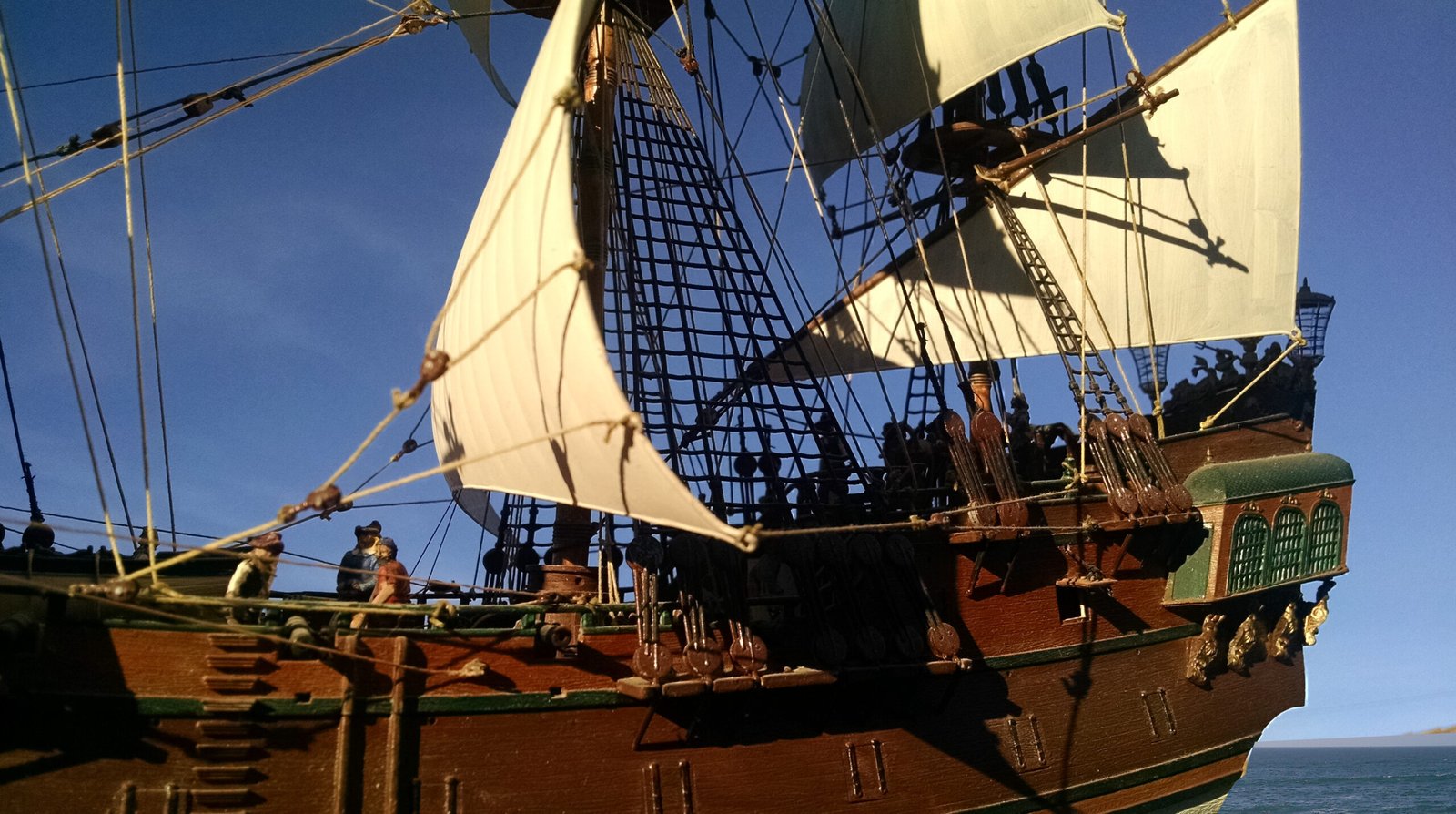
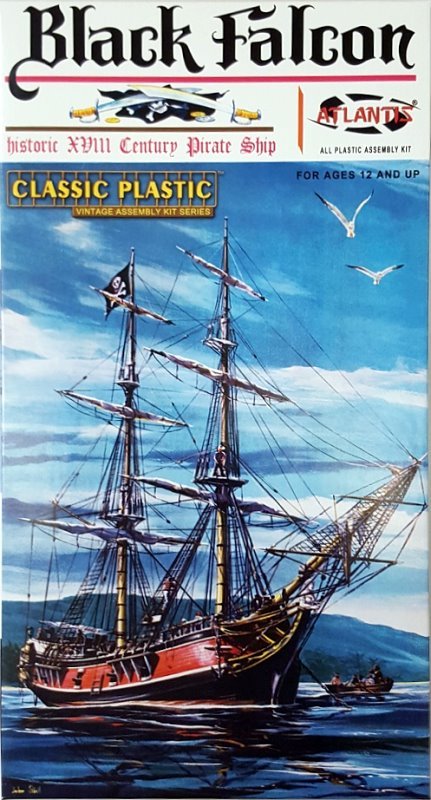
The Curse of the Black Falcon

I grew up in the pre-digital age, spending many an early adolescent hour at the worktable, building plastic model kits. Airplanes and ships – those were my specialties…

Wait, wait, wait… don’t go skipping away thinking this is some nostalgic, back-when-I-was-a-kid kind of thing.  Just hang tight for just another couple of paragraphs or so and you’ll see that this applies to you – yes you.

Continue reading “The Curse of the Black Falcon”

Five Years to Independence: Year Five – the Year of Independence

So, here we are at Year Five, the Year of Independence. This is the goal, the island to which we’ve charted our five year course, the one thing we’ve focused on and worked on and planned on.

So, like, what is year five?

Continue reading “Five Years to Independence: Year Five – the Year of Independence”

It’s Cool When Worlds Collide

You remember that dorky sci-fi movie from the ’50’s “When Worlds Collide,” right? If you don’t,  count yourself lucky. Earth was gonna get smashed by an asteroid, see, and so the scientists build these giant spaceships to fly away into space, see, and, well, you get the drift.

You’re a writer – you know how it is. You’ve got your work out there, doing its reader-generating thing, and you’re looking at your pile of ideas, wondering what’s going to call you next.

Same thing here.

Except, well, the ideas and facts work in funny ways, don’t they?  Check this out.

My next book, please don’t tell anybody, is all about Blackbeard the pirate. Very in-depth, but fun, too, because, well, hey, it’s what I do.  I’m still knuckle-deep in research, but I ran over a really cool, really helpful set of truths.

Was you a pirate in the early 1700’s, you were a rough-and-tumble sort of chap. Climbing rigging, whacking people with cutlasses, yelling “arrrgh”, that wasn’t for oldsters.

So, Captain Charles Johnson, in his book A General History of Pirates, which he penned in 1724, may have made a goof when he wrote that Blackbeard was born in 1680. Kevin Duffus, in his recent book The Last Days of Blackbeard, reasoned that such a birth year would have made the pirate 38 years old at the height of his career – quite old for an active  in those days.

More likely, Duffus writes, that he was born in 1690.

Record skidding noise…

Wait. My character Phineas Caswell, from my novel Marigold’s End, was born in 1694. Er-ma-gersh, I can see the next novel to follow this Blackbeard piece: how cool would it be to get Phineas aboard young Blackbeard’s ship, before he turned pirate? Phineas is twelve, Blackbeard is 16, both are fresh to the sea… this will be great!

So, chasing one idea leads to another. One novel collides with another… when worlds collide!

Nah. It doesn’t work for me, either.

Goodbye, Baby

DP FinishedStand by to eject bathwater on my mark.

Standing by, sir.

And…mark.

The bathwater is terminated.

Nice shooting, Lieutenant.

Roger that. The baby is outta here. Repeat: the baby is out of here.

Big ten four. Stand by for towelage.

Uh, negatory. Sorry. No can do.

Disregard that. Stand by to commence towelage on my mark.

Uh, sorry, skipper. No can do.

All hands, stand by. What’s with this gloomy Gus guff, Lieutenant. I believe I gave you an order.

Ten four on that, skipper. But, we don’t have, a, well…

Don’t tell me you ran out of towels.

Negative, sir. It’s just that, well, we ejected the baby with the bathwater.

Mongo Santamaria! You’re telling me we tossed the kid out the window?

Like a bullet, sir.

Well, there goes the towelage. All hands, prepare for battle stations. Angry mom at eight o’clock!

It turns out, writing a book is great fun. And it is great fun. Even though your imaginary friends, all those little voices in your head, drag you through the very depths of despair and pain and agony, the fact that you share that with them, that you are a witness to their travails – is an honor and a delight.

Oh, sure. That’s the cat’s pajamas, that part. Like ice cream for dinner every night of the week. Best of all, you tell all your friends that writing is the pits, it’s the worst – you feel like a zombie…hour after hour, typing, thinking, scribbling, coffee, beer, whatever. While, actually, your inner you goes “teehee, this is the best!”

Welp. The party’s over. They ate the pretty balloons. It’s crying time again, and you’re gonna leave me – I can see that faraway look in your eyes. Why must we get offa this cloud?

BECAUSE I PUBLISHED MY BOOK!!!

Yes, there is one more moment of glee, and that is when you join the Club of Shakespeare. All the world is a willing audience, hungry for your written words, longing for your thoughts, your ideas… and, once the book is published… Yo, lookit me, feedin’ the masses!

It’s a cerebral joy, and stunningly short-lived. I found no Disney at my door. Discovered Dreamworks dreaming of someone else. Ran across Random House randomly choosing someone else’s house.

No, the party’s over. Now comes the drudgery, the mind-numbing torture, of figuring out how to market this darned thing for real. It’s no longer a game, or a funny idea. Now it’s work, work, work, to get this product sold and out, into the sunshine where it belongs.

What? What’s that? How can you find it? Well, bless your generous soul, you have come to the right place. Let me pull your chair closer to the fire. Move it, dog. Make way for this most spectacular person.

Because you are you, and you’re a friend, I’ll let you have the book…for free!

No strings attached. Freebie. You go. Although, if you found it in your heart to write a dazzling review, I’m sure no one would be opposed to that…

Find DROPPINGTON PLACE here: https://www.smashwords.com/books/view/618049

Now, this is important: type in the coupon code NJ38D. When you do, the most wonderful book you’ll download with your free coupon will be yours – for free!!!

Of course, you could also visit the author’s site, PhineasCaswell.com.

Now, to find that baby…
Tomorrow Never Comes

Carousel_of_Progress_1940

Well, I don’t suppose it’s true that tomorrow never comes. If that happened we’d all be sorta stuck in a perpetual Groundhog’s Day scenario – say, haven’t we met, you know, today?

Disneyland of the late ‘60’s had The Carousel of Progress, a huge, revolving theater that brought you scenes of an exciting future life. The song that thrummed between the scenes told us “there’s a great big, beautiful tomorrow, waiting at the end of every day.”

At the end of this day, I’ve got to clean out the cat box – I hate cats – and do the dishes, and fix the pool pump. At the end of the day that follows this one – I won’t say tomorrow – I’ll have to fix the pool pump again, clean out the cat litter box – I hate cats – and catch up on the roughly 714,000 other little things that need doing every single day.

If, like me, you work a nine-to-five, those magic windows of sit down and think time, of play with the words time, of what-if time, well, they’re sort of like the windows of the apartment building across the street – you can look into them from here, but they are oh so hard to open.

Tomorrow is just like today, and will just the same as yesterday and the one that follows. Trudge, trudge, trudge right into the grave. Sigh.

Waaa-waaa-waaa-waaa

That’s the dinkey-toons answer. That’s the gee-I’d-like-to-be-a-writer-if-I-could-just-find-the-time answer. That, my dear writer friend, is the excuse.

The truth is that you’re a writer, and you know what that means. What time is it? Time to work, day in, day out.

Why are you changing the cat box – I hate cats – when you could be working? The dishes’ll get done, they always do, and the pool pump is a Sunday afternoon item. What’s the rush? Why put those mundane things ahead of your important, life-giving work?

Tomorrow comes when you make it come. It will be the best tomorrow you can imagine because you earned it – you worked hard and busted your knuckles to build it.

A tomorrow in which you are a passenger is just another day. The tomorrow that finds you creating, crafting, working – that’s the one to live for.

So, my literary friend, tomorrow doesn’t come. You have to bring it on.

Writing Forever

shake

I know you know this, so I guess there’s not much point to telling you about it. But, well, there it is, isn’t it?

I’ve been hating on my book, DROPPINGTON PLACE. Okay, well, not on the book itself, but on the writing of it. Some days it’s a blast, and the words flow like sweet cherry wine. The next day comes the roadblock, the stumbling block, the block of ice that freezes our soul and stalls us just plain dead in our tracks. I hate that block, too.

In my story, the characters explore a surrealistic world made entirely of paper. Their path takes them down, well, a path. So, how do we walk down this path?

Walking, and walking, and walking becomes so dull that even I can’t stand to write it.

Instead of walking and walking, the camera drifts up into the sky and looks down on them, telling us where they’ve been and what they’ve seen.

And THAT, my writer friend, is exactly where the roadblock landed. Flooomph, like a big rock in the highway to Interesting Storyland, we stepped out of the lives of the characters, the story became wooden and dull, and no fun to write. And, if you don’t have fun writing a piece, however is your reader going to enjoy it?

Ding-dong. Hello, Mr. Dimwit? Your brain is calling.

It’s a scene, of course. The answer is to place scenes along the path. Scenes that move the story forward even as they move the characters down the road. Cool, huh?

Biggity-big-big-bigger question.

Why do this? Why do you care about great paragraphs, and storylines, and why is it so important for you to put your thoughts on paper?

Why? Why must you publish your book? If writing is so important to you, why don’t you just write and write and let it go at that.

Okay, so maybe it’s not the writing, is it? It’s the reading.

You write your ideas and stories so that others will enjoy, will learn, will see the world in a new way. Isn’t that so?

So, here’s the rub: if you are so concerned about your reader seeing the world in a new way as a result of your work, why put your name on it? Okay, so it’s not just the reading. It’s the fame.

Before we go too far into our writer’s tools and processes, let us get this straight:

You and I are reaching for the brass ring of immortality.

Think about Shakespeare, a household word. Shakespearian theater. It defines a whole category of acting, of playwriting, of presentation. Why isn’t that you?

It could be. If your book is successful, if you find the right combination of story and character, you, my dear reader friend, could be the next Shakespeare, your name whispered and hailed and venerated for generations to come.

That’s immortality for us.

But it’s more than that, isn’t it?

Writing is a business. Success is not measured by finished works. It’s measured by works sold. Sold. Sounds bad, but it is the business.

Sell a million books and you’re doing good. Sell a million books a year and you’re on your way. Sell a million books a year and get a movie deal, and household wordism isn’t far away.

Isn’t that what you want? That’s what I want. I don’t think it will happen, but that doesn’t make me want it any less, or make me work any less hard in trying to get there.

So, go finish your book. Write well. I’m finishing mine. Maybe you’ll read it – maybe I’ll read yours. Maybe yours is so good that Disney is dialing the phone this very instant to make you the next Stephen King.

Hey, it could happen! Immortality could be that close. I’m sitting by the phone.

Thank You, Mister Gates

Photo: designapplause.com

Oh, Bill… whatever would we have done without you? Can you imagine tapping out a novel on an IBM Selectric? Or on a rusty old Underwood? Or, gasp, scrawling it out longhand? That Dickens, huh? Now there is dedication!

When you tippy-tap your messages out on your cell phone, you don’t use words like ululate, or hypertension, or Zoroastrianism. Too tough to tippy-tap out on that tiny keyboard. Yet Mr. Dickens scrawled out deliciously delightful words longhand. In truth, most people find it easier to block print letters than to try to spell on those itty-bitty keys. Someone, probably aliens, must be laughing their dang-fool heads off – look what I got the humans to do!

In Phineas Caswell’s world, the wind she blows us aback, and we can sail forward no more. We brace the yards around to catch the wind. We loose the heads’ls. We work the rudder and bring her head around to pick up the breeze. We change tack, gather speed, and off we go.

Mr. Gates’ spell-checker has finished MARIGOLD’S END, something few humans have yet to do.   The rough-and-tumble Englishmen in this book all drop their aiches, as in “‘ow was I to know?” And Louise, she is French, and she drops ‘er aiches, and she uses French words. And Red Suarez espeaks Espanish…Ay, caramba! But, for all that, the spell checker found out those embarrassing oopsies we try to hard to avoid. Next comes a grammar checker.

Software can never replace the human eyeball and skill set and judgment, but it can certainly point you towards questionable work.

So, thank you, Mr. Gates. Your PC has revolutionized the world, and your spell checker has brought a change of tack to an otherwise stalled project. ‘ats off to ye, lad!

De-Energizing Anti-Inertia

Photo: HowWeDrive.com

Time rolls like a jelly-roll, right down the hill with the biological waste-matter, for we all know poop rolls down hill. That’s why your boss can give you dreadful assignments with such cheerful abandon, because poop lands on the desks of bosses with the express goal of rolling down the hill to your desk. If you are a boss, good on ya, mate, because you can roll your poop to the next level below. But I digress.

Time and energy are inextricably intertwined. Don’t think so? Why don’t you drive at 85 mph down the interstate when you’ve got six hours to get there…unless you are one of THOSE, who can’t drive 55… was that Sammy Hagar? Wasn’t he horrible? Or was that Hagar the Horrible, who drove too fast in the… but I digress.

What stands between you and your finished work – and by finished I don’t mean lookee there, Slim, I rot me a boook! – I mean a finished and produced piece that, if not published, is well down that road. In fact, let’s take it a half-mile farther down the road and say your work is not finished until it is published, and easily accessible by the world at large.

Wow. That’s a big goal. You took the time and heart and effort to write your book, didn’t you? Good on ya, mate! That’s your heart and your art, and, even though we tell our friends and admiring toadies that it was tons of work, you know in your artistic heart that it was fun. Go ahead, admit it. We probably won’t tell.

There was so much inertia to get the book done – day after tedious day (wink) of writing to tell the story, get those characters’ voices out there- be free, my creepy inner friends – with a single goal in mind: The End.

Publishing it. We-heh-heh-heh-ell, now, that’s just a whole new kettle of friskies, in’it? How do you do it? My proofreader moved on before he finished my book – well worth the nothing I was paying him, I say. An editor? An EDITOR? Those cost around a thousand bucks, my ramen-eating friend. And then, say we finally get the thing proofed and plop down half of the house payment and get it edited: crickets.

I came of age in the business world – you probably did, too. We know how to get things done, you and I. Mimeograph this, would you? Did you order more ribbons for the Selectric?   Can you smell the ditto machine? Publishing… oy, now, that’s going to use our business acumen, and other parts of the egg.

All the inertia is lost. A wide set of skid marks veer off the shoulder and into the bushes on the other side of the ditch. Maybe it’s off the road, or maybe it’s running down some hidden lane only the driver knows. Whichever way it’s going, it aint towards success.

The hardest part of this book-writing exercise is the now, right here. The thing is done, but there is nowhere to go with it. I’ll let you know if I get out of the bushes.

Tips from a Marketing Guru

marketing-product-jobs

Gosh, that’s a selling title. Sadly, I sort of have the opposite in mind, but you can’t make a headline that says “I Need Tips from a Marketing Guru”, because no non-marketing guru will read your blog. And, although my children believe me to be an ATM, I was sort of hoping to get some advice on the cheap.

Here’s my bass-ackwards marketing plan, which needs serious consideration. WARNING: don’t do as I do, for I don’t know what I’m doing.

In the new world of publishing, the reader chooses the author, not the other way around. One way to build steam for your book is to offer it for free, or at least parts of it, to get it out there in the big old WWW. You build interest, you build potential readership, you build search linkages, yada yada yada.

In the new world of publishing, you must be brave, little Piglet, and put yourself into the market. But you needn’t do it all at once – it might be better to have a little cache of readers behind you. That’s the theory I read somewhere.

In my case, I’m a chicken. In my brave new world, we put chapters out and sort of test the waters. You sort of tentatively do things in tiny fits and starts just in case you’ve done something majorly idiotic. Hey, it could happen.

So, when you have a minute or twenty, if you wouldn’t mind, would you be so kind as to visit my pages and read the first and seventeenth chapters of my recently completed novel? I promise you’ll be entertained. Promise. Pinky-swear.

I also promise to keep you apprised of new happenings in this wacky adventure.

Especially if I hear from a marketing guru!


Stick a Fork in Me

Marigolds-End-Done

Done like a ton of finished, like a taco casserole in a thousand degree oven I am done, done as the day is long, done. Finito. Wrapped it up. Did the deal, finished across the line with a big ol’ smile across my face. DONE!

72,584 words of pathos, humor, and history all wrapped up in a nice little package featuring my friend Phineas, who gives up, gets angry, blows his top, cries, and finds his father, all the while fighting a running battle with the sea. Phin, my boy, carped at by the ship’s sailing master, driven to near distraction by the French king’s granddaughter, and called every harsh, rude, hurtful name in the book, tries to find his way, figure out how he got thrown into the seagoing gulag that is the Kathryn B.

Not a spoiler alert, not here – you’ll have to read for yourself how this one turns out.

In fact, my next step is to find a reader. Someone who can be honest with me, but someone who knows a thing or two or three about the Young Adult Fiction business, what they’re looking for, what will float, what will sink like a stinking stone.

Really, my next stop is on the publishing wagon. Get this monster read by someone with brains, rework it to their thoughts, and then Wordsmash it or Yahoo it or Amazon it or something.

Really, the next step, which starts tomorrow, is to think about marketing. Building the old platformaroony that will carry this book into the bazillion dollar sales range.

You, my friend, need not worry. I will not try to sell you a book. You are my only reader, and I thank you for sticking with me. Stay with me, sail with me over the horizon of the publishing adventure. I promise to tell you everything. The rewards could be great.

For now, the goal is to simply enjoy 72,584 words of doneness. Finitoness. Ah, sweet victory, thy name is Phineas.


Creepy Little Voices

You know the line of jokes: the little voices made me do it, I only do what the little voices tell me, how do I know you are not just another little voice, etc.

So, rattle me this, Bidman: you’re a writer, right? You write dialog, right? In that dialog, your characters say stuff that sometimes surprises even you, right? So, like, where do those words come from?

Is not the character you’ve created exactly like a little voice in your head? Consider:

Bob:     You don’t even know my last name…

 Julio:   But I could, man! I’m telling you, we could be famous.

 Bob:     Julio, I don’t want the kind of fame you’re suggesting.

 Julio:   Aw, come on, Bob. At least think about it.

I just shot that little gem right there out of my head, unconsidered, unrehearsed, and un-edited. I know, I know, hold the applause.

So, like, where did it come from? The names popped up as I typed them, and the dialog followed along. In the first line I thought Bob might be talking to a girl, and I almost typed   Julia, but I didn’t like Bob’s tone. So Julio is proposing something that will make them famous, but Bob doesn’t think it’s a good idea. Boy, how much story can you get out of just four lines?

In the rule book for regular folks, How to Be a Regular Person, by Ima Sandwich, it says that the little voices in your head are bad. They are destructive, and not real.

But, if you write down what the little voices say, you could be famous. And not for, like, blowing up dams and stuff, but good things, like writing fine, fine art.

Alas, my little voices aren’t good enough for fine art. They come as the simple regurgitation of all the hundreds of thousands of lines of dialog and conversation I’ve read and heard over the last half-century.

But isn’t that what writing really is? Don’t you mish-mosh ideas together and come up with characters for your novel? Doesn’t Cyrus say something that sounds like something you’ve heard before? Or Ethel? Rodney? Ralf? Aren’t they kind of barfing up old conversations in new, and sometimes surprising ways?

An actor memorizes his words, but the feelings behind them come from deep inside him. He applies his five or so decades of experience to the character he portrays, even though he’s never had to face the character’s exact circumstances.

Dollars to donuts says that you are doing the same thing with your mightier-than-the-sword word processor. Especially if you write horror, and your characters say the creepy stuff that the media tells is what the little voices say.

The answer is probably that, because you don’t act on the little voices, you’re not crackers.

But, tell me you haven’t awakened in the wee small hours with a perfect line in your head: Jackson says “well, it looks like rain to me.”

Thank you, little voices.

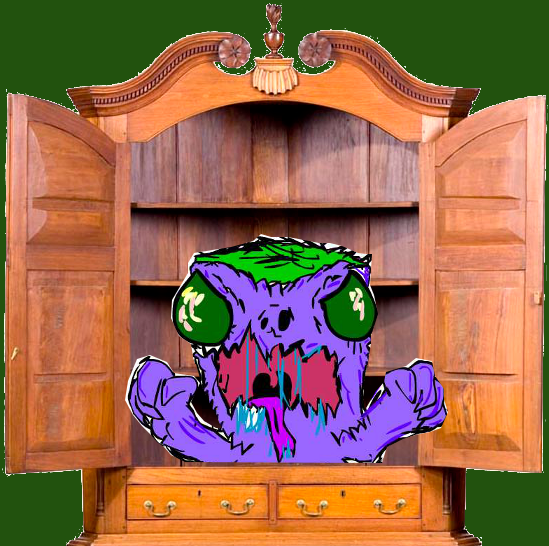
Alert: Monster in the Cupboard (not Closet)

If you write a lot, but don’t get feedback, yours, my friend, is a lonely game. You toil away, fitting together the pieces of your written puzzle like so much cheese at the mousetrap factory, when, one day, the monster grabs you.

I am a miserable novelist. I just realized it. Not misery like in hey lady, that was my ANKLE thank you very much, but in misery as in whoa, dude, do you, like, know any words? How many ways can you say “said” without sounding moronic, he intoned.   Whimpered, whispered, hissed, murmured, muttered, uttered, grunted, yelled, roared, bellowed. Well, that’s it for me.

And that sentence structure, what’s up with that? He opened the door and looked inside as the tree fell through the neighbor’s roof. He drove the car and whistled a happy tune as the rain pattered joyfully through the open sunroof. He wrote the post and congratulated himself on at least writing something as he bored his reader (bless you, whoever you are) to tears. Subject verb the noun clause and verb a noun clause as noun verb preposition noun clause. Booooooooooooooring.

Maybe it’s because, as a technical writer, my is writing is limited to “attach the motor mount to the casting with (2) socket head cap screws.” It isn’t romance, but it pays the bills. While it’s easy to write “carefully place the hinged device against the casting and thread the screws, one-by-one, into the small holes”, my editor would hand it back to me faster than a greased bowling ball on Crisco Boulevard.

In truth, there’s something else going on.

You’re a writer – I ask you: who is your worst critic?  Go ahead and think, we’ll wait… do you need to make a phone call?

Of course it’s YOU, you ninny!

Except not really you, but the monster in the cupboard. I was going to say monster in the closet, but that now leads to coming out of the closet, which has a whole different meaning than what I was shooting for, and oh, now everything’s all tangled up. One moment, please…

So, the monster in the cupboard is your own self-doubt, self-fear and self-loathing (if you’re in Las Vegas), trying to sell you a bill of goods. I know it’s just a bill of goods because my daughter told me today that she likes my book better than Hunger Games. She might be bucking for extra allowance, but I’ll take what I can get!

The monster lives in the cupboard of your mind, next to the windmills, and sees the absolute worst in everything that you do. And it loves, Loves, LOVES to point it out to you.

Part of the monster is good. I mean, it’s the only one who makes you go back and polish that sentence once more – you know it needed it. It’s the only one who makes you question whether this book really needs this scene.

But the monster is also baaaaad, baaaad, because it can convince you that you are a miserable writer. You know it isn’t true, but the monster seems so authentic, so… so… so right.

You know that you are the monster – your parents said you were a little one when you were a kid – which means you can stop being the monster.

The next time you flop into a heap in front of your word processor, crying because you just aren’t good enough to write this book, and you really should not have quit your day job, and how could you have EVER thought that you could do this…well, you can just stop it with the Mr. Nastypants routine.

Nobody’s buying it, and you’re just being a whiney crybaby because you listened to the monster in the cupboard.

Shut the cupboard and get back to work.

Phineas Begins Anew

Grayscale

I’ve added the first chapter of my most recent rewrite of Phineas Caswell, the novel, variously called Marigold’s End, Phineas Caswell, The Journal of Phineas Caswell, and The Treasure of the Tres Hermanas. Those are the ones that come to mind – I guarantee there are more.

My brother told me a story once about an old man who carved elaborate, beautiful wooden doors. He would sit at them day after day, whittling, cutting, shaping, without end. Someone asked when he knew a door was done. His answer was simple: “when someone takes it away from me.”

Yuck.

Phineas, the novel, is headed for online publishing: I’ve been told precisely 753 times that this story doesn’t lend itself to the young-adult publishing model. I was actually told that by the head editor at Disney – yes, that Disney.  I believe that one was the Journal of Phineas Caswell

Suzanne, the love of my life and my editor (all the same person), prompted this last rewrite. And believe me, this is the last one – I’ve twisted this poor kid so many ways from Sunday his name may as well be Larry.  Reach inside, she suggested, but not for what you know, what you feel.

Beyond queasy, I didn’t know quite what she meant, but eventually figured it out.

Chapter One, over on the page called Phineas the Novel, comes from down inside. It comes from a place of regret, of something lost than can never be regained. It’s not a generated feeling –  I have some regrets, believe you me. I sold that hillside, ocean-view house for $175k when today you can’t  touch it for under two million… just kidding (although, I did sell that house, and I do regret not having two million bucks).

My daughter cried when she read it and said “you can’t start a children’s story this way.”

Tells me we’re on to something!

Do me a favor and visit the Phineas the Novel page and let me know what you think.

Thanks!