
You are the One – Bring Your Wallet

Cow

In the writing business… that is, the business end of the writer’s business, although the writer’s business isn’t business at all, but art – this gets so confusing – not the business of writing art, the business of selling the art, which is a business unto itself, but we’re not talking about that. Actually we are, sort of… you’re a writer, you know how it is…

Restart.

If you are a writer, and you don’t have an agent, you need one. Yes, you can self-publish your novel, but who is going to sell your book for you? You? You’re a writer. You need an agent.

Finding an agent, well that’s the business end of writing. But agents don’t seem to drop out of trees, even if you’re absolutely, fantastically talented. I know this from personal experience. That dog don’t hunt. That ship has sailed. You can’t handle the truth.

So, you advertise, in a million different ways. You blog. You join writer’s circles and clubs and chats, and comment your brains out on other people’s stuff. You work like a monkey to get your name at the top of an agent’s mystical list, the agent’s short list, the who’s who of writers in the agent’s Rolodex. Rolodex – boy, that’s a piece of history, huh? Raise your hand if you know what a Rolodex is… uh huh, as I thought. Paltry, paltry.

At the end of the day, you have to face it: you’re marketing – advertising – in the hopes of getting an agent to look at you and say “wow, now THERE’s a talent!”

In the world of Gorilla Marketing, all this effort, all this subtle, almost not work at all, is aimed at just one person. Millions of readers, or in my case, half-dozens of readers, see your blog and comments, read your name… and move on to something else.

It’s like being a daisy in the middle of the tall grass – oh please, Ms. Cow, pick me, pick me! You stand up tall, doing your flowery best to grab a little bit of bovine attention… oh, puleeze…. Of course, nobody wins in the cow analogy. Literary agents are insulted, and you get eaten if you win. But, you get the point.

The point is that if Toyota gets you to run down to your local dealership and buy a car because you saw a good ad on TV, it doesn’t matter if they wasted the time of 30 million other viewers, so long as you buy the car. No, you don’t suffer from incontinence, but some poor sap does, and those commercials might just be the ticket… say, I didn’t know they made underpants like that!

The point is this: you market your keester off, in the hope that one, just one, single set of eyeballs, sees your stuff and says a quiet “bingo.” And when that one sees your stuff and mutters and magic phrase, all your Gorilla Marketing effort pays off, and the future is yours to pave.

Well, here’s to you, my marketing friend. May you hear a whispered “bingo” soon!

Now, if you’re an agent, you can find the first two chapters of my book here: PhineasCaswell.com.

Thank you.
Tales of Steel

JRSuper

It just can’t be that hard to be Superman. Yes, your home planet blew up. Yes, you have to hide behind those dorky Clark Kent glasses in a world that thinks you really can’t be recognized behind your Ray Bans. But you can knock the crackers out of anyone who disagrees with you.

More importantly, as a Super Person, you can approach every new situation with the knowledge that there is no one stronger, faster, smarter, yada-yada-yada. That must be a pretty cool something to have in your pocket. Say what you want, evil-doer, for I have all these nifty super powers.

But you and I, we’re writers. For us, publishing our work is like Superman going up against a bad guy. I don’t know about you, but when I look in my back pocket, I only see last week’s tissue and an empty wallet. Maybe a little lint.

Every piece we publish, even dopey pieces like this, put us out on that line of pass/fail, succeed/fail, survive/fail. Out here it’s just you and me, kid, and I’m not so sure about me.

With that cheerful thought, I formally announce to you, my writer friend, that Chapter 15 of MARIGOLD’S END is now on this site.

If you’ve been reading along, and I know you have, you’d know that Phineas, Louise, and Taylor have stowed away on the Marigold, only to find the ship in pursuit of their own Kathryn B. The weather has turned foul, and Captain Jaffrey’s a demon possessed, and things can’t possibly end well for the smaller ship. Phineas has to quickly piece together a very big, very serious puzzle, and despite a horrific loss, figure out what he’s made of.

I can’t give away the ending, but I can tell you that I recently read an account of an American frigate during the revolution that experienced almost exactly what happens in this story. It’s always nice to know I got the history right.

So, Super Person, dust off your cape, get out your Krypton Reading Glasses, and peruse Chapter 15 of MARIGOLD’S END. If you haven’t read the previous, that’s okay – you’ll enjoy this one. If you have, bless you child. Thank you for your generosity.

Is it paradoxical that the guys who started all those superheroes, back in the early days of the comics, took the same chances you and I, as writers, did? Edgar Rice Burroughs had paved the character road for them a little bit, and the newspapers carried comics, but you have to applaud the courage to publish an entire graphic magazine.

I wonder if those guys wore glasses…

Adventures in Adventures

Pirates

There’s a great deal of adventure in writing an adventure. You’re a writer. You know how it is.

The characters, their needs, the plot, the danger of plot holes, the words, the need to make beautiful sentences, the structure, the never ending quest for pace… all those sit down for a moment when you write the adventure part of an adventure.

When the “adventure moment” strikes, you, the writer, suddenly find yourself swept away in the drama. The moment surrounds you, and takes you off into the depths of the battle, or the storm, or the chase, to the very heart of the excitement. There is nothing finer than that.

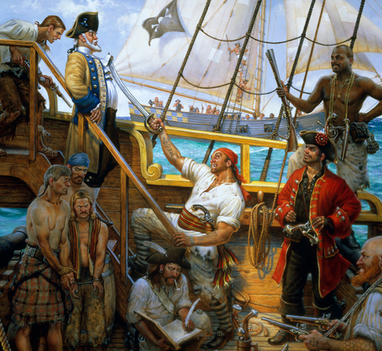
Chapter 8 of my novel, MARIGOLD’S END, is now on this site, and here we find adventure unbound. The little Katheryn B is beset by pirates – but them ain’t your Disney pirates…there be no amusement park rides here, mate. We never leave young Phineas’ side as he wends his way around the ship… adventure here, me hearties. Gosh, I hate pirate language.

Look to port, dear reader, and you’ll find it.

The hardest part of adventure writing comes after it’s been written, and you, dear writer, must go back into the moment and edit out the bad writing, close the plot holes, rework the pace, and fair the adventure into the storyline. It’s the hard work, made worse by the fact that you’ve already lived this adventure!

Still, that’s why we writers earn the big bucks. You’re a writer. You know how it goes.

Time and the Fragile Character

image

You’re a writer. You know how it is.
The time to write…when is the right time to write? Now? Nope, busy reading this post. When you finish this post? Maybe. But, if you’re like me, there are a million other things to do. More important things. Scrub the toilets. Sort the recycling. You know, I’ve been meaning to seriously detail my Barcalounger.

And so, there the project sits. The characters have all gone speechless…nothing to say because you’re busily sorting the soup cans in the kitchen. Arranging the forks just so in the silverware drawer.

Life can be so crazily hectic that it becomes nearly impossible to cleave out the time to work on a project. And yet…and yet…maybe not so, grasshopper.

There is another agent in the mix…something to which you and I should pay attention. You won’t like it.

Once upon a time, a motivational speaker said that everybody’s tired. Tired of this, of that. Too tired to make a change. But, she said, what if I gave you a hundred thousand dollars of mad money? Then you wouldn’t be so tired, would you? You’d feel fresh and vibrant, alive with joie de vivre.

So, it ain’t the tireds. It’s the motivations.

That book gathering dust on your word processor? It ain’t the lack o’ time, me bucko. It’s the lack of motivation.

Well, jeepers Mr. Monkeypants. How do I fix that?

Good question, Sullivan.

Abuse some characters. Chop ’em up, or blow ’em up. Or make them say things so horrific that their world is forever altered.

Does it mess up your story line? Oh, heck yeah. Does it mess up the whole book?

“No,” Mr. Monkeypants says firmly, “your book was already messed up. That’s why you were busily knitting underwear for the pet salamander you were thinking about renting. That’s why counting the holes in the colander is more appealing that working.

Your. Book. Stinks.

It stinks so badly that even you, yes you, don’t want to put energy into it.

Admit it. Face it. Fix it.

Kill somebody. Blow something up. Sink the ship, burn down the house, turn Uncle Ray into a zombie. Ch-ch-change it.

Challenge your characters and you challenge yourself.

And if your book is so boring that you’d rather sort socks than write it, you need a good stiff challenge.

The time is there…are you?

Okay. I’m, like totally out of breath after writing that stuff. How about you?

You’re not writing your book because you’re reading this post.

So, I’m not working on DROPPINGTON PLACE because I’m writing this post. My bad.

Promise me you’ll do something to spark interest in your work.

Thank you. Now I have to figure out which guy to kill in my book! Continue reading “Time and the Fragile Character”

Take a Team Across the Stream

image

You’re a writer – you know how it goes.

You’re working feverishly on a project, everything fits like fingers in a bowling ball. And then, when you absotively least expect it…whammo, like a two-by-four to the forehead: the deadly stall. A character says something that reveals a plot hole so big you could fit a Buick in it.

In DROPPINGTON PLACE we simply ran out of story. It was great fun, and everybody was lively and having a good time. And then, around 42,000 words or so, Arvy, a perfectly nice kid who was sadly turned to paper, paused and looked at me.

“I’m bored.”

“You can’t be bored!  You’re, like, a key player in this thing.”

“Yada, yada, yada…key player this. If I’m such a hotshot, give me something to do.”

A quick review of the Something To Do cabinet revealed empty shelves. And there Arvy sat, with so pained an expression he was impossible to look at.

That’s okay, because we can just change horses right here in the middle of the stream and work on another project that’s been a’hangin’ around.

A couple of weeks on the new project, just starting to feel it, and, son of a biscuit, here’s a new idea: something for Arvy to do.

“Leeme see, lemme see, lemme see!”

“Sit down, Arv…or, I guess sort of fold yourself ‘cuz you’re, like, made of paper…we need to plot this out a little bit.”

“Well, I categorically demand that you cease work on your new project and give me a challenge!”

So, we drop the reins on the new horse and leap back on the first one.

Their must be some old story about fording a river and changing horses in which something bad happened. I’ll bet you it has to do with Conestoga wagons. Let’s pretend it does, okay?

So, like, what’s the point?

I know, right?

The point is this: when you hit a creative wall with a project, it’s perfectly cool to start a new one. If the old one calls during the new project, it is equally cool to go on back to it.

One suggestion: make lots of notes on each project. Although today the plot thread is perfectly clear, tomorrow… well, after all, tomorrow is another day!

Frankly, Scarlett, I’m changing horses!

Shifting Gears in the Sea Lane of Time

Rowboat

You’re a writer. You know how it goes. You run like a monkey on a story, and then, blammo, like a ton of jelly, the story stops. The characters all turn and look at you expectantly.

“Well?”

“Don’t ask me! You’re the character! You’re supposed to tell me what to write! I’m just the translator.”

So, there you sit – the words of your last sentence dangling in the air like the tail of a kite that is slowly, slowly sinking down to the ground. Crash.

What do you do? What do you do? I get in a really bad mood, and am foul and cranky until somebody says something. It’s like a Mexican standoff, and there’s no way I’m going to blink first. No, senor, it is you who must say the first word…

A better option, and one I read somewhere and therefore cannot take credit for, is to embrace a different project. I’ve started the detailed synopsis for SAN CRISTOBAL’s DEFENSE, another Phineas Caswell adventure.

In this new book, see, Phineas and Uncle Nev…. hey, wait a minute. I see what you’re doing. Nice try, bucko, but it won’t sell soap. I’m not telling you about this new book until you read the first one. Well, okay, you don’t really have to read it. But you do have to wait for all of the chapters to get published.

But I’m not giving away the ending, which I would be if I told you about the San Cristobal. Paradoxically, I am giving away MARIGOLD’S END, one measly chapter a week, but not the ending. However do serial writers do it? Serial killers, well, that’s pretty straight up. And cereal killers – I have one of those in my very household.

Which leads us to the point of this diatribe: Chapter 6 of MARIGOLD’S END is now on the Pages part of this site. If you’ve been keeping up, and I know you have, the author cleverly introduces the reader to the intriguing lore of the sea through the eyes of a twelve-year-old-dude-I-don’t-wanna-be-a-sailor kind of young man. In Chapter 6, we find that learning to be a sailor isn’t always about the wind and the waves. Sometimes, it’s about men.

Oh, so NOW you’re interested, eh? Shoulda seen that coming!

Enjoy the chapter – it was great fun to write.

Good luck with your writing, and, remember, if you get stuck, do what I do, and throw a tantrum start another project.

Gorilla Marketing, Phase Two

cropped-droppington2

You just gotta love a sequel, huh? What better way to follow up a mega blockbuster hit than with another blockbuster? Boom, looka that, folks, something even better!

Well, in the spirit of gorilla marketing, I’ll go you one better than a sequel.

Howzabout this; Chapter 2 of DROPPINGTON PLACE? Oh, yeah, uh-huh, fist-bumps all ‘round.

Wha-aa-aat? Sonny Jim, you’re just plain givin’ away the whole dignity-danged store!

No I aint, Pa. I swear it. It’s a new market thing program about monkeys. All the cool folks ‘r doing it.

In today’s hurly-burly, gotta-make-a-buck world, you have to stand out of the crowd. You have to be the one. The one. You. If you don’t, the world will run right over you.

Think about this Internet. Right this instant, you can look up, like, a gazillion books for free. Books on just about anything, and fiction, and graphic novels, and whatever you want.

When you put your hard-earned words into that maelstrom, unless you just happen to be a Hemingway, or a Rowling, or a King, or another author more current whose name I should know but don’t because I’m actually an uncultured boob, you get lost in that rush of online pieces, just another salmon in the dash upstream.

So, you have to stand out. You have to be different. You have to be the one sought out by your readers.

Enter the gorilla wearing a tie.

GO: “I say, old bean, why not publish your work in a blog first, eh?”

JR: “But, jeepers, Mr. Rilla…”

GO: “Go, please.”

JR: “Oh, okay. Goodbye.”

GO: “No, don’t leave, you ninny. Simply call me Go. No need to be formal.”

JR: “Oh. Anyway, Go,   nobody reads my blog.”

GO: “Surely someone does.”

JR: “Well, I guess there are quite a few…”

GO: “There you are. Publish your book, one chapter at a time, to your readers. They’ll read it, talk amongst themselves, and before long, why, they’ll be clamoring to… “

JR: “To buy my books?”

GO: “No, to have you hanged. I’ve read your stuff. You should be ashamed.”

So, in the spirit of Go Rilla, the marketing monkey…

GO: “Ape, if you please. Great ape, in fact.”

DROPPINGTON PLACE, Chapter 2, is now released on my Droppington Place blog, here. You can also follow the link at the bottom of this page to the Droppington Place site.

Enjoy!

Publicity, One Chapter at a Time

ConnectDots

Are you ready for the next installment of MARIGOLD’S END? I’ll bet you are – you there, my writer friend, sitting on the edge of your seat wondering, wondering, wondering whatever happens to Phineas next.

At least, I hope it’s you. Nobody else in the room, that I can see. Yep. It’s you. Try to form a line there, would you please? A line of one rather resembles a dot, doesn’t it? Well, please form an orderly dot.

Writing is a lonely business. Your garret, or office, or room, or swimming pool deck, wherever you do your writing, fills up with characters, talking, laughing, fighting, sleeping, doing whatever it is that they do. Then you turn off the word processor, and, voila, it is only you.

No one is very much interested in you while you write, because, frankly, you are uninteresting when you write. Not as a person, mind you, but as company, because you’re in the room filled with all those interesting characters. The real people around you just sort of hang in limbo until you snap off the word processor. Oh, THERE you are!

So you, my dotted friend – dotted by virtue of being a line of one – are the witness to the publicity and hoorah surrounding the release of Chapter 4. Hoorah!

Chapter 4 introduces us to the life of a sailor. Chapter 1 introduced us to Phineas, Chapter 2 to the perils of traveling by boat in the early 1700’s, and Chapter 3 to the indescribable job of seasickness. Now we’re past all that and exploring the Kathryn B, and what it means to be a sailor.

In MARIGOLD’S END, you learn about the new world into which Phineas is thrust only through his eyes – a challenge to write, but hopefully not to read. Like you, Phineas’ learning comes through total immersion. It be sink or swim in the briny deep. You’ll find it over there, on the left, under MARIGOLD’S END, the Novel. See, it sort of drops down, ready for reading’!

So you, dear dot of a writer-friend, are in for a treat.

Let me know what you think. Drop me a line, leave me a comment, send me a mental note.

If you are a new dot, please be so kind as to stand next to the other dot, thereby forming a line.

A line! They’re lining up to read my work!

I KNEW this day would come!

Now, if I can just get ‘em to pay!

Writing Forever

shake

I know you know this, so I guess there’s not much point to telling you about it. But, well, there it is, isn’t it?

I’ve been hating on my book, DROPPINGTON PLACE. Okay, well, not on the book itself, but on the writing of it. Some days it’s a blast, and the words flow like sweet cherry wine. The next day comes the roadblock, the stumbling block, the block of ice that freezes our soul and stalls us just plain dead in our tracks. I hate that block, too.

In my story, the characters explore a surrealistic world made entirely of paper. Their path takes them down, well, a path. So, how do we walk down this path?

Walking, and walking, and walking becomes so dull that even I can’t stand to write it.

Instead of walking and walking, the camera drifts up into the sky and looks down on them, telling us where they’ve been and what they’ve seen.

And THAT, my writer friend, is exactly where the roadblock landed. Flooomph, like a big rock in the highway to Interesting Storyland, we stepped out of the lives of the characters, the story became wooden and dull, and no fun to write. And, if you don’t have fun writing a piece, however is your reader going to enjoy it?

Ding-dong. Hello, Mr. Dimwit? Your brain is calling.

It’s a scene, of course. The answer is to place scenes along the path. Scenes that move the story forward even as they move the characters down the road. Cool, huh?

Biggity-big-big-bigger question.

Why do this? Why do you care about great paragraphs, and storylines, and why is it so important for you to put your thoughts on paper?

Why? Why must you publish your book? If writing is so important to you, why don’t you just write and write and let it go at that.

Okay, so maybe it’s not the writing, is it? It’s the reading.

You write your ideas and stories so that others will enjoy, will learn, will see the world in a new way. Isn’t that so?

So, here’s the rub: if you are so concerned about your reader seeing the world in a new way as a result of your work, why put your name on it? Okay, so it’s not just the reading. It’s the fame.

Before we go too far into our writer’s tools and processes, let us get this straight:

You and I are reaching for the brass ring of immortality.

Think about Shakespeare, a household word. Shakespearian theater. It defines a whole category of acting, of playwriting, of presentation. Why isn’t that you?

It could be. If your book is successful, if you find the right combination of story and character, you, my dear reader friend, could be the next Shakespeare, your name whispered and hailed and venerated for generations to come.

That’s immortality for us.

But it’s more than that, isn’t it?

Writing is a business. Success is not measured by finished works. It’s measured by works sold. Sold. Sounds bad, but it is the business.

Sell a million books and you’re doing good. Sell a million books a year and you’re on your way. Sell a million books a year and get a movie deal, and household wordism isn’t far away.

Isn’t that what you want? That’s what I want. I don’t think it will happen, but that doesn’t make me want it any less, or make me work any less hard in trying to get there.

So, go finish your book. Write well. I’m finishing mine. Maybe you’ll read it – maybe I’ll read yours. Maybe yours is so good that Disney is dialing the phone this very instant to make you the next Stephen King.

Hey, it could happen! Immortality could be that close. I’m sitting by the phone.

Marketing Ploy: Chapter Added

cropped-cropped-009.jpg

Okay, no lies here. Only the straight up truth. Something inside says to publish the chapters of this book, one miserable week at at time, until the book is laid completely before you. So, submitted for your approval, MARIGOLD’S END, Chapter 3. You’ll find it over there, on the left, under the title MARIGOLD’S END, the Novel. See how it works?

So, why publish chapters of the book. Once you’ve read it, you’re not likely to buy, like, a dozen copies. Maybe you could – they make great Christmas presents and passable doorstops – but no one is holding their breath.

No, it’s something more fundamental than marketing. What is the WWW if not the marketplace of the world. What is the Internet, and the ability to publish whatever, whenever, if not a way to float ideas, to share thoughts, to trade our works of art with one another?

In Shakespeare’s time, he published his own work through a publisher, hoping that it would sell. But more than just hoping for a little quick cash, a little Elizabethan jingle-in-the-jeans, he had to write, had to publish, had to share his words.

You’re a writer, you understand. You do the blog thing as a way to express yourself.

More, this is marketing. While I want you to read this book, and  DROPPINGTON PLACE, my next book, I really want to impress in your mind that my books are good and entertaining and worth the paltry shekels one shells out for them. I’m not marketing these books, but their children.

Which, according to gorilla marketing, means I’m not marketing at all, but publicizing.  You, John or Jane Q. Public – isn’t it weird that John and Jane have the same middle initial? It must be Quincy – are not being marketed, but are reading a fine piece of publicity. No pictures, please.

So, go on over and click on MARIGOLD’S END, the Novel, and breeze through Chapter 3. I hope you enjoy reading it as much as I enjoyed writing it.

Oh, and enjoy the publicity. No pictures, please.

Cliffhanger Marketing

Image: Wikipedia
Image: Wikipedia

 When we left our heroes, Norman, Jake, and Wanda dangled over the boiling lava pit, suspended in the air by a single strand of dental floss.

 “I believe it’s beginning to stretch…” Jake gasped.

The cliffhanger, the white-knuckler squeaker of a nasty dilemma that makes you just want to, makes you just have to, makes you just DIE to start the next chapter and see what happens, is an old, old way to sell stories.

Scheherazade used them to keep herself alive in the One Thousand and One Nights, remember? The king was going to lop off her head when she reached the end of her story, so she spun out cliffhangers, night after night, until he finally said “dude, like, cut it out!” That may be a loose translation.

The upside of cliffhangers is that you bring the audience back for the next chapter. It’s rather a component of gorilla marketing, wherein you don’t do anything, and let the story do all the work.

The downside is that your story becomes lurchy, if that’s a word, and rather roller coastery, if that’s a word. Your sensitive love story about a girl and her pet dragon must necessarily take a turn for the violent, or for extreme emotions: I HATE you, Nogard bellowed. The end.

Another downside is that cliffhangers become rather tedious. For goodness sake, can’t he AVOID the traps once in a while? The old Batman TV show had just 22 minutes to get out of a cliffhanger, tell some story, and get into a new one, making the Caped Crusader seem, I don’t know, rather cartoonish?

So, it is with a blend of cliffhangery, if that’s a word, and gorilla marketing, that you now find Chapter Two of MARIGOLD’S END here on this very site.

Taa Daa!

As you’ll recall from Chapter One, our troubled twelve-year-old, Phineas Caswell, points the loaded pistol,  trigger-finger itchery (if that’s a word), squarely at the running-away back of Alfred Townsend, the unarmed bully that has made his life a living hell. Will he pull the trigger and end his woes? Will He? WILL HE???

Well, now you can find out. The second chapter, cleverly titled Chapter Two, now has it’s own page. Oh, and you’ll be surprised at the turn of events.         I hope.

Now you can read the chapters, build up steam, get rolling in MARIGOLD’S END, and wait breathlessly for Chapter Three. Oops – I gave away the title!

Before you get all wormy-squirmy and palm-sweaty like you do in the seat across the car dealer sales manager (How am I going to get you into that car today, friend?), I must remind   you: this is gorilla marketing. Don’t buy the book – you can’t!

But, let me know what you think, would you? Liked it? Hated it? Mondo disregardo? Your feedback, my independent writer friend, is most needed.

Now, I’m not desperate – I know that’s what you’re thinking.  But, I’m not, I’m not, I’m not. My darling editor is moooviiiing soooo slooooowly, think of this as Plan B.

Your input, spread out over the number of weeks over which I plan to release a chapter…let’s see, here, 18 chapters, take away the 2 I’ve already released…let’s see, carry the 1…should coincide with her completion of her editorial chore.

Badda boom, badda bing, and all I have to do is NOTHING! Now THAT, my reader friend, is gorilla marketing!


Designing a Book 


CarlsHouse

At first you think, whoa, I am, like, so going to write this book that it’s just going to be the best darned thing anybody has every gosh darned read. Then you sit down at the word processor…

It was a dark and stormy night…backspace, backspace, backspace

You may wonder why I’m dead… backspace, backspace, backspace

You’re not the boss of me, Timmy snarled… backspace, backspace, double backspace, control-X

All right, so, that knock at the front door is clearly not your muse, come to enlighten you…

My book, DROPPINGTON PLACE, has gone through iteration after iteration, the story orbiting around plot point after plot point, through about 17 “hot-dang, this’ll be good” rewrites, and finally sat down and breathed out.

That’s when Byron, the protagonist, stepped in. It turns out he really did have a story to tell – something serious he wanted to say. His story is actually pretty good – a little calm compared to previous editions of his book, but pretty good.

In the original story, Byron finds himself transported to a world of paper, run by a magical being called a homunculus. However will he get back? Assisted by two human friends and a couple of paper people, he eventually gets the homunculus to send him home. Yawnzers, kids. It’s a cool idea, but, like the paper world he visits, seriously flat.

Byron recently announced that he was not happy in the 3D world. His father has left. His mother has “episodes” that pull her emotionally far away, and he misses his best friend, left behind when they moved to a new town. He finds his escape from his woes by building paper houses.

The paper world into which he is thrust holds much more mystery for him, and might even be a place in which he can find respite. We spend most of the story wondering, with him, if the place is real or a dream. The homunculus is a paper copy of a 15th century playwright, and stands in as sort of a father figure for Byron.

We still have all the interesting paper stuff going on, and there’s a bad guy, but that’s no longer what drives the story.

The motor behind the story is Byron’s emotional arc, as he learns to cope with the many difficult issues he must face.

Fine, fine, well and good. Jeepers, mister, you’re a GENIUS, but having a character arc don’t do crackers for the structure of the book.

To remedy that ill, I broke the cracking-good synopsis for DROPPINGTON PLACE into chapters, to wit:

 “…

Chapter 2

At first the fascinating paper world is appealing, as it provides an escape from the woes of the real world. But, after seeing a 3D human like himself turned into a 2D paper person, he realizes he is in danger.


Chapter 3


Searching for a way out, he meets Hailey, a strikingly bright and hopeful 12 year old, who hopes to assist the tiny man requesting help. She uses her knowledge of magic, gained through reading a series of young-adult novels, to explain and understand the paper world. Together they witness Hobbs turn a 3D human into a 2D “flatso” as Byron calls them. They realize that Hobbs is the way out, and decide to visit his castle, Hobbs Manor…”


Now Byron can say all the stuff that’s important, but the rhythm of the book is a flow that can be managed and developed. Each character can say their important stuff, but this outline tells them when to say it.


There is a danger, my writer friend, of getting too detailed in the outline – I know some writers who fall into this sinister little trap. They write and write, not on the book, but in the outline, and solve all of their puzzles so thoroughly that they now see no need to write the book!


So, sketchy and loose, detailed but easy-peasy, that’s the road for Byron!

Writing at Disneyland

Image: Disneyexperience.com

There’s something sort of crazy about being, well, sort of crazy. At the top of the list is that you don’t have to explain anything – well, I’m just sort of crazy like that.   You get lots of clever adjectives, like quirky, and different. And, because you’re just sort of crazy like that, you know, quirky and different, you find yourself with lots of free time on your hands. Let’s not invite her – you, know, she’s quirky and different.

This big and mighty world tries really hard to convince you that being busy is doing something. You can be busy all day long at Disneyland, but, what have you accomplished beyond exhausting yourself and dropping two hundred bucks to a guy in a mouse costume? Nothing, Jack. For all that busyness, you accomplished nothing.

So it is with we quirky, different writers, dontcha think? This endeavor right here, this very one you are reading, which hopefully brings a smile to your erstwhile lips and perhaps gives you something over which to mull when you are not busy being busy, may very well be busyness for the sake of busyness.

It occurred to me while thinking about marketing…I mean, promoting…my book, my mind spinning feverishly like a rabid squirrel in a hamster wheel, that there is nothing to do about marketing…I mean, promoting…my book until my adorable editor is done with it. For the record, she did say she thought this was the best so far, but had scarcely started chapter two. Sigh.

Without a product, what is there to promote?…coming soon from John Reinhart, the author who is, well, uh, is kinda waiting in limbo while his editor wraps up his glorious…wait, where ya going?

BUT, there is a sequel to MARIGOLD’S END, tentatively titled PELICAN’S WAY… there’s sort of a theme here, see, where the Marigold is a ship in the first novel that gets blown up…oh, poop, I spoiled the ending…double poop, because NOW I spoiled the ending by telling you that Phineas blows it up at the end of the book…oh, triple poop! So, see, Pelican is a ship in the next book that gets…well, you’ll have to read that one.

Anyway, the rabid squirrel brains rattled out a good synopsis of that book on Tuesday. And I must say, it’s a ripping good synopsis, as synopses go. That was Tuesday.

On Wednesday, the quirky, different sort of crazy writer that I am, I sort of cracked out a terrific synopsis for my other series of books, called DROPPINGTON PLACE. For a preview of Droppington, scroll to the bottom of this page and you’ll see that I have a blog for that, too. Oh,  I’ve thought of everything.

So, while my lovely editor does everything other than edit my book, my NEW plan is to work on DROPPINGTON PLACE. And thus my hands will be busy.

But, is busyness productivity? If the words crackle and dance from your fingertips, but never get published, is that accomplishing anything?

Maybe that’s why my crazy, quirky, different friends are so fond of Disneyland.

Change Your Marketing Mind

image

The world changed while we were sleeping. It used to be kind of a pain in the bum to hand-write stuff. I mean, you have to get the paper, to get the pens, and most often you had to get the erasable pen because none of us is that good of a writer. But then came typewriters and hey that was pretty cool.

Word processors, those phantoms of the future, made it so easy to create good literature. And then, along came speech – to – text.

I was going to write this post and complain about how difficult it was to use the tiny keyboard on my cell phone. But then I discovered this speech-to-text dealio. Now I am speaking slowly, and clearly, but allowing my inner whatever that is to flow through my lips rather than through my fingers. queen.

The word queen is what my speech – to – text engine things is the word whee, so there is a lot of work to do yet. But, imagine the possibilities for those of us who are too lazy to type the little finger things on our cell phones.

Speech – to – text is supposed to be for those people who have trouble typing. Well, if you are like me, typing is too much trouble. So, I suppose speech – to – text is for you and me. Cool.

How does this relate to marketing? Think about it: you can just open your mouth and create great stuff! Or, if you are like me, you can open your mouth see mediocre stuff, and then go back and type it in correctly.

While we slept, the world changed. This new world is much more friendly to everyone. Even those of us too lazy to type out our marketing messages. Cool!

Elevator-Speech Dustcover Marketing

Marigolds End Fin

Don’t you hate those people who sum up their lives in, like, fifteen seconds? What do I do? Well, after I graduated with my MBA from Dogsnorton University, I became the sales manager for Incredible Products, the premier manufacturer of sodium-hydroxide based whisk-broom filaments with offices here and in seventeen other countries. Perhaps you should look into purchasing sodium-hyrdoxide whisk-broom fliaments. Your first thought: don’t these elevator doors ever open?

On the one hand, it’s nice to know what that person is all about. On the other, an elevator pitch invariably leaves you standing there saying “uh, well, huh, how about that?”

Sadly, this must become you. Wait, don’t go! …well, go if you must. But hurry back.

The fellow making his elevator speech to you is showing you a sign, paving your road, mentoring you, yes, you. Instead of muttering “you’re ticking me off, Phil,” you should take a mental note. Use a pencil if you have to.

This person is showing you how to market your book. He’s not exactly granting you permission to be annoying and mono-focused, but he is giving you a great example of how to sell. His elevator speech is guiding you in creating your dustcover speech.

When you buy a book, you don’t just read the front cover. You flip it over and read the paragraph on the back of the dustcover to see if the book has more than just a cool picture to recommend it. That guy’s elevator speech is his dustcover paragraph.

Here are two dustcover paragraphs on my book, MARIGOLD’S END:

The deep blue sea has haunted and hunted twelve-year-old bookbinder’s apprentice Phineas Caswell ever since it took away his best friend and his father. Now, shanghaied aboard his uncle’s ship, the Kathryn B along with his new-found friends Louise and Taylor, he must face pirates, storms, and the secret of nations as he learns the meaning of trust and the value of responsibility.

 …and…

Everything happens to twelve-year-old bookbinder’s apprentice Phineas Caswell: his father and best friend are taken by the sea, he’s beset by bullies, and he’s dragged off to sea by his uncle. But, after learning the ways of sailors, after battling ruthless pirates, facing storms, and even determining the fate of nations, he realizes that life is not what happens to you, but what you make it.

So. Which book would you buy? – I’m sorry, “neither” is not a valid option. I’m still trying to decide which of these best describes not just the story, but the style of the book. Like the elevator speech, how you say what you say says what you need to say, too. Well, I say!

The second book sounds like more fun, but the first book might teach you more. I haven’t figured out which one I like yet – your input would be appreciated before you leave the elevator.

So, go out there and practice your dustcover speech. Who knows? Someday you might be on an elevator, and someone might ask what you do. You turn to them and say “Everything happens to twelve-year-old bookbinder’s apprentice Phineas…”

Don’t these doors ever open?

De-Energizing Anti-Inertia

Photo: HowWeDrive.com

Time rolls like a jelly-roll, right down the hill with the biological waste-matter, for we all know poop rolls down hill. That’s why your boss can give you dreadful assignments with such cheerful abandon, because poop lands on the desks of bosses with the express goal of rolling down the hill to your desk. If you are a boss, good on ya, mate, because you can roll your poop to the next level below. But I digress.

Time and energy are inextricably intertwined. Don’t think so? Why don’t you drive at 85 mph down the interstate when you’ve got six hours to get there…unless you are one of THOSE, who can’t drive 55… was that Sammy Hagar? Wasn’t he horrible? Or was that Hagar the Horrible, who drove too fast in the… but I digress.

What stands between you and your finished work – and by finished I don’t mean lookee there, Slim, I rot me a boook! – I mean a finished and produced piece that, if not published, is well down that road. In fact, let’s take it a half-mile farther down the road and say your work is not finished until it is published, and easily accessible by the world at large.

Wow. That’s a big goal. You took the time and heart and effort to write your book, didn’t you? Good on ya, mate! That’s your heart and your art, and, even though we tell our friends and admiring toadies that it was tons of work, you know in your artistic heart that it was fun. Go ahead, admit it. We probably won’t tell.

There was so much inertia to get the book done – day after tedious day (wink) of writing to tell the story, get those characters’ voices out there- be free, my creepy inner friends – with a single goal in mind: The End.

Publishing it. We-heh-heh-heh-ell, now, that’s just a whole new kettle of friskies, in’it? How do you do it? My proofreader moved on before he finished my book – well worth the nothing I was paying him, I say. An editor? An EDITOR? Those cost around a thousand bucks, my ramen-eating friend. And then, say we finally get the thing proofed and plop down half of the house payment and get it edited: crickets.

I came of age in the business world – you probably did, too. We know how to get things done, you and I. Mimeograph this, would you? Did you order more ribbons for the Selectric?   Can you smell the ditto machine? Publishing… oy, now, that’s going to use our business acumen, and other parts of the egg.

All the inertia is lost. A wide set of skid marks veer off the shoulder and into the bushes on the other side of the ditch. Maybe it’s off the road, or maybe it’s running down some hidden lane only the driver knows. Whichever way it’s going, it aint towards success.

The hardest part of this book-writing exercise is the now, right here. The thing is done, but there is nowhere to go with it. I’ll let you know if I get out of the bushes.

Stick a Fork in Me

Marigolds-End-Done

Done like a ton of finished, like a taco casserole in a thousand degree oven I am done, done as the day is long, done. Finito. Wrapped it up. Did the deal, finished across the line with a big ol’ smile across my face. DONE!

72,584 words of pathos, humor, and history all wrapped up in a nice little package featuring my friend Phineas, who gives up, gets angry, blows his top, cries, and finds his father, all the while fighting a running battle with the sea. Phin, my boy, carped at by the ship’s sailing master, driven to near distraction by the French king’s granddaughter, and called every harsh, rude, hurtful name in the book, tries to find his way, figure out how he got thrown into the seagoing gulag that is the Kathryn B.

Not a spoiler alert, not here – you’ll have to read for yourself how this one turns out.

In fact, my next step is to find a reader. Someone who can be honest with me, but someone who knows a thing or two or three about the Young Adult Fiction business, what they’re looking for, what will float, what will sink like a stinking stone.

Really, my next stop is on the publishing wagon. Get this monster read by someone with brains, rework it to their thoughts, and then Wordsmash it or Yahoo it or Amazon it or something.

Really, the next step, which starts tomorrow, is to think about marketing. Building the old platformaroony that will carry this book into the bazillion dollar sales range.

You, my friend, need not worry. I will not try to sell you a book. You are my only reader, and I thank you for sticking with me. Stay with me, sail with me over the horizon of the publishing adventure. I promise to tell you everything. The rewards could be great.

For now, the goal is to simply enjoy 72,584 words of doneness. Finitoness. Ah, sweet victory, thy name is Phineas.


The End of the World

It could all be whipped away from us in the very blink of an eye, this trusty old world of ours. I might not even be able to finish this post because the dumb old world ending thing might happen fir… st. If you’re a fan of Dr. Who, it almost happens every week.

On a totally different subject, my wife and I were talking about absolute cold… well, I was babbled about it and she was very nice… absolute cold. So cold that all of the heat is drawn out of the molecules, down to the quarks and their cousins falling to infinitesimally small particles of nothing, but not falling because there is no energy. No energy, no heat, but absolute cold. Maybe that’s the end of the world.

Or, maybe it happened today, when my daughter told me that maybe I should reconsider my book – you have a good idea, there, but maybe you should write it this way. Excuse me? Excuse me? Excuuuuuuuuse me? You’re my kid. You’re supposed to think it’s better than Gone with the Wind, for crying out loud. Maybe it would be better if…?

It’s not the end of the world, but, you’re a writer, you know how it feels.

This afternoon was supposed to be a nice editing session, powering through the last quarter of the book, reworking working sentences into elegant, beautiful descriptions of the human condition.

He pulled the trigger. The pistol exploded in fire and smoke. The pirate swore and ran for the ladder. Lah dee dah dee dah.

Maybe she’s right. Maybe I should sit down and write a book like J.K. Rowling, or Stephen King.   Yes, perhaps I’ll try that. Maybe I’ll just write version seven of this stupid book off as a whim, one that’s lasted a good six years, and do something else. I hear that wallpaper’s easy to hang. Taco Bell’s hiring.

It’s not the end of the world. But some simple conversations can cool your heart until the quarks cease their tiny orbits.

Now, I’m not complaining. I am sharing this with you, dear writer, because the day may come when a loved one delivers to you the blow that ends your world, your entire universe.

But you know that you’re good – you just have to hold onto that, because you ARE good, dear writer. And tomorrow the sun will come up and the absolute zero in your heart will thaw, and your muons will start their crazy dance, and life will go on.

And you’ll think about what you’ve been told, and you’ll put it into the salad bar of your mind, right next to the windmills, and continue your work.

See? It wasn’t the end of the world.

Creepy Little Voices

You know the line of jokes: the little voices made me do it, I only do what the little voices tell me, how do I know you are not just another little voice, etc.

So, rattle me this, Bidman: you’re a writer, right? You write dialog, right? In that dialog, your characters say stuff that sometimes surprises even you, right? So, like, where do those words come from?

Is not the character you’ve created exactly like a little voice in your head? Consider:

Bob:     You don’t even know my last name…

 Julio:   But I could, man! I’m telling you, we could be famous.

 Bob:     Julio, I don’t want the kind of fame you’re suggesting.

 Julio:   Aw, come on, Bob. At least think about it.

I just shot that little gem right there out of my head, unconsidered, unrehearsed, and un-edited. I know, I know, hold the applause.

So, like, where did it come from? The names popped up as I typed them, and the dialog followed along. In the first line I thought Bob might be talking to a girl, and I almost typed   Julia, but I didn’t like Bob’s tone. So Julio is proposing something that will make them famous, but Bob doesn’t think it’s a good idea. Boy, how much story can you get out of just four lines?

In the rule book for regular folks, How to Be a Regular Person, by Ima Sandwich, it says that the little voices in your head are bad. They are destructive, and not real.

But, if you write down what the little voices say, you could be famous. And not for, like, blowing up dams and stuff, but good things, like writing fine, fine art.

Alas, my little voices aren’t good enough for fine art. They come as the simple regurgitation of all the hundreds of thousands of lines of dialog and conversation I’ve read and heard over the last half-century.

But isn’t that what writing really is? Don’t you mish-mosh ideas together and come up with characters for your novel? Doesn’t Cyrus say something that sounds like something you’ve heard before? Or Ethel? Rodney? Ralf? Aren’t they kind of barfing up old conversations in new, and sometimes surprising ways?

An actor memorizes his words, but the feelings behind them come from deep inside him. He applies his five or so decades of experience to the character he portrays, even though he’s never had to face the character’s exact circumstances.

Dollars to donuts says that you are doing the same thing with your mightier-than-the-sword word processor. Especially if you write horror, and your characters say the creepy stuff that the media tells is what the little voices say.

The answer is probably that, because you don’t act on the little voices, you’re not crackers.

But, tell me you haven’t awakened in the wee small hours with a perfect line in your head: Jackson says “well, it looks like rain to me.”

Thank you, little voices.

Alert: Monster in the Cupboard (not Closet)

If you write a lot, but don’t get feedback, yours, my friend, is a lonely game. You toil away, fitting together the pieces of your written puzzle like so much cheese at the mousetrap factory, when, one day, the monster grabs you.

I am a miserable novelist. I just realized it. Not misery like in hey lady, that was my ANKLE thank you very much, but in misery as in whoa, dude, do you, like, know any words? How many ways can you say “said” without sounding moronic, he intoned.   Whimpered, whispered, hissed, murmured, muttered, uttered, grunted, yelled, roared, bellowed. Well, that’s it for me.

And that sentence structure, what’s up with that? He opened the door and looked inside as the tree fell through the neighbor’s roof. He drove the car and whistled a happy tune as the rain pattered joyfully through the open sunroof. He wrote the post and congratulated himself on at least writing something as he bored his reader (bless you, whoever you are) to tears. Subject verb the noun clause and verb a noun clause as noun verb preposition noun clause. Booooooooooooooring.

Maybe it’s because, as a technical writer, my is writing is limited to “attach the motor mount to the casting with (2) socket head cap screws.” It isn’t romance, but it pays the bills. While it’s easy to write “carefully place the hinged device against the casting and thread the screws, one-by-one, into the small holes”, my editor would hand it back to me faster than a greased bowling ball on Crisco Boulevard.

In truth, there’s something else going on.

You’re a writer – I ask you: who is your worst critic?  Go ahead and think, we’ll wait… do you need to make a phone call?

Of course it’s YOU, you ninny!

Except not really you, but the monster in the cupboard. I was going to say monster in the closet, but that now leads to coming out of the closet, which has a whole different meaning than what I was shooting for, and oh, now everything’s all tangled up. One moment, please…

So, the monster in the cupboard is your own self-doubt, self-fear and self-loathing (if you’re in Las Vegas), trying to sell you a bill of goods. I know it’s just a bill of goods because my daughter told me today that she likes my book better than Hunger Games. She might be bucking for extra allowance, but I’ll take what I can get!

The monster lives in the cupboard of your mind, next to the windmills, and sees the absolute worst in everything that you do. And it loves, Loves, LOVES to point it out to you.

Part of the monster is good. I mean, it’s the only one who makes you go back and polish that sentence once more – you know it needed it. It’s the only one who makes you question whether this book really needs this scene.

But the monster is also baaaaad, baaaad, because it can convince you that you are a miserable writer. You know it isn’t true, but the monster seems so authentic, so… so… so right.

You know that you are the monster – your parents said you were a little one when you were a kid – which means you can stop being the monster.

The next time you flop into a heap in front of your word processor, crying because you just aren’t good enough to write this book, and you really should not have quit your day job, and how could you have EVER thought that you could do this…well, you can just stop it with the Mr. Nastypants routine.

Nobody’s buying it, and you’re just being a whiney crybaby because you listened to the monster in the cupboard.

Shut the cupboard and get back to work.

59,534 Words

59534

59,534 is a pretty big number. Way bigger than six, even fifty-six. It’s so big that, if you wrote it out in word form, well, you couldn’t put a postage stamp on it. Although, really, what with email, that postage stamp business is kinda getting old school. I mean, really?

But that’s not the point. The point is that 59,534 is a milestone – no, not a millstone, although one could make the argument that if you never finish anything, but simply count numbers of words, the writing of one’s novel could become the thing itself, and the poor novel would never be finished because really we’re just churning out words to be counted. Sad, sad.

But that’s not the point. The point is that I set out to rewrite this novel of mine to 60,000 words. I’m still a good 15,000 words from the end of the rewrite and I’ve hit 59,534. On the one hand you could say, gee whiz, you bozo, you didn’t hit the mark. But, on the other hand, you could say, dude, you like, totally obliterated the milestone. Shredded it. Like a cheap taco, you know?

Oh, and these are good words. Full of passion and verve, with only one passage so far that my daughter has pointed out as dullsville. I’m headed over to dullsville next week, taking the slow bus, to fix up things there. As long as she stays awake I’m good.

But that’s not the point. The point is that, as writers, particularly budding novelists – oh, how I hate that word “budding”. Makes it sounds like all you need is raindrops and sunshine and lovely windy days and, badda boom, etc., look mom, I produced a novel! Bud this. Novels are nothing but the results of blood sweat and tears, and more than a lot of all three of them except the blood part. They are hard, hard work that, even though it’s fun to write and when you’re in the moment there is nothing sweeter than your characters telling you what to say and what they see and you are really there, really in that place, the sweat dripping off your nose because the steam engine is just six inches away, and the smell of the grease fills your nostrils, and the bossman keeps bellowing “shovel, you lazy dogs!”, they are angst-filled folios cobbled together from hopes and dreams and genuine, genuine art.

But that’s not the point. The point is this: although nobody reads my stuff – if your are reading this, be a pal and turn out the light before you go – I am celebrating almost hitting my goal of 60,000 words. Yaay me!

Tomorrow I’ll cross the 60,000 words no prob. But by then the goal will have shifted to completion. Completion of the 7th and best rewrite of what started out, so long ago, as a simple short story meant to describe a warm day. I guess that’s the point, isn’t it?

Make Yourself A Movie Trailer

Imagine that your novel is a major motion picture…it’s not that hard, is it? This movie has fantastic actors, a brilliant script, breathtaking cinematography: it’s a stunner.

Now imagine the movie trailer…you’re sitting in the theater trying to ignore that kid three seats away that keeps bellowing “mmmwaaa” like a drunk lamb (it turns out that they like beer…who knew?), and alternately slipping on spilled soda and sticking on some tacky substance that releases a regular waft of tutti-frutti. The theater darkens…the room falls silent.

“Mmmmwaaaaa!”

Except for that.

An image flickers on the screen. You gasp, dude, it’s your trailer…

“In a world gone mad…one man…one woman…one deli sandwich (extra pickle-lily no on the jalapenos)…from the people that brought you…”

The theater goes silent in anticipation.

“Mmmmwaaaaaa!”

Except for that.

That’s what your book is like if your are not…don’t have a…haven’t written a…

It probably never happened in history that some writer just sorta wrapped up a manuscript and dropped it off at a publisher’s house and went to bed to wake up the next day to find that he was a phenom and the Daily Enquirer had already saved column 1, page 1 for him. Of course not…the Enquirer is a tabloid.

All that to say that, mega publisher or no, don’t force your first book to stand on its own. Start today, right now…good heavens, you mean you haven’t started yet?!?…to build a name for yourself, make a coherent framework in your career into which the book will fit. It doesn’t have to be a huge name…the book will do that if it’s good…but it should enough oomph to fill out the dust jacket.

“Author John Reinhart lives in Ventura, CA with three dogs, four cats, five rabbits, and the ocasional sheep. He has a nifty collection of rubber bands and really likes padded socks. This is is his first novel.”

In the trailer, “from the author of nothing prior to this” just doesn’t fly. “From the publisher of Hairball dot com…” now that has something going for it.

In the good old days of Harcourt Brace, they took the nifty picture of you at the typewriter smoking a cigarette and looking authorly, and did all that behind-the-scenes Madmen stuff because they had invested a bunch of money in you.

The money’s gone, which means you, my dear, must do the Madmen stuff yourself.

“In a world gone mad…one man…one woman…one clever backstory to get you to buy my book…”

“Mmmmmwaaaaaa!”

What’s in a Name?

Marigolds End

While we write our novels one at a time, we writers have to think about each book as part of an enterprise. How many books are in the Harry Potter series? Septimus Prime? The Name of this Book is a Secret? If a publisher is going to look at you, of course they’ll look at your talent as a writer, and at the ideas in your book. But they are looking beyond it, too. Is this an idea that has legs? Will there be more than just this one book? Do we want to invest our publishing machinery on a single book?

To that end, my book, PHINEAS CASWELL, is now titled MARIGOLD’S END. It ties in with the story, has a dramatic hook, and has the legs to be part of a series, which it will be. Number one in a series.

The energy behind the new title bled over into a new cover, which I think is exciting and intriguing at the same time. Now we’re getting somewhere!

Eliminating Was

007

Writing for the now, writing with action and verve, can be a challenge. Lets’s try that again: it can be tough to write good action sentences. Passive sentences certainly have their place in expressive, contemplative and descriptive passages. But they can spell death for an action scene.

Lothar was waiting behind the door, anxiously clutching the hatchet. VS Lothar anxiously clutched the hatchet on the other side of the door.

The second sentence implies action and shifts the focus to Lothar, where the first sentence describes what was on the other side of the door.

I issued this challenge to myself in the reworking of Phineas : eliminate the word “was”.

To accomplish it, I used Word’s Find feature to examine each instance of the word and come up with a better alternative. The word absolutely fits in some circumstances, such as in dialog. But, in most cases, a better word choice, and perhaps a more expressive sentence structure, can usually be found. I mean, you can usually find a better word choice!

Was is a pervasive word that can drop an anchor on your action passage.

The Exoplanet Mystery Continues

Image: NASA.gov
Image: NASA.gov

The readership puzzle surrounding exoplanets, those planets that orbit stars other than our own, continues to deepen.

My articles with the word “exoplanet” in their title have an immediate and extensive readership compared to those that do not, even though the article search terms are the same.

Readership numbers at Science Ray, my science article publisher, leap through the roof when an exoplanet piece publishes: my daily readership shot from 150 to 2,200 with this latest piece. The numbers are slowly declining as the piece ages, but the boost in the daily average remains mystifying.

I feel like Butch Cassidy: Who are these guys?